
FUNDAMENTAL OVERVIEW
USD:
The US dollar regained some ground this week as US and Iran rejected the respective war-ending proposals and US inflation data came out higher than expected. Overall, the market remains rangebound as traders continue to wait for new developments before picking a direction.
Looking ahead, the Fed is slowly abandoning the easing bias with more and more policymakers talking about the need of keeping all options on the table and some explicitly bringing up rate hikes.
The reopening of the Strait could weigh on the greenback in the short-term as oil prices will likely fall quickly and rate cut bets will increase on easing inflation worries.
After that though, the focus will quickly turn back to the Fed and the economic data. With the end of the war, the increase in economic activity could keep inflation higher for longer and eventually even require rate hikes to bring it sustainably back to the 2% target that the Fed has been missing since 2021.
There’s also another scenario where the Strait remains closed for longer and oil prices stay elevated, with the risk that the Fed turns hawkish anyway and gives the greenback a strong boost given the bearish positioning on the dollar.
EUR:
On the EUR side, a June rate hike is not basically a done deal as policymakers hinted that the situation in the Middle East and oil prices will need to change markedly to steer them away a rate hike.
The market is pricing in an 87% chance of a rate hike in June and a total of 70 bps of tightening by year-end (almost 3 rate hikes). This makes it harder for the euro to rally on interest rate expectations alone as the ECB is unlikely to “outhawk” the market pricing.
The recent economic data has been highlighting the ugly combination of weaker economic activity and stronger price pressures. There is no strong case for multiple rate hikes yet. The ECB wants to err on the cautious side and deliver an insurance hike if the situation doesn’t change before June.
After that, we can expect the central bank to stay on hold until September at very least as they gather more data over the summer.
EURUSD TECHNICAL ANALYSIS – DAILY TIMEFRAME
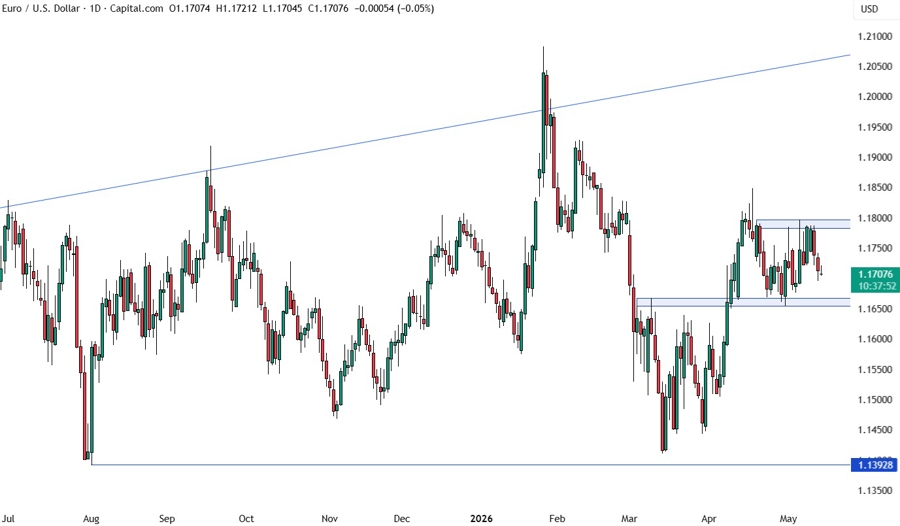
On the daily chart, we can see that EURUSD rejected the resistance zone around the 1.18 handle and it’s now approaching the support zone around the 1.1660 level. If the price gets there, we can expect the buyers to step in with a defined risk below the support to position for a rally back into the resistance. The sellers, on the other hand, will want to see the price breaking lower to increase the bearish bets into the 1.15 handle next.
EURUSD TECHNICAL ANALYSIS – 4 HOUR TIMEFRAME
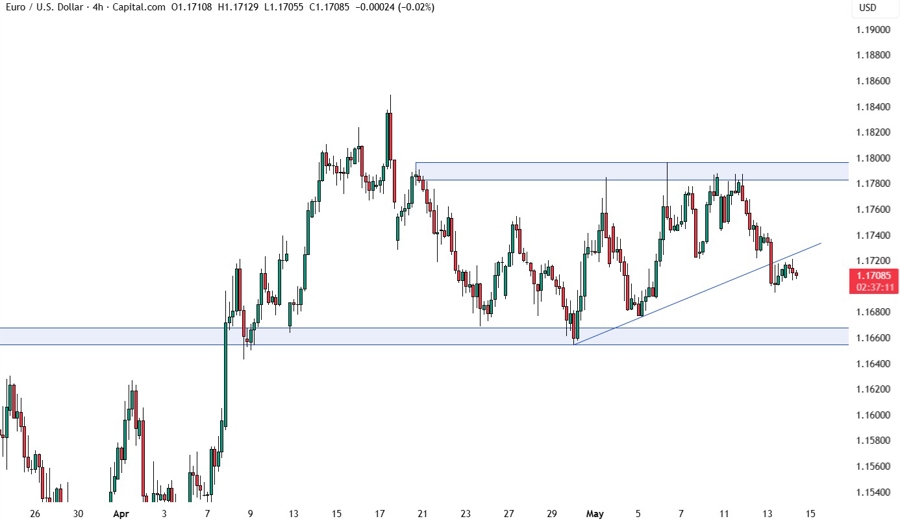
On the 4 hour chart, we can see the price is consolidating near the broken upward trendline. We can expect the sellers to step in around these levels with a defined risk above the trendline to keep pushing into the support. The buyers, on the other hand, will want to see the price rising back above the trendline to pile in for a rally back into the resistance.
EURUSD TECHNICAL ANALYSIS – 1 HOUR TIMEFRAME
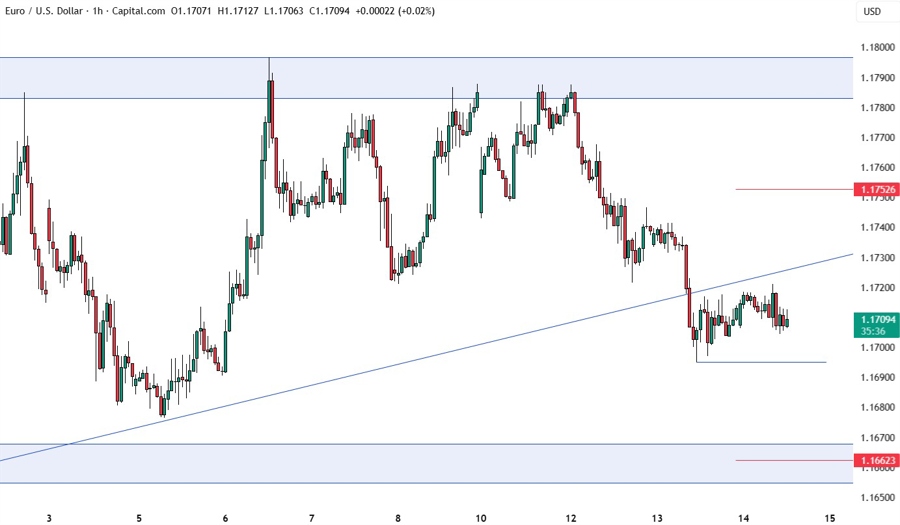
On the 1 hour chart, there’s not much we can add here as the sellers will have a better risk to reward setup around the broken trendline, while the buyers will need to wait for a drop into the support or a rally back above the trendline. The red lines define the average daily range for today.
UPCOMING CATALYSTS
Today we get the US Retail Sales report and the latest US Jobless Claims figures.