Strategy sold 32 bitcoin for ~$2.5M last week to fund preferred stock dividends, its first sale since 2022, breaking the "never sell" doctrine and sending MSTR shares down over 6%.
Summary:
- Strategy sold 32 BTC for approximately $2.5 million last week, its first Bitcoin disposal since late 2022
- The sale was made to fund distributions on STRC, the company's yield-bearing preferred stock
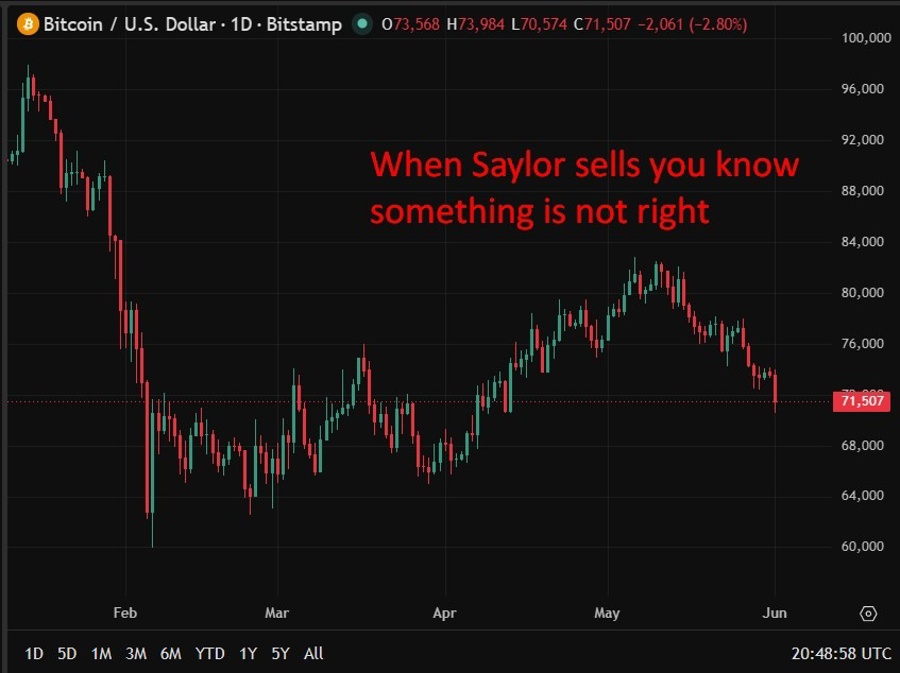
- MSTR shares fell more than 6.5% on Monday before recovering partially; Bitcoin dropped around 3% to approximately $71,467
- Saylor framed the move as balance-sheet optimisation aimed at improving the Bitcoin-per-share metric and managing tax liabilities on STRC
- Strategy holds around 843,706 BTC worth more than $60 billion, with an average cost basis of $75,701 per coin
- The company's dividend reserve has declined to approximately $900 million from an original $1.44 billion
Strategy, the Nasdaq-listed company that built its identity on an unrelenting Bitcoin accumulation strategy, sold 32 Bitcoin last week for roughly $2.5 million, its first disposal of the cryptocurrency since the depths of the 2022 crypto winter. The sale, disclosed in a regulatory filing, was made to fund distributions on the company's preferred stock and sent shares of MSTR down more than 6.5% on Monday before a partial recovery, while Bitcoin itself fell around 3% to approximately $71,467.
The transaction is negligible against Strategy's holdings of around 843,706 Bitcoin, worth more than $60 billion at current prices. But its significance lies almost entirely outside the arithmetic. For years, executive chairman Michael Saylor's refusal to sell Bitcoin was treated as doctrine, a founding principle woven into the company's market identity and its appeal to Bitcoin maximalists. That principle is now formally broken in practice.
Saylor has sought to reframe the sale as a rational treasury management decision rather than a retreat. Speaking to the Wall Street Journal in May, he argued that selling a small amount of Bitcoin to fund obligations that ultimately enable further accumulation is consistent with the company's long-term philosophy. Strategy CEO Phong Le added that disposals near the company's average cost basis of $75,701 per coin can reduce tax exposure on STRC, benefiting holders of the income-focused security.
Digital asset research firm Delphi Digital was less accommodating in its framing. The firm said the market must now treat Strategy as a leveraged corporate treasury company whose Bitcoin reserves may serve as a source of liquidity, not purely as an accumulation vehicle. The preferred share suite, which includes instruments such as Strike, Stretch, Strife and Stride, carries yields that have drawn strong retail interest but also raised questions about long-term sustainability. The dividend reserve has fallen from $1.44 billion to around $900 million.
The episode arrives at a complicated moment for Bitcoin sentiment more broadly. The cryptocurrency has declined around 18% so far this year, drifting in a narrow range while technology stocks hit new records. Retail enthusiasm that once surrounded Bitcoin and Strategy has largely migrated toward artificial intelligence. Whether Monday's disclosure marks an isolated adjustment or a structural shift in how Strategy manages its balance sheet is now the central question for investors holding any part of the company's capital structure.
---
Bitcoin fell 3% to around $71,467 on Monday following the disclosure, with MSTR shares dropping as much as 6.5% before recovering some ground by early afternoon. The move rattled sentiment around the corporate Bitcoin treasury model more broadly, as Strategy's "never sell" positioning had long been treated as a floor of sorts for institutional confidence in BTC as a balance-sheet asset. Analysts at Delphi Digital warned that investors may now reprice Strategy as a leveraged treasury company subject to competing financial obligations, rather than a pure accumulation vehicle. The erosion of Strategy's cash reserve for dividend obligations, down to around $900 million from $1.44 billion, adds a further overhang to watch.