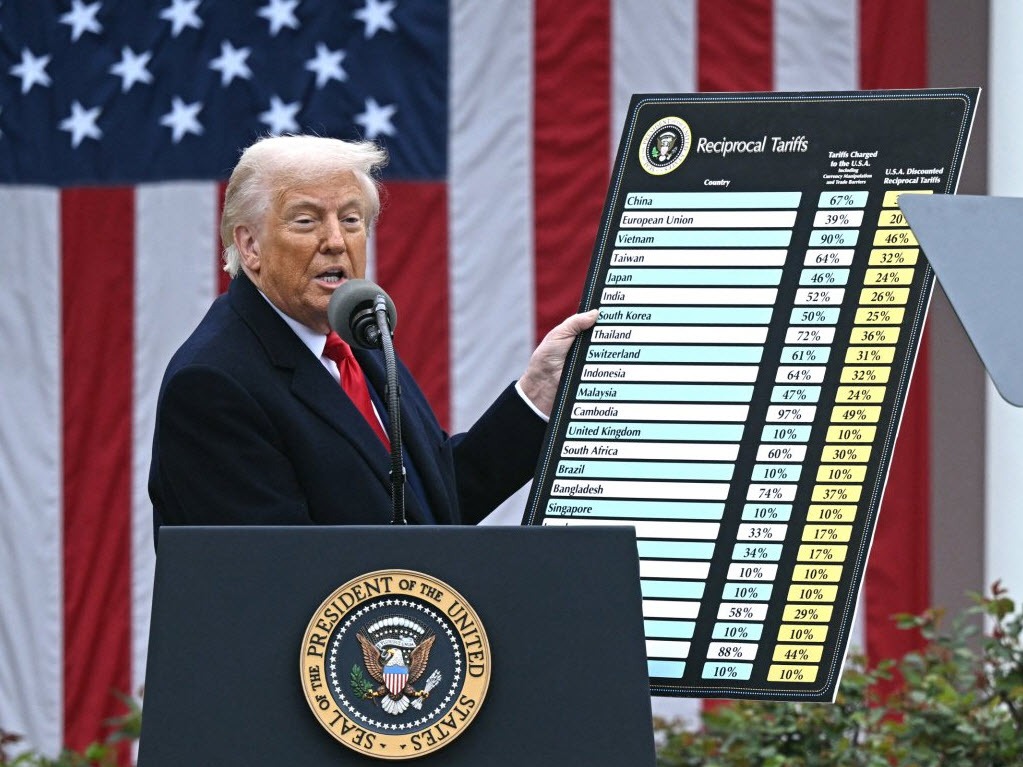
A US trade court struck down Trump's 10% global tariffs 2-1, ruling the duties were not justified under a 1970s trade law; the White House had cited a $1.2 trillion goods trade deficit as grounds.
Summary:
- The US Court of International Trade ruled 2-1 against President Trump's 10% global tariffs, finding they were not justified under the Trade Act of 1974, per the court ruling
- The tariffs took effect on February 24 after Trump invoked Section 122 of the 1974 Act, which permits duties for up to 150 days to address balance-of-payments deficits or dollar depreciation risks, per the court filing
- The court found the law was not an appropriate instrument for the type of trade deficits Trump cited, according to the ruling
- The Trump administration had argued a serious balance-of-payments deficit existed, pointing to a $1.2 trillion annual goods trade deficit and a current account deficit of 4% of GDP, per the administration's legal submissions
- The case was brought by small businesses who argued the tariffs were an attempt to circumvent a Supreme Court decision that struck down Trump's 2025 tariffs under the International Emergency Economic Powers Act, per court documents
- One dissenting judge said it was premature to grant victory to the small business plaintiffs, according to the ruling
A federal trade court has struck down President Donald Trump's 10% global tariffs, ruling in a 2-1 decision that the duties were not legally justified under the 1970s trade legislation the administration used to impose them, in a significant blow to one of the White House's central economic policy instruments.
The US Court of International Trade found in favour of a group of small businesses that challenged the tariffs after they took effect on February 24. Trump had issued the February order under Section 122 of the Trade Act of 1974, a provision that allows a president to impose duties for a period of up to 150 days to correct serious balance-of-payments deficits or to head off an imminent depreciation of the dollar. The court determined that the law was not an appropriate tool for the kind of trade imbalances Trump cited when issuing the order.
The administration had mounted a robust defence of the tariffs, arguing that a serious balance-of-payments deficit existed in the form of a $1.2 trillion annual goods trade deficit and a current account deficit equivalent to 4% of gross domestic product. That argument did not persuade the majority of the panel, though one dissenting judge argued it was premature to hand victory to the small business plaintiffs, leaving the door open for a more protracted legal dispute.
The small businesses behind the challenge had framed the February tariff order as an attempt by the administration to sidestep an earlier Supreme Court decision that struck down Trump's 2025 tariffs, which had been imposed under the International Emergency Economic Powers Act. By reaching for a different statutory authority, the White House sought to put its tariff policy on firmer legal ground, a strategy the trade court has now rejected.
The ruling will be welcomed by import-dependent businesses and global supply chain operators who have faced rising costs since the duties came into force. The Trump administration is widely expected to appeal, meaning the legal status of the tariffs is unlikely to be resolved swiftly. Until a higher court issues a definitive ruling, companies will face continued uncertainty over whether the duties will ultimately stand, complicating investment decisions and supply chain planning across a wide range of sectors.
It's a bit of a challenge trying to keep up with all these stuff ups.
---
The ruling introduces immediate legal uncertainty over a tariff regime that has been a central pillar of the Trump administration's trade policy and a persistent source of cost pressure for businesses reliant on global supply chains. A successful challenge on the grounds of statutory overreach narrows the legislative tools available to the White House for imposing broad-based duties, and markets will reassess the durability of the entire tariff architecture if the ruling survives appeal. For energy traders, the significance lies in the downstream implications: import-dependent industries facing lower tariff costs may see input price relief, while the prospect of a less aggressive trade posture could ease some of the demand destruction fears that have weighed on oil price forecasts. The 2-1 verdict leaves room for appeal, meaning the uncertainty is unlikely to resolve quickly, and companies will be cautious about adjusting supply chain strategies until a higher court rules.