The start of the week is filled with murmurs about a US-Iran deal and some form of agreement. However, what exactly does that entail and what is it really all about? Or better yet, what exactly is it going to lead to? Market players are optimistic in wanting to hear good news but the reality of the situation is that we might not even be close to a US-Iran endgame at all.
Let's take a look at where we are at right now and break things down accordingly.
US and Iran are ironing out details and have "agreed" on various issues
Now, this is all very vague sentencing I must admit. While both sides are claiming that they are progressing, the major thing to scrutinise is what exactly are the things that they agreeing on. And in that lieu, I would say markets have to be very careful.
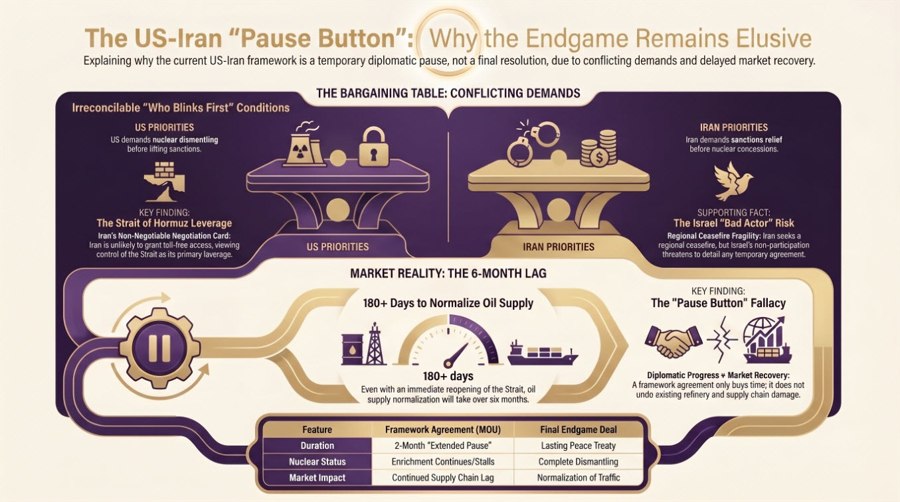
What the US and Iran look to be working out now is a framework agreement, in what they may label as a memorandum of understanding (MOU). This can take shape in a peace agreement that will outline key terms that both sides will have to adhere as they proceed to the next round of negotiations, that being nuclear discussions.
In this case, we might see something along the lines of the US and Iran agreeing to two months of sticking to these terms as they continue to butt heads on Iran's nuclear programme. It is not a lasting peace deal. This is one that is pretty much just pressing an extended pause button so that both sides can finally deal with the crux of the problem.
So, what can we expect from this framework agreement or MOU?
To keep things short, the US wants two things. The first being for the Strait of Hormuz to be reopened and with it to be done toll-free. I don't see how Iran will ever agree to that as this remains their biggest leverage in negotiations. However, what I feel might happen is that Iran will show some gesture of goodwill in clearing out some mines and allow a conditional reopening - one that they will still be in charge and manage.
And I reckon the narrative that they are trying to sell here is part of that game in trying to convince the US that they are slowly trying to meet Washington somewhere in the middle. That without completely surrendering its leverage in negotiations and returning to the pre-war position.
The second is that they want Iran to agree to dismantling its nuclear programme as a pre-condition for a lasting deal. Then and only then will the US agree to lift its sanctions on Iran. However, Tehran officials will certainly want to argue for the opposite - that being wanting the sanctions lifted first before proceeding to any nuclear dismantling.
As for Iran, they also want two things. The first being a complete ceasefire in the region that will also involve Lebanon. The issue with this is that Israel is more than likely not going to be involved in this agreement. As such, they may be a bad actor in this whole thing and ruin it all. I mean even until today, Israel has been launching strikes against Lebanon despite a supposed ceasefire in the meantime.
The second thing is Iran wants the US to lift its naval blockade and also sound a retreat of its military forces in the region. The former is arguably the most important thing with the second rather a bonus. Come what may, do not expect any US forces to back off as they will continue to maintain presence in the region so long as a final deal is not signed yet.
And this framework agreement or MOU is no final deal. Just like how Iran wants to maintain control over the Strait of Hormuz, the US also needs to show some threat or power move in keeping their forces around.
What's the next step then?
Now that we have those conditions lined up for the framework agreement to work, the question is can all of those pieces hold together until the US and Iran are able to negotiate a nuclear deal?
It is a very tough one to imagine, that especially since there are some non-negotiables on the tables as outlined above. Iran needs control the Strait of Hormuz no matter what and giving that up even as part of final negotiations mean that they can be bullied into a different bargaining position right after doing so.
Meanwhile, the US wants Iran to move first and get rid of its uranium enrichment before moving on lifting sanctions and pulling back on military presence.
While both sides hash it out during this period of the framework agreement, something's gotta give if not there will not be any real progress at the end of the day. In essence, one side has to blink and wave the white flag.
If not, the only other option will be to just let things be and let this war pass by without any real conclusion to it. That basically means both sides just painting a picture that they did agree to achieve something but in the end of the day, nothing was accomplished. It could just mean reverting back to something along the lines of the 2015 JCPOA, even if Trump will somehow say that his deal was better. So, we'll see.
What does this mean for markets?
If you're expecting a return to normal traffic in the Strait of Hormuz from the framework agreement, I'm sorry to say that you will be left disappointed. Even on an unconditional reopening of the strait today and if traffic were to be back up and running to full speed, this cannot reverse the disruption caused by the closure over the last three months.
On that assumption, oil supply in the Gulf region will still take more than six months to normalise. And with each passing day that this does continue, that reset time just gets even longer.
And all of this is yet to account for other key issues such as refineries facing disruptions as well and also supply chain issues being extended for longer. Those damages are also critical in the sense that they cannot just be undone immediately when the US and Iran announce some form of agreement. It needs time to heal.
So even with so much optimism baked in, the worst is not quite over yet for markets.
The US and Iran agreeing to a framework deal doesn't mark the endgame to the war. It is merely pressing pause as both sides try to then work out the most important issue that triggered the conflict.
And just like any video game when you're up against a dicey situation, pressing pause is not the solution. It buys time for some quick thinking maybe, but it could all still end up being disastrous at the end of the day.