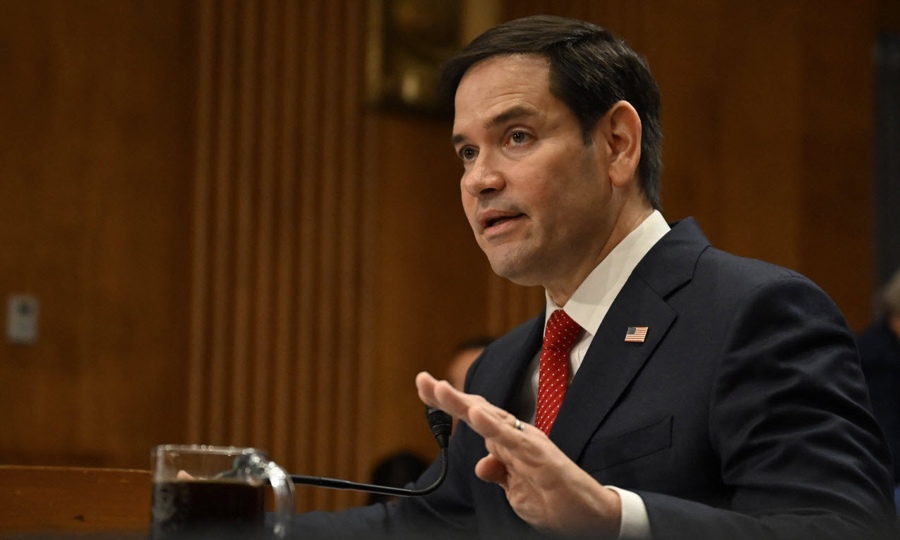
US Secretary of State Marco Rubio says Washington will give diplomacy every chance on Iran but will pursue other means if a good deal cannot be reached, while describing the current framework as solid.
Summary:
- Rubio said the US would give diplomacy every opportunity to succeed before considering alternative approaches, but was explicit that alternatives exist if a good agreement cannot be reached
- He described the current proposal on reopening the Strait of Hormuz as a solid framework
- A time-limited negotiation on Iran's nuclear programme is also on the table as part of the broader deal structure
- The comments are consistent with the two-phase framework outlined by other senior US officials over the weekend: Hormuz reopening first, nuclear resolution to follow
US Secretary of State Marco Rubio has laid out Washington's position on Iran in terms that were constructive in tone but carried an unmistakable edge, saying the United States would pursue diplomacy to the fullest before considering what he described as alternative ways of dealing with the problem.
Rubio's remarks framed the current state of play as a genuine but time-sensitive opportunity. He described the proposals on the table as solid, specifically citing the framework around reopening the Strait of Hormuz and entering a time-limited negotiation on Iran's nuclear programme. The word choice was deliberate: solid, not final, and contingent on Tehran's willingness to close the remaining gaps.
The diplomatic structure Rubio outlined tracks closely with what other senior US officials have described in recent days. The first phase centres on restoring free passage through the Strait of Hormuz, relieving the pressure on global energy markets that has built since Iran effectively closed the waterway following the US and Israeli strikes in late February. The second phase would involve a structured, time-bounded process to address Iran's nuclear ambitions, with the sequencing designed to extract a concrete and verifiable concession before the US offers broader relief.
What gave Rubio's comments added weight was the alternative he left hanging in the air. He did not specify what dealing with it another way would look like, but in context the implication was clear enough. Washington is prepared to exhaust the diplomatic track, but it is not prepared to wait indefinitely, and it is not treating a negotiated outcome as the only path available.
For markets, the tone is cautiously positive without being conclusive. The Hormuz framework appears to be holding shape, the nuclear element has a structure if not yet agreed detail, and the secretary of state is publicly invested in making the diplomacy work. The alternative, however, remains very much on the table.
---
Rubio's "deal or deal with it another way" framing keeps a military or escalatory tail risk in the price, limiting how far the Iran risk premium can fully unwind even if Hormuz optimism persists in the near term.
The reference to a time-limited nuclear negotiation as a separate phase is consistent with the two-step framework outlined by other US officials over the weekend, suggesting the structure is hardening.
Markets will read the overall tone as cautiously constructive but not as a signal that closure is imminent.