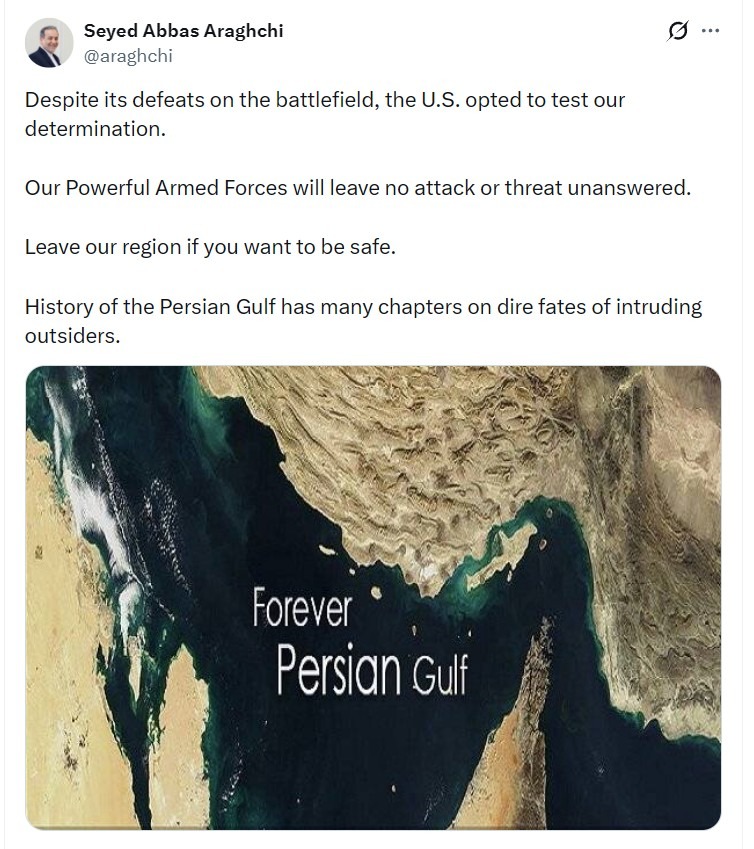
Bandar Abbas is the nerve centre of Iran's Strait of Hormuz operations, and confirmed strikes there mark a qualitative escalation beyond radar and air defense sites. The reported launch of ballistic missiles from Isfahan introduces a new dimension of retaliatory risk that will weigh heavily on energy markets. Gulf state allies hosting US assets are now acutely exposed to Iranian counter-strikes, particularly against water and power infrastructure, which would have severe humanitarian and economic consequences well beyond the oil market. The combination of widening US strike targets and Iranian missile launches points to a conflict that is deepening rapidly.
---
The US has launched a third wave of strikes on Iran targeting Bandar Abbas, Jask, Qeshm and Sirik, as at least three ballistic missiles were reported fired from Isfahan in apparent retaliation.
US airforce said to be targeting Iranian launch sites and air defence radars on Qeshm Island and other locations in order to prevent further drone attacks on US assets in Hormuz.
Earlier:
- More on this news: US strikes southern Iran after Apache helicopter downed over Hormuz
- US hits Iran air defenses in warning shot as Trump says deal talks to continue
- Second wave of US attacks on Iran said to be underway
Summary:
- The US launched a third wave of strikes on Iranian military positions, with a large fleet of fighter jets reported airborne across western Iran
- Targets in this wave included once again Sirik, Jask, Qeshm and Bandar Abbas, the IRGC Navy's primary command hub for Strait of Hormuz operations
- Explosions were reported near Bandar Abbas in Hormozgan Province, marking at least the second round of strikes on that location overnight
- Iranian authorities confirmed that earlier strikes on Sirik damaged at least two water reservoirs in the Bomani district, temporarily cutting drinking water supply to the area
- At least three ballistic missiles were reported launched from Isfahan in central Iran
- Gulf states hosting US military assets are increasingly concerned about potential Iranian retaliation against civilian infrastructure including water desalination facilities
The United States launched a third wave of strikes against Iranian military targets overnight, with a large formation of US fighter jets reported airborne across western Iran and explosions heard near the strategic port city of Bandar Abbas in Hormozgan Province.
The latest strikes expanded the target list to include Sirik, Jask, Qeshm and Bandar Abbas, the latter being the IRGC Navy's principal command hub and the operational centre for all Iranian activity in the Strait of Hormuz. Explosions near Bandar Abbas marked at least a second round of strikes on the city in the same night, suggesting Washington is targeting the command and control architecture underpinning Iran's grip on the waterway.
As the third wave unfolded, at least three ballistic missiles were reported launched from Isfahan in central Iran, indicating Tehran has moved beyond threats and begun retaliatory fire. The missile launches represent a significant escalation and will sharpen concerns among US Gulf allies about what Iran may target next.
Those concerns are not abstract. Iranian authorities confirmed that earlier strikes on Sirik had damaged at least two water reservoirs in the Bomani district, cutting drinking water supply to the area. That report, whether accurate or framed for domestic audiences, underscores the civilian infrastructure dimension of the conflict and will fuel Iranian justifications for hitting equivalent targets in Gulf states hosting American forces.
The widening assault follows Washington's stated position that tonight's action was intended as a calibrated warning that would not derail peace negotiations. That framing looks increasingly difficult to sustain as the strike package grows and Iranian missiles leave the ground.
---
Earlier: