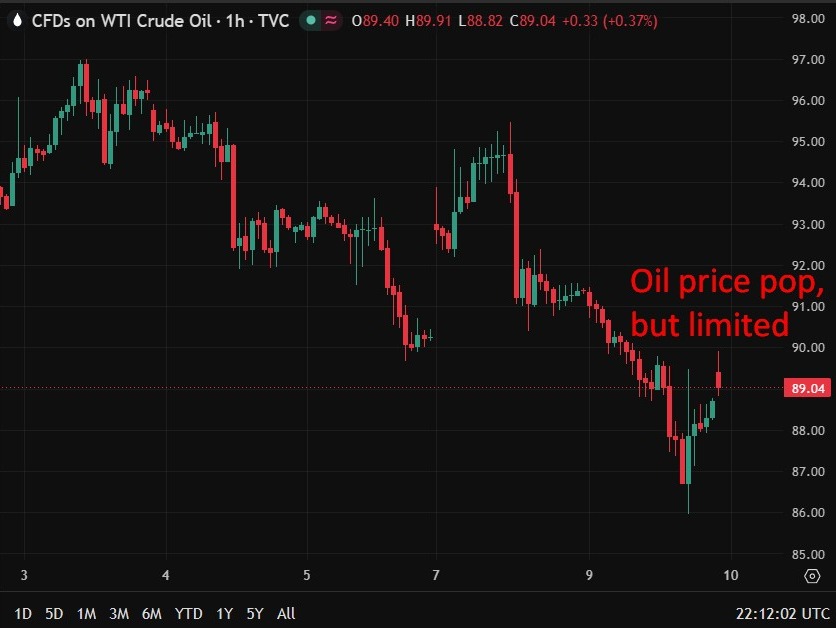
The dual signal from Washington, striking Iranian territory while simultaneously insisting the deal survives, introduces a new layer of uncertainty that markets will struggle to price cleanly. Targeting air defense and radar infrastructure near Hormuz raises the operational stakes considerably, and Iran's vow to retaliate keeps escalation risk elevated. The possibility that drone program sites were hit adds a proliferation dimension that could complicate any near-term diplomatic resolution. Oil supply risk premiums are likely to remain elevated until there is clearer evidence the negotiating channel is genuinely intact.
US strikes hit Iranian air defense and radar systems near Hormuz in what Washington described as a warning shot, with officials insisting the action would not derail ongoing peace negotiations.
Summary: Per Axios, Al Arabiya, Al Jazeera, CNN, and Politico, citing US officials and Iranian state media:
- US strikes targeted Iranian air defense systems and radar installations around the Strait of Hormuz, with the operation described as ongoing
- Sites potentially linked to Iran's drone program may also have been struck, given indications a Shahed drone was used to down the Apache helicopter
- A US official characterised the strikes as a warning shot intended to send a message, not to derail ongoing peace negotiations
- Trump is said to believe a deal with Iran remains close
- Iran's IRGC-affiliated media vowed a decisive response to what it described as US aggression carried out under the pretext of the helicopter incident
US forces struck Iranian air defense systems and radar installations around the Strait of Hormuz on Tuesday, with a US official describing the action as a warning shot and insisting Washington believes the strikes will not derail ongoing negotiations to end the conflict.
The operation, confirmed as ongoing, came hours after the US military launched its initial retaliatory strikes in response to Iran's downing of a US Army AH-64 Apache helicopter over the strait the previous day. The Apache was brought down by a one-way attack drone, with reporting suggesting a Shahed-type drone was responsible. US forces may also have targeted infrastructure linked to Iran's drone program as part of the expanded operation.
Iran's state media and the IRGC-affiliated Tasnim news agency said Tehran would deliver a decisive response to what they called American aggression, rejecting Washington's framing of the Apache incident as justification. The threat of Iranian retaliation keeps the risk of further escalation squarely in focus.
The White House is nonetheless presenting a notably calibrated posture. Administration officials told reporters the strikes were designed to send a message rather than permanently damage the prospect of a settlement, and Trump is said to believe a deal remains within reach. The simultaneous signalling of military action and diplomatic continuity reflects the fine line Washington is walking as both sides remain, at least nominally, engaged in talks.
The strikes occurred against a backdrop of an already heavily disrupted Hormuz corridor. The strait, which before the conflict carried roughly a fifth of global crude oil and LNG, remains largely closed to commercial shipping, with Washington and Tehran each maintaining effective blockades against the other's interests.