Market expectations for BoE interest rate hikes have increased following the release of the latest UK flash PMIs. The survey showed an acceleration in economic activity in April alongside a record-breaking surge in business costs. The agency noted though that "the improved rate of expansion is in part a reflection of a short-term boost from a rush to secure purchases ahead of feared price rises and supply shortages linked to the war".
The bad news is that businesses across both the manufacturing and services sectors reported the steepest rise in average cost burdens in more than three years, with some measures of input price inflation reaching their highest levels since the survey began nearly three decades ago. The agency noted that "prices are rising not just because of surging energy costs, but also due to increases in charges levied for a wide variety of goods and services, with price hikes often stoked by supply concerns". Businesses cited also strong wage pressures.
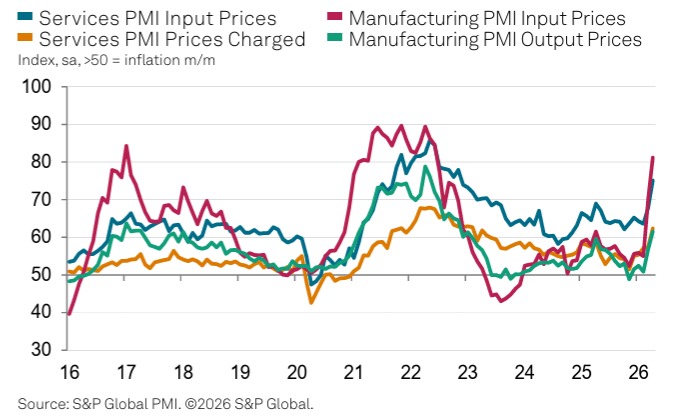
The surge in costs, driven primarily by energy price shocks and mounting wage pressures, suggests that inflationary pressures could become more entrenched forcing the BoE to retighten policy to avoid erasing the progress achieved since 2022. The market is now pricing 60 bps of tightening by year-end compared to 35 bps last week, and there's a 70% chance of a rate hike in June.
While raising rates risks dampening the economic recovery, the prospect of inflation rebounding well above 3% may leave the MPC with little choice but to retighten policy after 5 years of missing the target.