The RBA held its cash rate at 4.35% in June but signalled further hikes remain possible, with Westpac forecasting a move at the August meeting if inflation stays elevated. Justin had the info yesterday:
- RBA leaves cash rate unchanged at 4.35% in June monetary policy meeting, as expected
- RBA governor Bullock: I want to be clear that inflation remains too high
- The RBA rate decision (rates unch) did little to break the AUDUSD one way or the other.
The below is from Westpac's take.
The RBA's deliberate insertion of explicit hike language into its post-meeting statement removes any residual market comfort that the tightening cycle has peaked. Rate-sensitive sectors, particularly housing and consumer discretionary, face renewed pressure as the probability of an August move rises. Bond markets pricing in cuts may need to reprice materially if June quarter trimmed mean inflation prints firm, as Westpac expects. The Australian dollar could find near-term support on rate differentials if the hawkish tilt is sustained into the data flow.
Summary:
- The RBA held the cash rate at 4.35% at its June meeting, a decision that was widely expected
- The post-meeting statement included an unusual clause explicitly flagging that further hikes remain on the table, language Governor Bullock repeated at the press conference
- Westpac interprets this as the board pushing back against market speculation the tightening cycle is over
- The bank maintains its call for further rate increases, with August the most likely timing if June quarter trimmed mean inflation is again strong
- A pause is possible if upcoming inflation data surprises to the downside, but Westpac sees the direction of travel as still upward
- The RBA views the economy as capacity-constrained at around 2% annual growth, and sees increasing signs that energy cost pressures are passing through into broader prices, particularly in new housing construction
The Reserve Bank of Australia left its cash rate unchanged at 4.35% at its June board meeting, but made clear the tightening cycle may not be over, adding language to its post-meeting statement that explicitly flagged the possibility of further rate increases if conditions warrant.
The move drew immediate attention from analysts who noted the phrasing was unusual by the RBA's typically measured communication standards. Governor Michele Bullock reinforced the point at the subsequent press conference, signalling the board wanted to dispel any notion that it had finished lifting rates.
Westpac, which said the hawkish tone was less surprising to it than to some peers, retained its forecast that the cash rate will rise again. The bank argues the key trigger is the June quarter trimmed mean inflation result, and that a firm reading would bring an August hike into play. A softer run of data could extend the pause, but Westpac sees the balance of risk as skewed toward further tightening.
The bank noted the RBA remains more focused on upside inflation risks than downside growth risks. It views the labour market as still modestly tight, consumer spending as slowing in an orderly and anticipated way, and energy-driven cost pressures as increasingly bleeding into output prices, particularly in residential construction. That last point marked a subtle but notable shift in language from May's post-meeting statement, where the RBA described cost pass-through as showing only "early signs." The qualifier was dropped this month.
Westpac concluded the meeting outcome and its communication were broadly consistent with its existing read of the RBA's thinking, and reiterated that avoiding further rate hikes from here would likely require both an unexpected deterioration in domestic economic conditions and a materially improved inflation outlook.
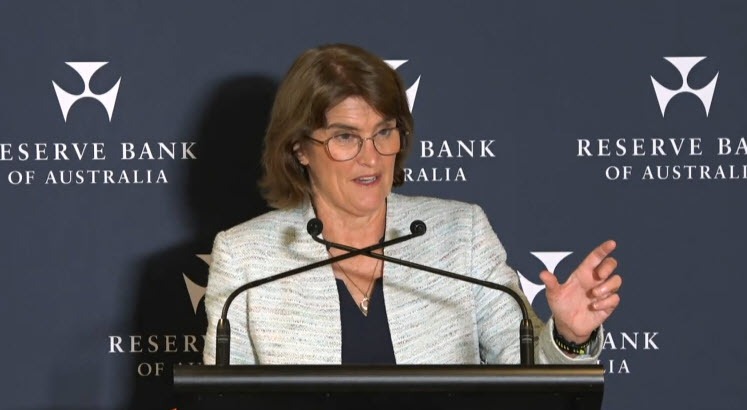
Reserve Bank of Australia Governor Bullock