Although Canada’s inflation and retail sales data came in stronger than expected, the broader USD buying bias — along with retail sales details that were not as strong beneath the surface (with core sales slipping marginally) — helped push the Canadian dollar lower and the USDCAD higher.
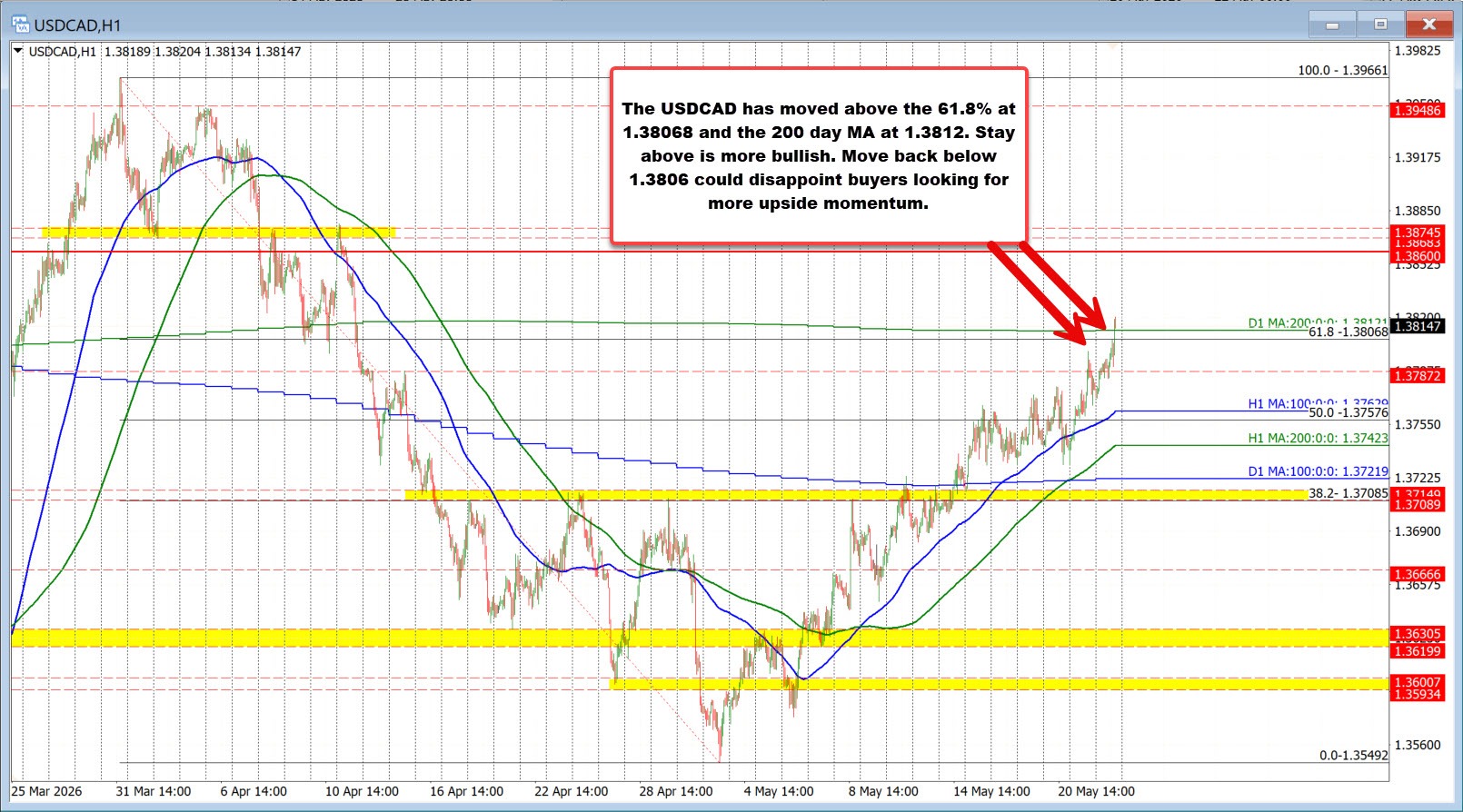
Technically, on the hourly chart, the USDCAD has now broken above both the 61.8% retracement of the decline from the late-March high at 1.38068 and the 200-day moving average at 1.3812. The pair reached a high of 1.3821 and is currently trading near 1.3817. Notably, the last time the price traded above the key 200-day moving average was back on April 13.
If buyers can keep the price above the 1.3806–1.3812 area, it would reinforce the bullish bias and signal that buyers remain firmly in control. However, a move back below those levels could disappoint the bulls and trigger a rotation lower on the failed breakout.
Earlier in the week, sellers had their opportunity after pushing the pair below the 100-hour moving average (currently at 1.3763) on Wednesday and into the early trading hours on Thursday. However, downside momentum stalled before reaching the next key support targets. That failure shifted the bias back in favor of the buyers. Once the pair moved back above the 100-hour moving average during the Asian session yesterday, momentum accelerated higher, giving buyers the green light to extend the rally — and they did.