Cruise ship demand is a good proxy for economic comfort and a way to gauge the impact of the war in Iran on consumer behaviour. Carnival also sits on the lower-income rung of the cruise ship industry so it's less skewed by the K-shaped economy.
Earnings today of $0.41 cents beat the $0.35 consensus but the Q3 outlook was below expectations and shares fell 8% before recovering to -5%. The Q3 consensus is $1.42 and they guided $1.35.
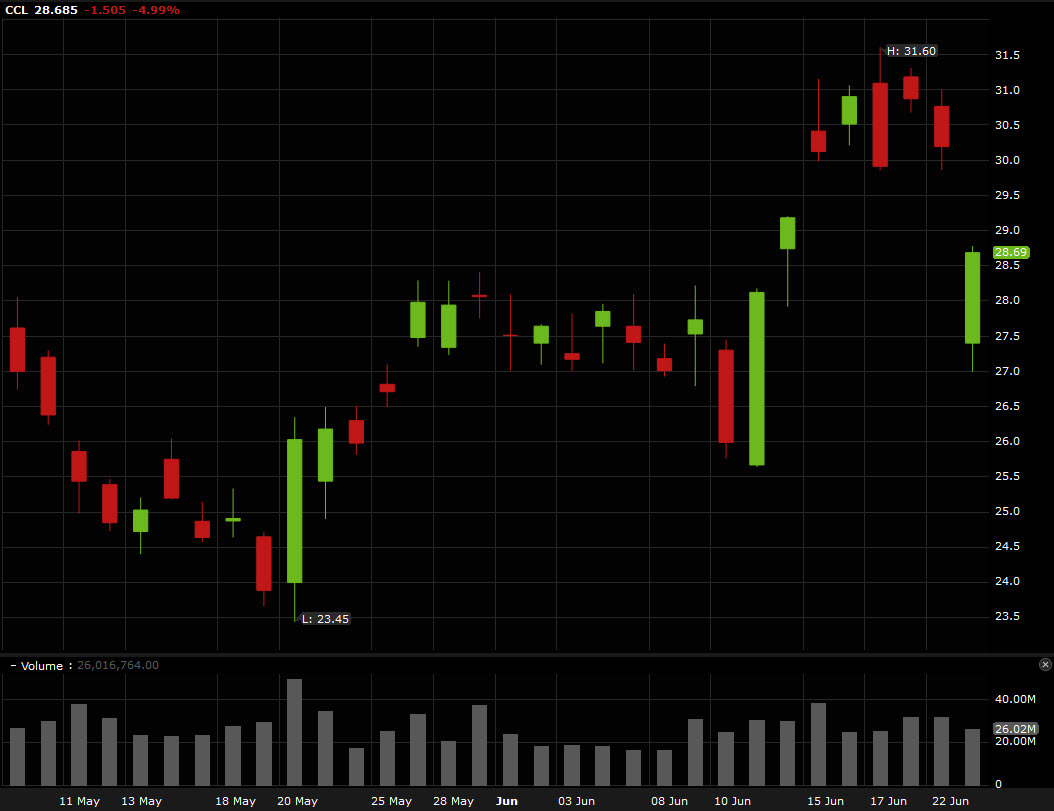
It wasn't bad though as Carnival said customer deposits reached an all-time high of $9 billion, rising by more than $450 million from the previous year's record. They also said bookings for the remainder of 2026 remain ahead of last year and at historically high prices. For the quarter, revenue rose to a record $6.7 billion, fractionally above the consensus forecast of $6.68 billion.
"What stands out most is that we achieved these results despite operating through a period of extreme geopolitical volatility, consumer sentiment at historically low levels and unusually high fuel prices," said CEO Josh Weinstein.
He said the company struggled with guidance around when the Strait would open but that demand was still generally ok, aside from Europe.
"This moderation was concentrated on our European deployments, particularly in the Med region, which were closest to the conflict and it was further exacerbated by elevated airfares and reduced international flight capacity for North American guests... will Europe have fuel to fly my plane back home, right? I mean, all those things, they didn't really die down."
His look ahead suggested that Q3 could ultimately exceed guidance.
"June certainly seems to have turned a corner and last week was a nice... cherry on top as we kind of got the MOU signed and people started thinking about, okay, I can start planning my life again."
Carnival said it is 93% booked for 2026, with less inventory remaining for sale than at the same point last year. That's despite claiming to hold the line on pricing even as demand fell during the war.
An interesting side note is that the CFO highlighted AI as an earnings tailwind.
"We're also been working with many of our suppliers and vendors to look for reduced rates as everybody implements AI and gains efficiency in their business. We do expect fee reductions as a result of that," said David Bernstein.