- Prior month 49.8
- preliminary 51.3
- S&P Global services 51.0 versus 51.3 preliminary.
- S&P Global composite 51.7 versus 52.0 preliminary. Last month 50.3.
Details from the report from S&P Global:
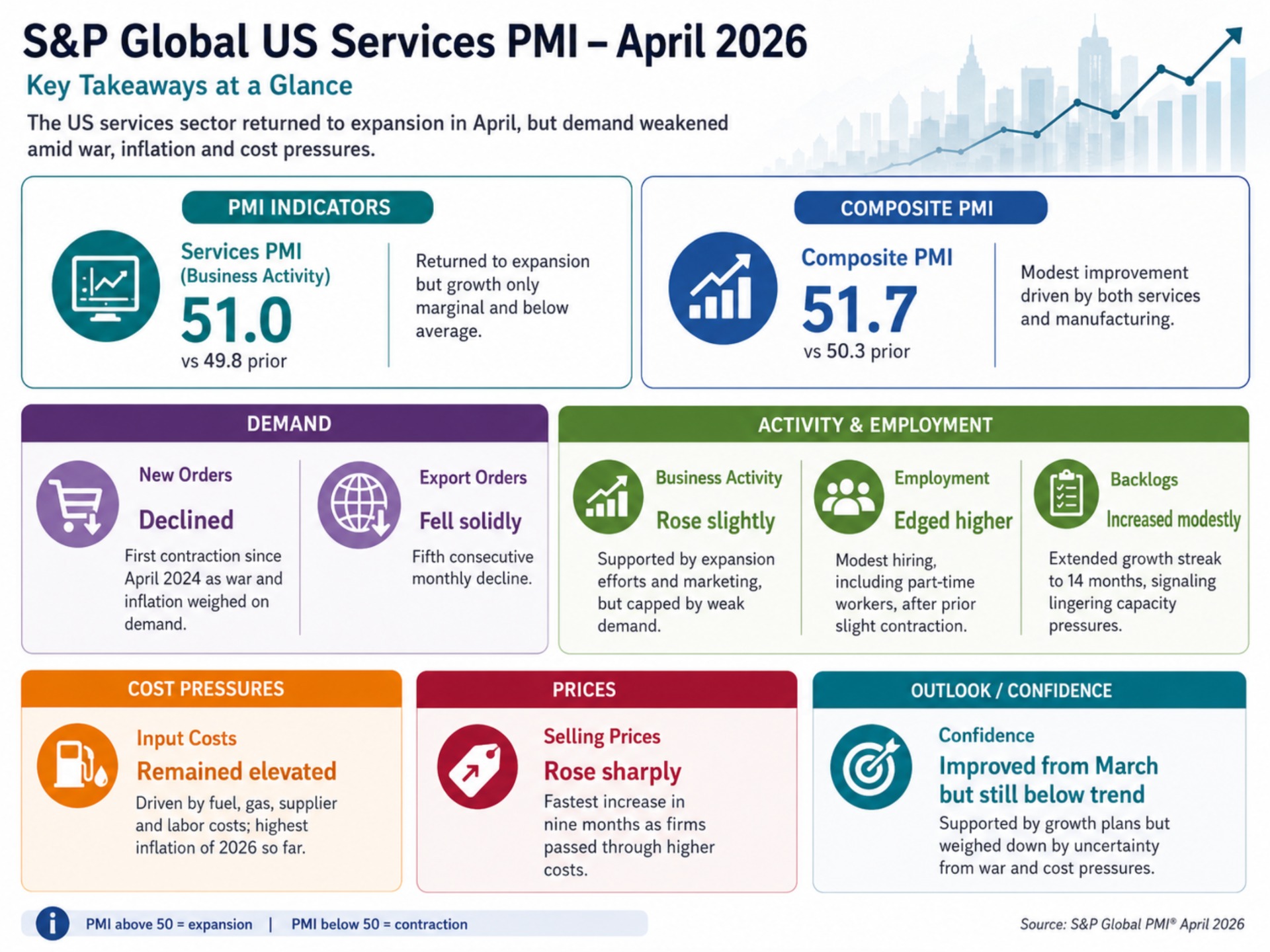
- Services PMI (Business Activity): 51.0 vs 49.8 prior – returned to expansion but growth only marginal and below average
- Composite PMI: 51.7 vs 50.3 prior – modest improvement driven by both services and manufacturing
- New orders: Declined – first contraction since April 2024 as war and inflation weighed on demand
- Export orders: Fell solidly – fifth consecutive monthly decline
- Business activity: Rose slightly – supported by expansion efforts and marketing, but capped by weak demand
- Employment: Edged higher – modest hiring, including part-time workers, after prior slight contraction
- Backlogs: Increased modestly – extended growth streak to 14 months, signaling lingering capacity pressures
- Input costs: Remained elevated – driven by fuel, gas, supplier, and labor costs; highest inflation of 2026 so far
- Selling prices: Rose sharply – fastest increase in nine months as firms passed through higher costs
- Confidence: Improved from March but still below trend – supported by growth plans but weighed down by uncertainty from war and cost pressures
Chris Williamson, Chief Business Economist at S&P Global Market Intelligence
“Although business activity returned to growth after a small decline in March, it’s clear the pace of growth has kicked down a couple of gears since the start of the year. The survey data are indicative of GDP growing at a modest 1% annualized rate.
“Growth may weaken further, as service providers are reporting lower inflows of new business for the first time in two years, reflecting an intensifying hit to demand from the war in the Middle East.
“The direct impact of the war has been most evident in consumer-facing services, as high prices have led to a pull-back in discretionary spending on activities such as holidays and recreation, though transport has also been curbed by high fuel prices and travel disruptions.
“However, a secondary additional driver of renewed weakness is a drop in demand for financial services, in part linked to heightened uncertainty about market outlooks but also reflecting expectations of higher inflation and interest rates, which has hit real estate and lending activity.
“A further increase in input cost inflation reflected not just higher fuel prices but a widening spread of goods and services rising in price, as well as higher wages, which will feed through to consumer price inflation in the coming months. The scale of the price rises will put pressure on the Fed to prevent higher inflation becoming entrenched.”