Iranian President Pezeshkian has resigned (media sources), telling Supreme Leader Khamenei the IRGC had seized control of all major decisions and rendered elected civilian government unworkable.
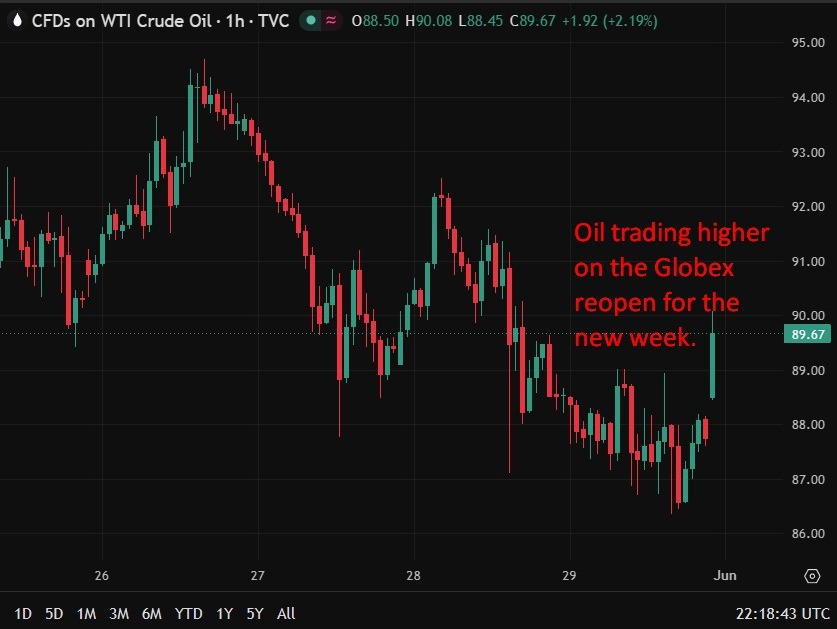
- Oil is higher on Globex to open the new week.
Treat this report with care, social media sources only at this stage. Iran's government has denied it as 'fake news'.
Summary:
- Iranian President Masoud Pezeshkian resigned and addressed a direct communication to Supreme Leader Ali Khamenei stating that the Islamic Revolutionary Guard Corps had assumed control of all major decision-making, per the source material
- Pezeshkian stated he had been excluded from every significant decision and said he could not continue to govern under those conditions, per the source material
- The resignation amounts to a formal admission by Iran's elected head of government that civilian authority is subordinate to IRGC command, per the source material
- The development directly undermines the ongoing US-Iran negotiations, as Washington has been engaging with a civilian government whose own president has now declared it lacks effective power, per the source material
Iranian President Masoud Pezeshkian resigned and delivered a direct written communication to Supreme Leader Ali Khamenei confirming what outside observers and intelligence assessments had long suggested: the Islamic Revolutionary Guard Corps has assumed effective control of Iran's government, and the elected civilian presidency has been reduced to a ceremonial function with no meaningful role in major decisions.
Pezeshkian told Khamenei he had been cut out of every significant decision, that the IRGC had consolidated authority across the institutions of state, and that he was unable to continue governing under conditions in which the presidency carried responsibility without power. The resignation was both a political act and a public indictment, issued at a moment when Iran is engaged in the most consequential diplomatic negotiations in a generation.
The timing is devastating for the nuclear talks. The United States and Iran had been working through a tentative framework, reported late last week, that would extend the ceasefire, begin to reopen the Strait of Hormuz, and launch a structured 60-day negotiation on Tehran's nuclear program and enriched uranium stockpile. That framework was already fragile: Trump had toughened its terms on Sunday, Iran's parliamentary security spokesman had declared no nuclear commitments had been made, and Foreign Minister Abbas Araqchi had urged patience while declining to offer any timeline for resolution.
Pezeshkian's resignation now raises a more fundamental problem than the terms of any deal. Washington has been negotiating with a government whose own president has formally stated it holds no real authority. If the IRGC controls all major decisions, as Pezeshkian has now alleged in a direct communication to the supreme leader, then any agreement signed by Iran's foreign ministry or presidency carries an obvious question mark over whether the institution with actual military and strategic power has endorsed it, and whether it would honour the terms.
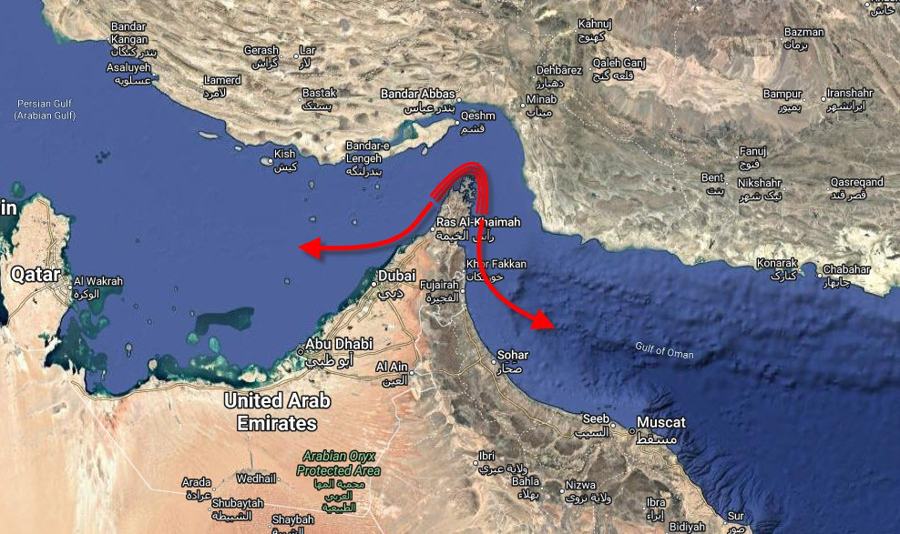
The IRGC's centrality to Iran's posture on Hormuz is not incidental. The corps controls the missile and drone forces that have enforced Tehran's claim over the waterway since the conflict began in late February. It runs the naval assets that have threatened commercial shipping on the Iranian coastal route. If Pezeshkian's account is accurate, the organisation that physically controls the strait has been operating independently of the president throughout the negotiations, and the civilian interlocutors across the table from American diplomats have been speaking without a mandate from the body that would need to implement any deal.
For energy markets, the resignation removes the most optimistic scenario from the table in the near term. A rapid diplomatic resolution to the Hormuz closure was already a low-probability outcome given the gap between US and Iranian positions on uranium stockpiles, sanctions relief and the blockade. It is now harder still to identify a credible Iranian signatory for any framework, or a mechanism by which a deal reached with civilian officials could compel IRGC compliance. The strait, through which a fifth of the world's oil and a significant share of its natural gas flowed before the conflict, remains effectively closed to normal commercial traffic, with US Central Command coordinating a covert trickle of around three dark-passage crossings per day, a volume that does not begin to approach pre-war norms.
The question now facing Washington, and the oil market, is whether the IRGC will step into the diplomatic space Pezeshkian has vacated, or whether his resignation marks the end of the negotiating track entirely.
--
This is an unambiguous oil price shock event. The resignation strips the already fragile US-Iran negotiating framework of its last pretence of a functional civilian counterpart, and markets will reprice Hormuz closure risk sharply higher at the open. Any probability assigned to a near-term deal reopening the strait should be revised toward zero until it becomes clear whether the IRGC intends to engage diplomatically at all, or whether Pezeshkian's departure removes the last internal advocate for a negotiated settlement. The admission that the elected president has been excluded from every major decision also raises the question of who in Tehran actually has authority to sign or honour any agreement, a question Washington now has to answer publicly. Energy traders will read this as weeks, not days, added to the Hormuz timeline.