- China April data misses badly, Iran war and weak demand weigh. Retail sales growth plunge.
- China April Retail Sales +0.2% y/y (exp 2%) & Industrial Prduction +4.1% y/y (exp 5.9%)
- Iran war economic toll deepens as global oil stocks near exhaustion
- Japan's 10-year bond yield hits 1996 high as fresh debt plans emerge. Extra budget coming
- Chinese House Price Index continues to slump: April -3.5% y/y (prior -3.4%)
- PBOC sets USD/ CNY reference rate for today at 6.8435 (vs. estimate at 6.8086)
- Singapore April 2026 non-oil exports +24.5% y/y vs prior 15.30%
- Zcash surges 1,140% in a year as bitcoin pioneers back privacy token
- South Korea exchange halt as KOSPI futures slammed limit lower
- US net oil exporter status shields dollar from energy shock hitting peers
- UK housing prices rise but employer confidence stays near record low
- Annie Duke on the investing mistakes that quietly destroy most portfolios
- New Zealand services sector contracts again in April as fuel costs bite
- US futures are open for the week's trade, oil up and equites (minor) down
- Currie warns US oil inventory on course to hit rock bottom, no buffer left to draw on
- Clock is ticking: Trump threatens Iran with annihilation over stalled peace talks
- Axios says Trump is waiting for a response from Iran
- weekend news - Drone hits UAE nuclear plant as Iran war deadlock deepens
- Newsquawk Week in Focus: NVDA earnings, UK, Canadian, Japanese and NZ inflation
- Heads up for Trump situation room meeting called for tuesday - military option discussion
- Monday open levels, indicative FX prices, 18 May 2026
- Is Tesla Stock a Buy or Sell?
Summary:
- Oil prices extended gains as Iran war ceasefire talks stalled, a drone struck a UAE nuclear facility, and Trump is expected to convene a Tuesday Situation Room meeting on military options against Tehran, with the president warning Iran the clock is ticking.
- US Treasury yields surged, with the 10-year climbing to 4.631%, its highest since February 2025, and the 30-year hitting a one-year high of 5.159%, as rising oil prices fuelled inflation fears and reinforced bets on further rate hikes.
- South Korea's KOSPI triggered a sidecar halt for a second consecutive session with the index falling as much as 4.68% before recovering, with Samsung and its labour union entering government-mediated pay talks to avert a strike at a company accounting for nearly a quarter of Korean exports, per Yonhap.
- Japan confirmed plans to issue fresh debt to fund a supplementary budget aimed at cushioning the economic blow from the Middle East conflict, with PM Takaichi directing the finance minister to explore funding options including an expanded budget
- China's April data broadly disappointed, with retail sales rising just 0.2%, the weakest since December 2022, industrial output slowing to 4.1%, and fixed-asset investment contracting 1.6% in the first four months of 2026, while new home prices recorded a 35th consecutive monthly decline.
- Bitcoin weakened to its lowest level in more than two weeks as risk sentiment deteriorated across asset classes.
Global markets were roiled on Monday as a toxic combination of surging oil prices, rising bond yields and deepening geopolitical strains from the Iran war sent equities lower across Asia, extending the losses that swept Wall Street at the end of last week.
Oil was the dominant driver. Prices extended gains after efforts to end the US-Israeli war on Iran appeared to have stalled, a drone struck a nuclear facility in the United Arab Emirates, and reports emerged that President Trump is expected to meet top national security advisers in a Tuesday Situation Room session to discuss military options. Trump also warned publicly that the clock was ticking for Iran and that Tehran must move quickly or face destruction, language that markets read as raising the probability of resumed military action. A first meeting with his security team took place on Saturday.
Bond markets bore the brunt of the oil-driven inflation fear. The benchmark 10-year US Treasury yield climbed to 4.631%, its highest since February 2025, while the 30-year yield reached a one-year high of 5.159%. The move reflected a broader repricing of the rate outlook, with surging energy costs reinforcing bets on further hikes at a moment when government debt levels, political instability and the scale of the energy shock were already combining to unsettle fixed income markets globally. Japan's 10-year government bond yield also hit its highest level since 1996, compounded by confirmation that Tokyo plans to issue fresh debt to fund a supplementary budget designed to ease household energy costs, with Prime Minister Takaichi directing the finance minister to consider an expanded package.
Asian equities fell broadly. South Korea's KOSPI triggered a sidecar circuit breaker for a second consecutive session, falling as much as 4.68% before recovering to close higher, with sentiment further complicated by labour tensions at Samsung Electronics, whose union entered government-mediated pay talks to avert a strike at the company that accounts for nearly a quarter of Korean exports.
China added to the gloomy backdrop. April data showed retail sales rising just 0.2%, the weakest reading since December 2022, while industrial output slowed to 4.1% and fixed-asset investment contracted in the first four months of the year. New home prices fell for a 35th consecutive month. Officials acknowledged persistent weak demand but offered no new stimulus beyond existing policy commitments.
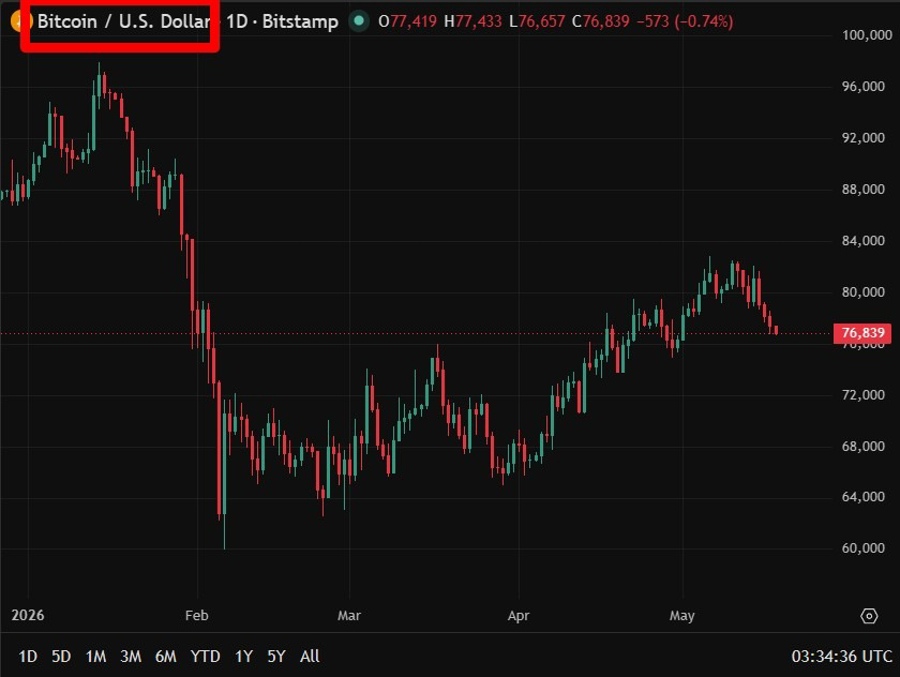
Bitcoin slipped to its lowest in more than two weeks as risk appetite deteriorated across asset classes.