
There's quite a bit to break down from the decision earlier, with traders still digesting it all ahead of RBA governor Bullock's press conference at the bottom of the hour. In case you missed it: Reserve Bank of Australia raise its cash rate by 25 bps, as widely expected
The key thing is that they raised the cash rate from 3.85% to 4.10%. However, that only came about amid a 5-4 vote. It is as close of a split as you can get. And that says a lot considering that the Australian economy is already dealing with high inflation persistence domestically before the whole US-Iran conflict started. As a reminder, the RBA also raised its cash rate in February here.
The Australian dollar is keeping rather mixed on the day after a bit of a whipsaw on the decision. AUD/USD is now down 0.1% to 0.7060 levels with the near-term price action depicted below:
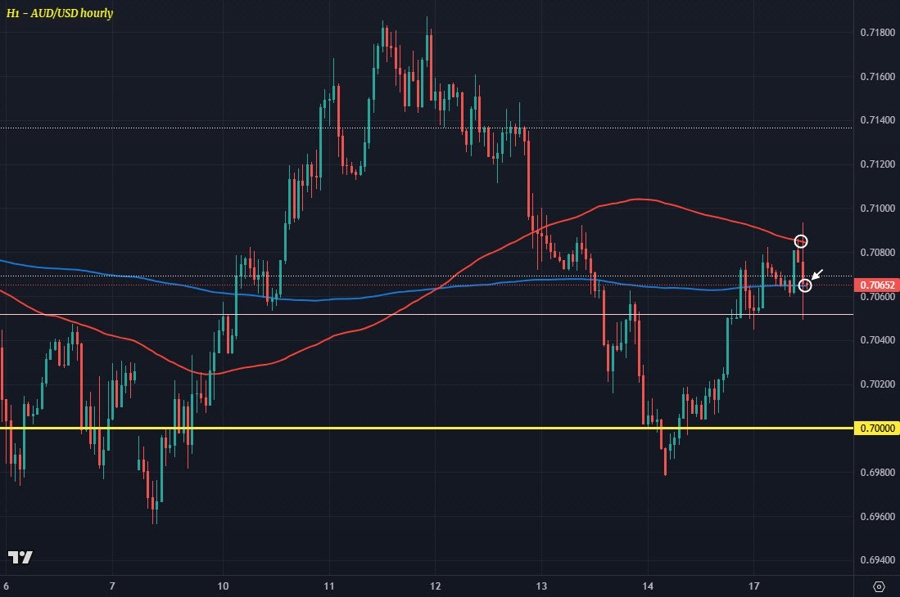
The whipsaw jump failed to hold a break above the 100-hour moving average (red line) at 0.7084. So, that is stopping buyers from running away with a more near-term bullish momentum. We're now caught in a bit of a tussle near the 200-hour moving average (blue line) at 0.7064 but the key line in the sand to any downside reach is the 0.7000 mark as defined on the daily chart. The latter has held all through the Middle East conflict so far this month and will continue to be a key line in the sand to any downside push.
Looking at the RBA decision, traders were pricing in ~82% odds of a rate hike already coming into today. So, the central bank definitely did deliver. However, the 5-4 vote split is arguably leaning more dovish especially if you consider the notion that policymakers were already having to deal with more stubborn and persistent inflationary pressures domestically before all this.
The US-Iran conflict even prompted this additional line by the RBA:
"Developments in the Middle East remain highly uncertain, but under a wide range of possible scenarios could add to global and domestic inflation. In light of these considerations, the Board judged that inflation is likely to remain above target for some time and that the risks have tilted further to the upside, including to inflation expectations."
So, the tighter vote split is arguably not as hawkish as most would hope for.
All that being said, the general language in the statement still reads that the RBA is prepared to deliver another rate hike if need be. However, they are not going to pre-commit to that. And rightfully so.
As things stand, no major central bank is going to prematurely tighten policy after just 18 days of the US-Iran conflict. The RBA is an exception in this move because of the fact that the domestic inflation backdrop was already triggering alarm bells. Even before all this, Bullock had already warned of the potential for rate hikes at the end of last year. And they duly delivered on that last month, before taking another proactive step today.
So, what's next?
I would argue that the threshold for the next rate hike would be much higher. And that will greatly depend on oil prices and how long the Middle East conflict drags on for. In other words, the latest rate hike here puts the RBA closer in terms of positional stance to other major central banks. However, the risk of them actually taking necessary action is still bigger than it would be for the likes of the ECB for example.
The market odds of a 25 bps rate hike in May are at ~38% now. As for the next full 25 bps rate hike, that is priced in for August. So, that will be the benchmark to work with in the weeks to come.
