FUNDAMENTAL OVERVIEW
USD:
The US dollar started the week on a positive note following rising tensions in the Strait of Hormuz. Yesterday, we got reports and denials about Iran firing on US ships in the Strait which gave the greenback a boost.
Trump said the US sank 6 Iranian fast boats while Iran denied it. Iran also launched a surprise attack against the UAE oil route that bypasses the Strait of Hormuz in Fujairah. This latest escalation is likely to keep the US dollar supported as the risk sentiment stays more on the defensive.
Trump has played things down for now, but the situation could worsen quickly. Overall, we are now in a consolidation phase as we await the next key development in this US-Iran stalemate.
The Fed is slowly abandoning the easing bias amid resilient US data and elevated energy prices. The reopening of the Strait could weigh on the greenback in the short-term as oil prices will likely crater and rate cut bets will increase.
After that though, the focus will quickly turn back to the Fed and the economic data. With the end of the war, the increase in economic activity could keep inflation higher for longer and eventually even require rate hikes to bring it sustainably back to the 2% target that the Fed has been missing since 2021.
AUD:
On the AUD side, the RBA raised the Cash Rate to 4.35% as widely expected today and signalled a pause. In fact, the central bank added in the statement the key passage "having raised the cash rate three times, monetary policy is well placed to respond to developments, and the Board is focused on its mandate to deliver price stability and full employment”.
The RBA has also revised its forecasts for the Cash Rate by matching the market expectations of two more rate hikes by year-end. Governor Bullock doubled down on the more neutral tone as she stated that “the cash rate level is now a bit restrictive” and “that gives us space to see how the conflict plays out”. Finally, she added that “with this rate hike, we have space to sit and see what happens”.
The market pared back some of the hawkish bets and it now see the next rate hike coming in September at the earliest.
AUDUSD TECHNICAL ANALYSIS – DAILY TIMEFRAME
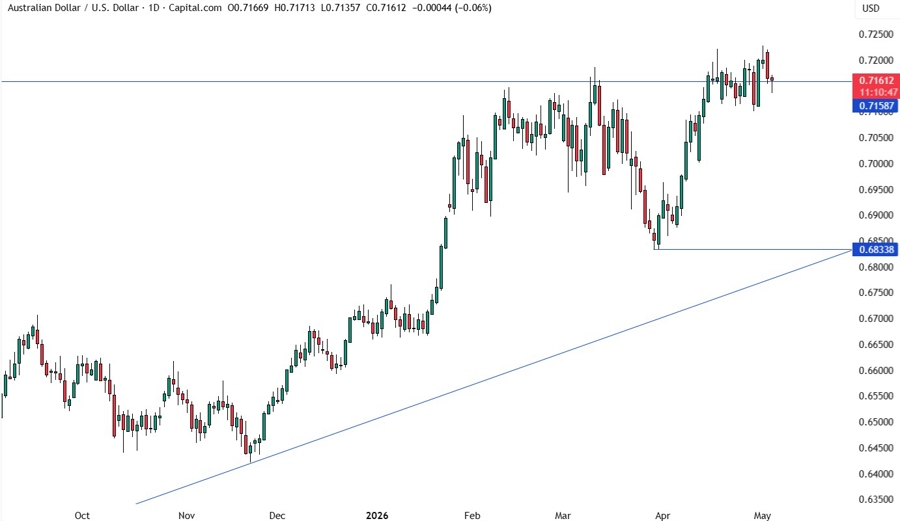
On the daily chart, we can see that AUDUSD is consolidating around the cycle highs as the US-Iran stalemate keeps the price action more rangebound. From a risk management perspective, the buyers would have a much better risk to reward setup around the major trendline to position for a rally into new highs. The sellers, on the other hand, will need a break lower to open the door for new lows.
AUDUSD TECHNICAL ANALYSIS – 4 HOUR TIMEFRAME
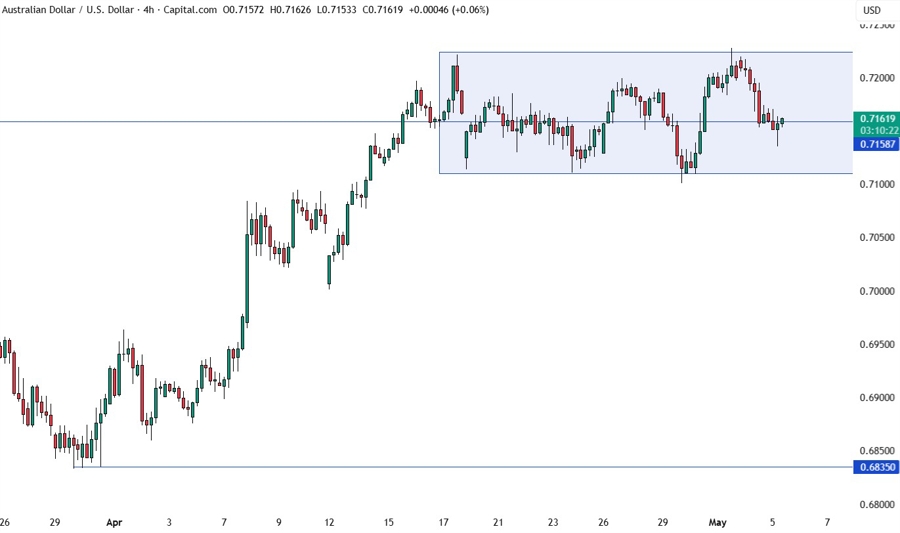
On the 4 hour chart, we can see more clearly the consolidation phase highlighted by the blue box. The market participants will likely continue to play this range by buying at support and selling at resistance until we get a breakout on either side.
AUDUSD TECHNICAL ANALYSIS – 1 HOUR TIMEFRAME
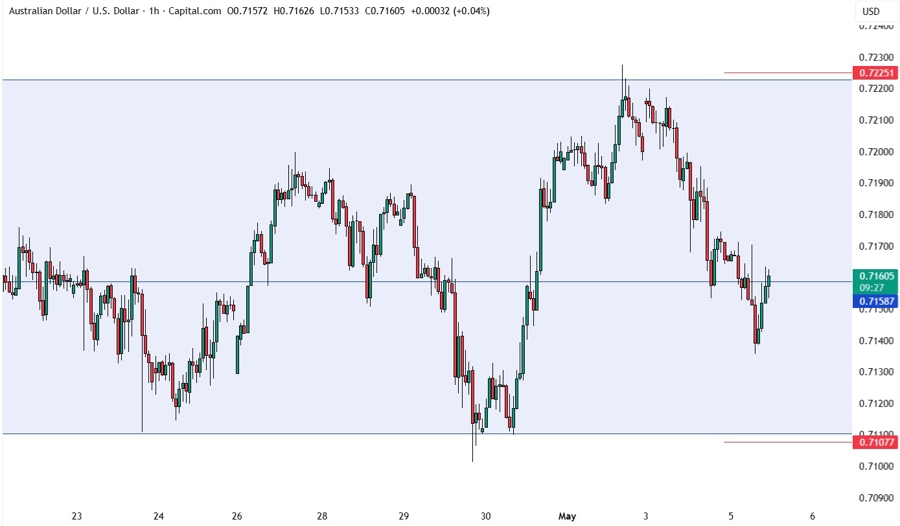
On the 1 hour chart, there’s not much else we can add here as the sellers will have a better risk to reward setup around the resistance, while the buyers will have it around the support. The red lines define average daily range for today.
UPCOMING CATALYSTS
Today we get the US ISM Services PMI and the US Job Openings data. Tomorrow, we have the US ADP report. On Thursday, we get the latest US Jobless Claims figures. On Friday, we conclude the week with the US NFP report and University of Michigan Consumer Sentiment survey.