Iran has dismissed Trump's rejection of its nuclear proposals as irrelevant, with a source telling Tasnim that negotiators draft plans for Iranian interests alone and that Trump's dissatisfaction is "naturally better."
Earlier:
- Iran said to table broad demands covering sanctions, war and security in U.S. talks
- Trump says Iran's proposals are "TOTALLY UNACCEPTABLE"
- Monday open indicative forex prices, 11 May 2026. USD bids.
Summary:
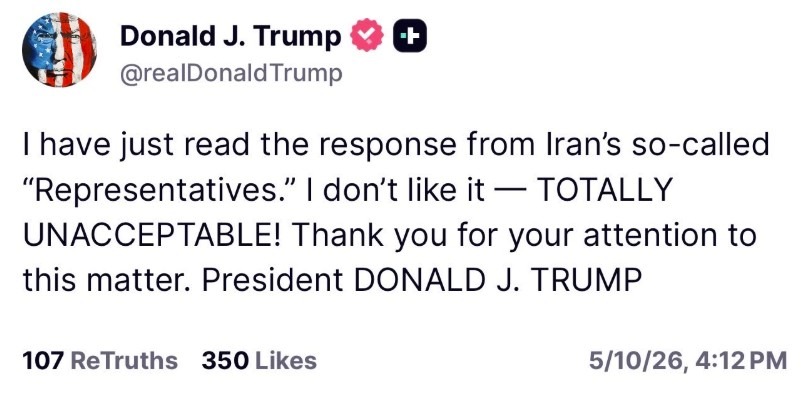
- Trump posted on Truth Social that he had read Iran's response and found it totally unacceptable, per the post visible in the screenshot
- An Iranian source told Tasnim that Trump's reaction to Iran's response does not matter at all
- The same source stated that no one in Iran drafts negotiating plans with the aim of pleasing Trump, per Tasnim
- The source added that Iran's negotiation team should only draft plans in the interests of the Iranian nation
- The source concluded that if Trump is not satisfied with Iran's response, that outcome is naturally better, per Tasnim citing an informed source
- All Iranian commentary originates from Tasnim, a state-linked outlet, citing a single unnamed source, and has not been independently verified
Donald Trump publicly rejected Iran's nuclear negotiating proposals on May 11, declaring them totally unacceptable in a post on Truth Social, as an Iranian source fired back through state-linked media to say that Trump's reaction carried no weight whatsoever with Tehran's negotiating team.
Trump's post, brief and characteristically blunt, said he had read the response from what he called Iran's so-called representatives and found it unacceptable, signing off with his full title in capital letters. The post attracted hundreds of re-truths and drew immediate attention given the sensitive state of the negotiations, which had been the subject of earlier reporting on Iran's proposed draft text covering sanctions relief, security guarantees and an end to hostilities.
Iran's response came rapidly and in pointed terms. A source cited by Tasnim said Trump's reaction to Iran's position does not matter at all, a formulation that went well beyond standard diplomatic pushback. The same source stated that Iran's negotiators do not and should not draft proposals with any consideration for what would satisfy the U.S. president, insisting that the negotiating team's sole obligation is to protect the rights and interests of the Iranian people.
Most strikingly, the source suggested that Trump's dissatisfaction with Iran's position is not merely acceptable but preferable, framing his displeasure as a form of validation rather than a setback. That framing, whether reflecting genuine Iranian confidence or a posture adopted for domestic consumption, signals that Tehran is not inclined to soften its demands in response to public pressure from Washington.
The exchange illustrates how quickly the diplomatic atmosphere can shift when both sides resort to public channels rather than quiet negotiation. The combination of Trump's blunt rejection and Iran's contemptuous response raises the prospect of a serious stall in the talks. As with the earlier reporting on Iran's draft proposals, the Tasnim material originates from a single unnamed source at a state-linked outlet and should be read with appropriate caution, though the Trump Truth Social post is a matter of public record.
--
The open defiance from Tehran, delivered through a state-linked channel, significantly raises the probability of a near-term breakdown in U.S.-Iran nuclear talks, which would dash any near-term prospect of sanctioned Iranian crude returning to market. Crude traders had begun pricing in a slim probability of sanctions relief following earlier reports of Iran's proposed text; this exchange hardens the risk premium. The tone from both sides, Trump's public rejection and Iran's dismissal of his reaction as irrelevant, suggests the gap between the two positions is wider than diplomatic language had previously implied. A collapse in talks would sustain the existing sanctions architecture on Iranian oil exports and remove a potential bearish supply overhang from the market.