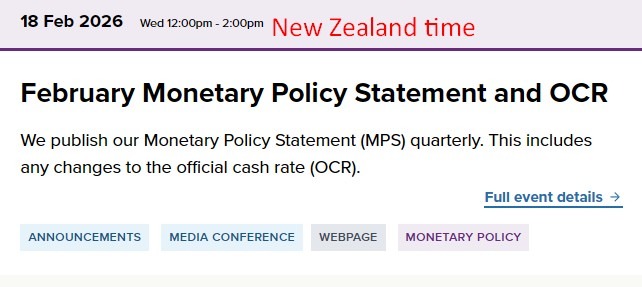
Westpac expects the RBNZ to hold rates steady while modestly bringing forward its first projected hike, without signalling a more aggressive tightening path.
Summary:
RBNZ expected to hold OCR at 2.25% at its February 18 meeting
First hike forecast brought forward to Dec 2026
Inflation acknowledged as too high
Forecasts still point to gradual disinflation
Messaging likely to remain dovish
The Reserve Bank of New Zealand is expected to keep its policy settings unchanged at its February meeting, while modestly bringing forward the timing of its first projected rate increase, according to a new research note from Westpac.
Westpac expects the RBNZ to leave the Official Cash Rate at 2.25%, while signalling that the first hike could arrive in December 2026, slightly earlier than previously projected. Such a shift would imply only a marginal upward revision to the Bank’s average OCR forecast for the December quarter, rather than a material change in the policy outlook.
The bank anticipates policymakers will acknowledge recent signs of stronger economic momentum and a more supportive global backdrop, while continuing to emphasise that inflation remains above target. However, Westpac argues the RBNZ is unlikely to lean aggressively hawkish in its messaging.
Instead, the central bank is expected to highlight ongoing excess capacity in the economy, tighter financial conditions, and easing price pressures from food and fuel costs. These factors are likely to underpin a forecast path showing inflation gradually moving back toward the 2% midpoint of the target band, reducing the need for a rapid return to more neutral interest rate settings.
Looking further ahead, Westpac sees scope for the RBNZ to revise up its June 2027 OCR forecast by around 40–50 basis points, to roughly 2.85–3.0%, from the 2.45% track published in November. Even so, this would still represent a cautious and gradual tightening profile rather than a decisive pivot.
Overall, Westpac expects the RBNZ to avoid “scaring the horses” by pushing back aggressively against market pricing for future rate increases. Instead, policymakers are likely to strike a relatively dovish tone, reinforcing a view that any eventual tightening cycle will be measured and data-dependent.