I posted on this earlier, ICYMI:
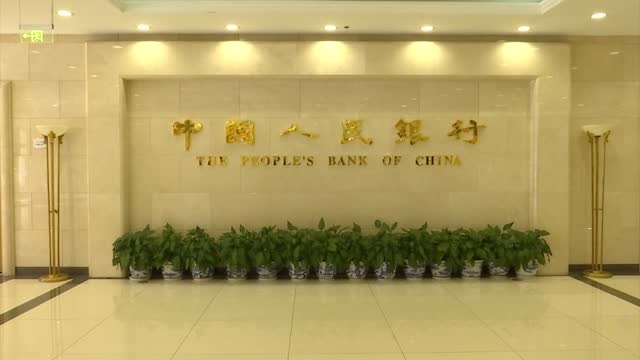
The People's Bank of China is due to set its Loan Prime Rate on Wednesday, with markets widely expecting both the one-year and five-year tenors to remain unchanged for a twelfth consecutive month. The one-year LPR, the benchmark for most corporate and household lending, has been held at 3.0% since May 2025, while the five-year rate, the key reference for mortgage pricing, has sat at 3.5% for the same period.
While the LPR remains the formal benchmark that directly shapes borrowing costs across China's real economy, its status within the PBOC's own policy architecture has decisively shifted. The central bank now treats the seven-day reverse repo rate as its primary policy instrument, a change formally signalled in mid-2024 when PBOC Governor Pan Gongsheng indicated that short-term open market operations would serve as the main lever for guiding monetary conditions, with the LPR and the Medium-term Lending Facility taking supporting roles.
The seven-day reverse repo rate is the rate at which the PBOC temporarily buys securities from commercial banks, injecting short-term liquidity into the interbank market, with an agreement to sell them back after seven days. Because it is (well, can be) adjusted in daily open market operations, it gives policymakers far more precise and timely control over funding conditions than the LPR, which is set once a month based on submissions from a panel of 18 designated commercial banks. Those submissions are themselves anchored to what the banks have bid for PBOC liquidity, meaning the reverse repo rate effectively feeds through to the LPR, reinforcing the hierarchy.
The reverse repo rate currently stands at 1.4%, a level it has held since 9 May 2025, when the PBOC cut it by 10 basis points from 1.5%. That move was part of a broader easing package that also brought the one-year LPR down from 3.1% to 3.0% and the five-year LPR from 3.6% to 3.5%, alongside a 50-basis-point reduction in the reserve requirement ratio and a cut to Housing Provident Fund loan rates. It has not moved since, and officials are seen as having limited appetite for further reductions, with concerns that deeper cuts could squeeze bank margins and put unwanted pressure on the yuan.
The LPR framework itself was introduced in August 2019, when the PBOC designated it the new lending benchmark for new bank loans to households and businesses, replacing the central bank's older administered one-year lending rate. That reform was designed to improve the transmission of monetary policy into real-economy borrowing costs. The latest evolution, elevating the reverse repo rate above the LPR in the policy pecking order, represents a further step toward a more market-oriented framework closer in structure to those used by major Western central banks.
For now, the decision to hold rates reflects a careful balancing act. China's economy grew 5% in the first quarter of 2026, hitting the top of the government's annual target range of 4.5% to 5%, reducing immediate pressure to ease. At the same time, escalating Middle East tensions have pushed global oil prices sharply higher, importing inflationary pressure that complicates the case for cuts. Factory-gate prices turned positive for the first time in more than three years in March, rising 0.5% year on year, while consumer inflation logged its biggest jump in over three years in February before easing slightly. The PBOC has signalled it intends to keep policy "supportive" and "moderately loose" but is in no rush to pull the trigger on fresh rate reductions.