RBNZ seen on hold as it navigates oil-driven inflation shock while signalling patience on policy tightening.
- Due at 0200 GMT / 2200 US Eastern time
Summary:
- RBNZ expected to hold OCR at 2.25% amid energy-driven inflation shock
- Policymakers likely to look through near-term inflation but watch for persistence
- Communication to balance avoiding overtightening vs maintaining inflation credibility
- Domestic slack seen limiting second-round inflation risks
- No new forecasts, but guidance may hint at higher inflation and weaker growth
- Internal MPC split likely on inflation persistence and policy path
- Market pricing for multiple hikes seen as excessive; Westpac expects just one
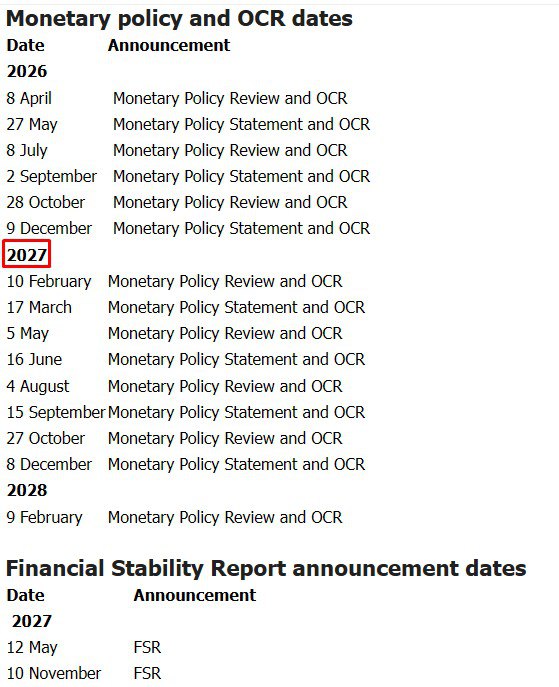
The Reserve Bank of New Zealand is widely expected to leave the Official Cash Rate unchanged at 2.25% at its April 8 Monetary Policy Review, according to Westpac, with policymakers opting for caution as they assess the inflation shock stemming from higher global energy prices.
The central bank is likely to signal continuity in its policy approach, closely reflecting recent guidance from Governor Breman. That guidance emphasised a willingness to “look through” the immediate, first-round impact of higher oil prices on inflation, while remaining alert to any signs that those price pressures become embedded in wages and broader pricing behaviour. In effect, the Bank is expected to tolerate a temporary spike in headline inflation but stand ready to tighten policy if second-round effects threaten to push inflation persistently above target.
The communication challenge for the Monetary Policy Committee (MPC) will be to strike a careful balance. On one hand, the Bank will want to avoid triggering an unnecessary tightening in financial conditions by overreacting to what is fundamentally a supply shock. On the other, it must maintain credibility by reinforcing its readiness to act if inflation expectations begin to drift higher over the medium term.
Much of the uncertainty centres on the duration and severity of the ongoing Middle East conflict, which is driving the energy shock. A prolonged disruption would likely deepen supply chain damage and sustain upward pressure on prices, increasing the risk of persistent inflation. However, domestic conditions in New Zealand may act as a mitigating factor. The economy is still operating below capacity, and recent GDP data has been soft, suggesting businesses may struggle to fully pass through higher costs without dampening demand—potentially limiting second-round inflation effects.
While no updated forecasts are expected at this meeting, the RBNZ may offer early signals about its evolving outlook ahead of the May Monetary Policy Statement. That could include acknowledging stronger near-term inflation and weaker growth prospects. Westpac, for example, expects inflation to peak around 4.1% this year while growth slows to roughly 1.9%, reflecting the drag from higher energy costs and weaker confidence.
The meeting will also feature the RBNZ’s first post-decision press conference, part of a broader push to enhance transparency. Meanwhile, the Record of Meeting is likely to reveal differing views within the MPC, particularly around how persistent inflation risks may become and how quickly policy should respond.
Overall, the Bank is expected to lean against current market pricing for multiple rate hikes in 2026, signalling a more measured path. Westpac continues to expect just one hike this year, with more substantial tightening deferred until 2027 once the economic impact of the energy shock becomes clearer.