Summary:
- RBNZ expands post-MPR communication with multiple media appearances
- Governor Breman scheduled across domestic and global outlets
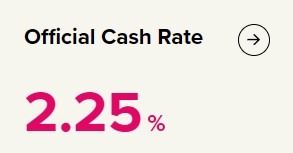
- Follows decision to hold OCR at 2.25% amid heightened uncertainty
- Aims to reinforce policy messaging and manage expectations
- Reflects need for clarity amid rising inflation and weaker growth
- Signals broader push toward transparency and engagement
RBNZ post-MPR media schedule
| Date | Outlet | Programme | Time (NZT) | Notes |
|---|---|---|---|---|
| Wed, 8 Apr 2026 | Newstalk ZB | Heather du Plessis-Allan Drive | ~5:00–5:15pm | First reaction post-MPR decision |
| Thu, 9 Apr 2026 | Radio NZ | Morning Report | 6:00–9:00am | Broad national audience |
| Thu, 9 Apr 2026 | Newstalk ZB | Mike Hosking Breakfast | ~7:30–7:45am | High-profile domestic interview |
| Thu, 9 Apr 2026 | Bloomberg | The Asia Trade | ~12:00–12:20pm | Global markets focus |
| Sun, 12 Apr 2026 | TVNZ | Q+A | 9:00–10:00am | Longer-form policy discussion |
The Reserve Bank of New Zealand is stepping up its post-decision communication strategy following its April 8 Monetary Policy Review, with Governor Anna Breman scheduled for a series of high-profile media appearances in the days after the rate decision.
The expanded media schedule comes after the RBNZ opted to hold the Official Cash Rate at 2.25%, while flagging a significantly more uncertain outlook driven by the Middle East conflict and associated energy shock. Against that backdrop, the central bank appears keen to reinforce its policy message and manage market expectations more actively through direct engagement.
Governor Breman will begin with a domestic audience on the evening of April 8, speaking with Newstalk ZB shortly after the policy decision. This will be followed by a busy slate of interviews on April 9, including appearances on Radio NZ and Newstalk ZB breakfast programs, before addressing a global financial audience via Bloomberg later that day. The communication push will culminate with a weekend appearance on TVNZ’s Q+A program.
The breadth of outlets, spanning local radio, international financial media and weekend political programming, suggests a deliberate effort to reach multiple audiences, including households, businesses, and global investors. This reflects the heightened uncertainty currently facing the economy and the need for clear guidance on how the RBNZ is interpreting the evolving inflation and growth outlook.
The timing is notable. With inflation expected to rise in the near term while growth weakens, the RBNZ faces a delicate balancing act. Policymakers must communicate that they are willing to “look through” temporary energy-driven inflation while remaining vigilant to the risk of more persistent price pressures. Any misinterpretation could lead to an unwanted tightening in financial conditions or a drift in inflation expectations.
The expanded communication approach also aligns with a broader shift toward transparency, with the introduction of post-MPR press conferences and more frequent engagement with the media. In the current environment, where markets are highly sensitive to geopolitical developments and policy signals, this strategy is likely aimed at anchoring expectations and reducing volatility.
Ultimately, the increased visibility of the Governor underscores the importance the RBNZ places on communication as a policy tool in its own right, particularly at a time when the outlook is unusually uncertain and risks are skewed in both directions.