Philadelphia Fed President Paulson said current policy is appropriate and putting downward pressure on inflation, but called it healthy that markets are now pricing in scenarios of an extended hold or further rate hikes.
Summary: The following is drawn from Paulson's prepared remarks to an Atlanta Fed conference on Tuesday:
- Paulson said current monetary policy is mildly restrictive and appropriate, helping to contain both tariff-related price pressures and inflation stemming from the Middle East conflict
- She said inflation remains too high and that rate cuts would only be appropriate if there is renewed progress on bringing inflation down, provided the labour market remains in balance
- Paulson said it is healthy that market participants are now pricing in scenarios where rates remain on hold for an extended period or where further tightening becomes necessary, describing this as aligned with her own thinking
- She played down the risk of a sharper inflation problem, noting that longer-term inflation expectations remain contained and growth is running around potential
- The Fed is expected to hold rates steady at 3.50% to 3.75% at the June meeting, the first to be chaired by incoming Fed Chair Kevin Warsh, whose swearing-in is scheduled for Friday
Philadelphia Federal Reserve President Anna Paulson said on Tuesday that the current level of US interest rates is appropriate and continuing to exert downward pressure on inflation, but added that she considers it healthy for markets to be pricing in the possibility of an extended hold or further tightening, in a sign that the door to rate hikes has not been closed.
Speaking in remarks prepared for an Atlanta Fed conference, Paulson described monetary policy as mildly restrictive, a stance she said is helping to keep in check both the inflationary effects of tariffs and the price pressures flowing from the Middle East conflict. She was clear that this combination of factors justifies keeping policy where it is for now, but equally clear that the bar for rate cuts has risen considerably.
Paulson said cuts would only be appropriate if there is renewed and tangible progress on bringing inflation lower, and only if the labour market remains broadly in balance. In the meantime, she said the way markets have repriced the Fed's likely path over recent months, shifting from expecting cuts to considering hikes, largely mirrors her own assessment of the risks facing the US economy. She said she wanted to be clear that policy is in a good place, but that it would be wrong to dismiss the scenarios in which rates need to go higher.
On the broader inflation picture, Paulson was measured. Longer-term inflation expectations remain anchored, she noted, and growth is running around estimates of potential. Some households are feeling the strain of elevated prices, but her overarching read of the economy is one of resilience rather than distress.
The June meeting, at which the Fed is widely expected to hold rates steady at 3.50% to 3.75%, will be the first presided over by incoming Fed Chair Kevin Warsh, whose swearing-in is scheduled for Friday. Markets will be watching closely for any signal from Warsh on whether the hawkish tilt now visible across the Fed's regional presidents reflects the direction he intends to set at the top.
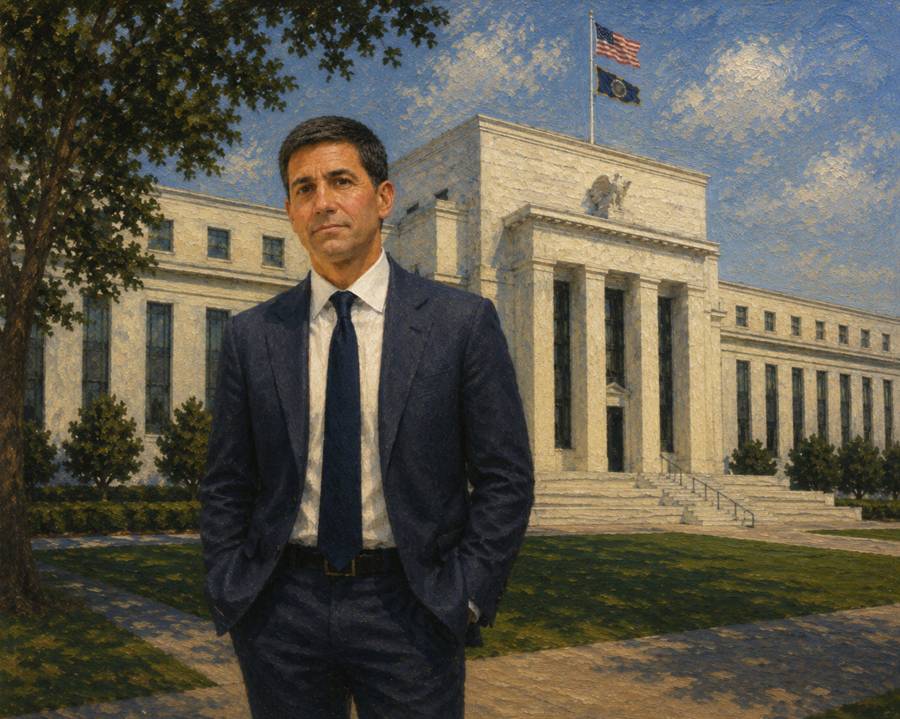
Warsh gets the big chair on Friday. Careful of what you wish for, eh?
---
Paulson's remarks reinforce the hawkish pivot now visible across the Federal Reserve, with the Philadelphia Fed president explicitly validating market pricing that has shifted from cuts to potential hikes over the course of 2026. The comment that it is "healthy" for markets to consider a prolonged hold or further tightening is as close to an endorsement of current market positioning as a Fed official is likely to offer without pre-committing to action. Combined with the imminent arrival of incoming Fed Chair Kevin Warsh, whose swearing-in is set for Friday, the June meeting takes on added significance as the first under new leadership. Any softening of the hawkish tone from Warsh could move markets sharply; any reinforcement of it would cement expectations of a higher-for-longer trajectory into the second half of 2026.