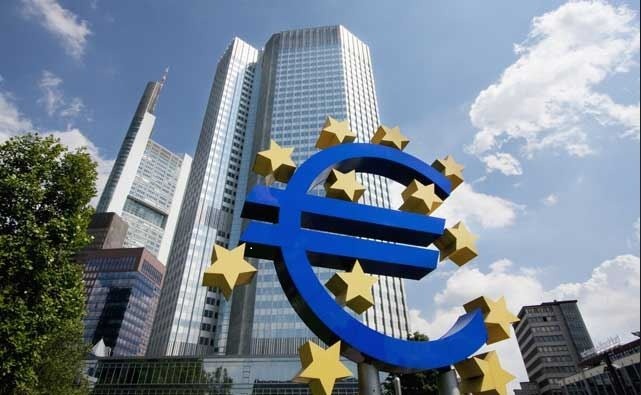
The ECB's first rate increase since 2023 was largely anticipated, but the upward revision to inflation forecasts and the explicit signal of a further September hike removes any residual dovish interpretation of the decision. European sovereign spreads and rate-sensitive sectors face renewed pressure as the market adjusts to a higher-for-longer plateau scenario through 2027. The euro may find near-term support on rate differentials, though the simultaneous downgrade to growth forecasts limits the currency's upside. With wage growth expected to remain contained and the price-wage spiral seen as unlikely, the ECB appears to be threading a narrow path between taming energy-driven inflation and avoiding a deeper growth shock.
---
The ECB raised its key rate 25bp to 2.25% and revised up its 2026 inflation forecast to 3.0%, with BNP Paribas expecting one further hike in September before rates plateau through 2027.
Summary:
- The ECB raised its benchmark rate by 25 basis points to 2.25%, its first increase since 2023, as eurozone inflation rose to 3.2% in May from 3.0% in April driven by the Middle East conflict
- The ECB revised its 2026 inflation forecast up to 3.0% from 2.6% and its 2027 forecast to 2.3% from 2.0%, while cutting its growth outlook to 0.8% this year and 1.2% next year
- Forward-looking price indicators including European Commission surveys and PMIs confirm the energy shock is transmitting gradually to other sectors, though the pass-through remains less severe than in 2022
- A price-wage spiral is considered unlikely for now, with compensation per employee growth expected to slow to 3.2% in 2026 and stabilise at that level through 2027-2028
- BNP Paribas maintains a forecast of one additional 25 basis point hike, most likely in September, followed by a rate plateau in 2027
The European Central Bank raised its key interest rate by 25 basis points to 2.25% at its latest meeting, marking its first hike since 2023 and signalling that the inflationary fallout from the Middle East conflict has shifted the policy calculus decisively back toward tightening.
Eurozone inflation accelerated to 3.2% in May from 3.0% in April, with the ECB attributing the move to a more pronounced impact of the war on energy and related costs. The bank revised its inflation forecasts upward across the projection horizon, now expecting the rate to average 3.0% in 2026, compared with its March estimate of 2.6%, and 2.3% in 2027, up from 2.0%. Growth forecasts were trimmed in tandem, with the ECB now projecting eurozone expansion of 0.8% this year and 1.2% next year, against prior estimates of 0.9% and 1.3% respectively.
BNP Paribas said the outcome was consistent with its existing scenario and that one further rate increase of 25 basis points remains its central call, with September the most likely timing. The bank expects rates to plateau through 2027 thereafter.
On the inflation dynamics driving the ECB's posture, BNP Paribas noted that forward-looking price indicators, including European Commission surveys and purchasing managers indices, confirm the energy shock is gradually feeding into other sectors of the economy. However, the bank stressed that the transmission remains considerably less intense than the episode seen in 2022 and has so far only marginally affected finished goods prices.
Critically, BNP Paribas assessed the risk of a price-wage spiral as unlikely in the current cycle. The ECB itself projects compensation per employee growth to slow to 3.2% in 2026 and to stabilise at that level through 2027 and 2028, a trajectory the bank considers compatible with its 2% inflation target over the medium term. That contained wage outlook is a key reason BNP Paribas sees the tightening cycle ending after one more move rather than extending into a more aggressive sequence.