ECB policymaker Francois Villeroy de Galhau tells CNBC the bank will do what is necessary to return inflation to 2%, as eurozone prices hit 3% on Iran war energy shock.
Summary: Source: CNBC interview with Bank of France Governor Francois Villeroy de Galhau
- Bank of France Governor Villeroy de Galhau told CNBC the ECB will act as much as necessary to bring inflation back to its 2% medium-term target
- Eurozone inflation rose to 3% in April, up from 2.6% in March, after sitting just below the ECB's target at 1.9% before joint US-Israeli strikes on Iran began on February 28
- The ECB held rates at 2% last month due to insufficient data on second-round inflation effects, including underlying price pressures, inflation expectations and wage growth
- Markets are pricing in a rate hike at the June 11 ECB meeting, with at least 50 basis points of tightening expected by end-year, per LSEG data
- Germany's 10-year Bund yield has risen around 32 basis points since the conflict began, reflecting investor expectations of higher inflation and tighter policy
- Bundesbank President Nagel said oil price volatility has left the ECB navigating between its baseline and adverse scenario; Latvia's Kazaks warned of a potential layering of economic shocks
The European Central Bank has signalled it stands ready to raise interest rates as eurozone inflation climbs above target, driven by the energy shock stemming from the ongoing conflict in the Middle East.
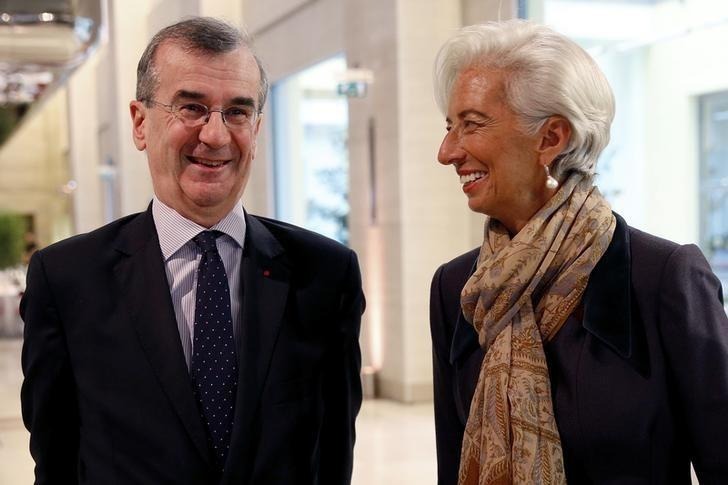
Bank of France Governor Francois Villeroy de Galhau told CNBC that the ECB would do what is necessary as an independent central bank to return inflation to its 2% medium-term objective. Speaking on the sidelines of an event in Singapore, he said sovereign debt markets could be assured of the central bank's commitment, and that policymakers would act as much as necessary to prevent price pressures from becoming entrenched.
Eurozone consumer prices rose to 3% in April, up from 2.6% in March, after having briefly dipped below the ECB's target to 1.9% in the weeks before joint US-Israeli military strikes on Iran began on February 28. The effective closure of the Strait of Hormuz has sent oil prices sharply higher, with gasoline, diesel and jet fuel costs surging across Europe in recent months, prompting government intervention in some countries and raising concerns about flight cancellations this summer.
Europe's exposure to the shock is acute. As a major net energy importer, the continent is especially sensitive to sustained disruptions in crude supply, and policymakers have been candid about the risks of first-round energy price effects feeding through into broader price pressures.
Villeroy de Galhau acknowledged that the ECB held its key rate steady at 2% at its most recent meeting due to a lack of sufficient data on potential second-round effects, including underlying inflation, household and business inflation expectations, and wage dynamics. He stressed, however, that vigilance was essential, and that the data available so far pointed primarily to first-round effects rather than a broader inflationary spiral.
Other Governing Council members have echoed the cautious but hawkish tone. Bundesbank President Joachim Nagel said oil price volatility had left the ECB caught between its baseline and adverse economic scenarios, while Latvia's central bank governor Martins Kazaks warned of a potential stacking of economic shocks hitting simultaneously. ECB President Christine Lagarde had previously indicated the bank was prepared to act even if an inflation overshoot proved temporary, cautioning that leaving a significant deviation from target entirely unaddressed carried its own communication risks.
---
Markets are overwhelmingly pricing in an ECB rate hike at the June meeting, with most traders anticipating at least 50 basis points of tightening by year-end. German Bund yields have surged around 32 basis points since the conflict began, with other eurozone sovereign bonds seeing even sharper moves, as investors reprice for higher inflation and a more aggressive policy response. The effective closure of the Strait of Hormuz remains the dominant upside risk to energy prices, with knock-on effects feeding through to gasoline, diesel and jet fuel across the continent. Europe's structural position as a net energy importer amplifies its vulnerability to sustained oil price pressure relative to other major economies.