Fed Vice Chair Jefferson says monetary policy is well positioned to respond to developments but has not prejudged June's FOMC meeting, flagging upside inflation risks and energy shock exposure.
Summary: Source: Federal Reserve Vice Chair Philip Jefferson, speech to the 2026 Bank of Japan-Institute for Monetary and Economic Studies Conference in Tokyo, 27 May 2026
- Jefferson said the current federal funds rate range of 3.50% to 3.75% leaves monetary policy well positioned to respond to incoming data and evolving conditions
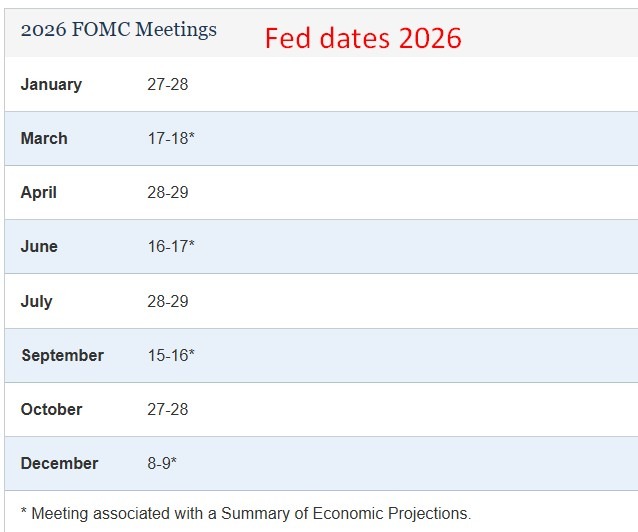
- He has not prejudged the outcome of the June 16-17 FOMC meeting and said he looks forward to engaging colleagues on the appropriate policy path
- Inflation risks are tilted to the upside, though Jefferson expects tariff and energy-driven price pressures to wane later in the year
- The US is not immune to oil-related energy shocks, which Jefferson identified as a downside risk to growth and an upside risk to inflation
- Recent economic activity has been solid and the labor market stable, though Jefferson flagged downside risks to employment conditions
- Jefferson's remarks were his first since the swearing in of new Fed Chair Kevin Warsh last Friday
Federal Reserve Vice Chair Philip Jefferson said on Wednesday that monetary policy is well positioned to respond to whatever the economy delivers, while stopping short of any signal on the direction of the next move and explicitly leaving the outcome of June's rate-setting meeting open.
Jefferson delivered the remarks in a speech to the 2026 Bank of Japan-Institute for Monetary and Economic Studies Conference in Tokyo, his first public comments since Kevin Warsh was sworn in as Fed chair last Friday, succeeding Jerome Powell, who remains at the central bank as a governor.
The current federal funds rate range of 3.50% to 3.75%, Jefferson said, gives the Fed the flexibility it needs to respond to incoming data and the evolving balance of risks. On the June 16-17 Federal Open Market Committee meeting, he was deliberate about keeping options open, saying he had not prejudged the outcome and was looking forward to engaging with colleagues on the policy path best suited to achieving the Fed's dual mandate.
Jefferson placed inflation squarely at the centre of his risk assessment. He said risks to the inflation outlook are tilted to the upside and reaffirmed his commitment to returning inflation to the 2% target. He does expect price pressures to ease later in the year as the impact of tariffs and energy costs fades, but he was careful to frame that as a baseline rather than a certainty.
On energy, Jefferson acknowledged directly that the United States, despite being a substantial domestic producer, is not fully insulated from the disruptions the Iran war (latest ceasefire breach here) has created in global oil markets. He described the energy shock as a downside risk to growth and an upside risk to inflation, a two-sided assessment that reflects the bind facing policymakers as the conflict in the Middle East continues.
On the broader economy, Jefferson's assessment was measured. Recent economic activity has been solid and the labor market stable, characterised by low rates of both hiring and firing. However, he noted that risks to employment are tilted to the downside, a signal consistent with the cautious tone other Fed officials have struck this week, including Governor Cook, who also flagged labor market vulnerability in her remarks on Wednesday.
Warsh, who expressed interest in cutting rates as he pursued the Fed chair role, is widely expected to face difficulty delivering any reduction this year given persistent inflation pressures tied to import tariffs and the war.
--
Jefferson's comments reinforce the broader Fed message that has emerged this week: the current rate setting is appropriate for now, but the bar for cuts is high and a hike remains a live option if inflation does not cooperate. His explicit acknowledgment that the US is not immune to oil-related energy shocks ties Fed policy directly to Hormuz developments, giving crude price moves an additional read-through to rate expectations. The deliberate non-commitment on June adds no pressure in either direction, leaving the meeting genuinely open data dependent.