
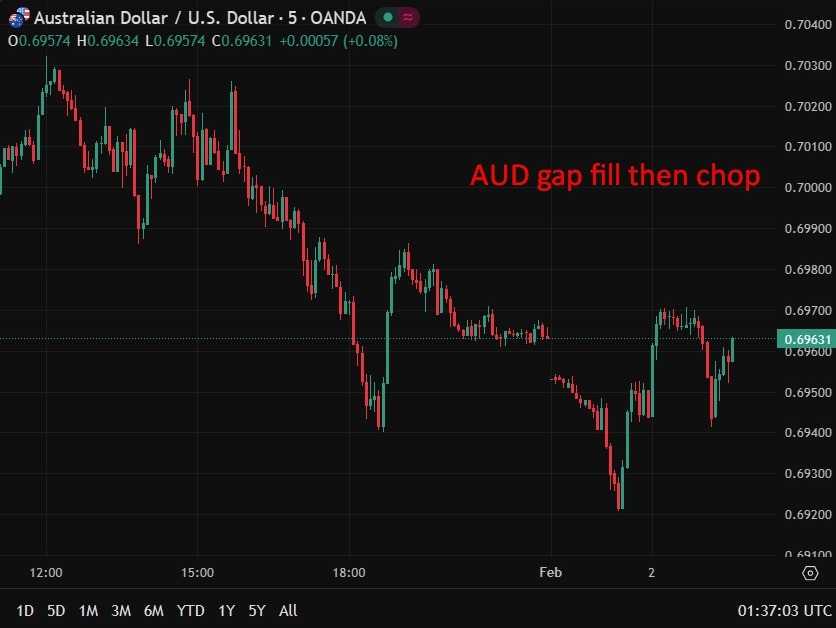
Australian job ads surged in January, signalling renewed labour demand and reinforcing expectations the RBA may need to tighten policy.
Summary:
Australian job advertisements surged 4.4% m/m in January, snapping a six-month run of declines and marking the strongest monthly gain in four years.
The rebound adds to evidence the labour market remains resilient despite higher interest rates and slowing growth elsewhere.
Job ads are only modestly lower than a year ago and remain well above pre-pandemic levels.
Hiring gains were concentrated in consumer-facing sectors, suggesting demand has not cooled materially.
The data reinforces market expectations that the RBA may well hike tomorrow, February 3, amid sticky inflation and labour tightness.
Australia’s labour market showed renewed momentum at the start of the year, with private-sector data pointing to a sharp rebound in hiring demand that underscores the economy’s resilience and complicates the near-term policy outlook for the central bank.
Job advertisements rose 4.4% in January, reversing a 0.8% decline in December and ending a six-month downward streak, according to data compiled by Australia and New Zealand Banking Group and employment platform Indeed. The January increase was the strongest monthly rise in four years, signalling that employers have become more willing to add staff after a prolonged period of caution.
In level terms, job ads were just 3.2% lower than a year earlier, a relatively modest pullback. Importantly, advertised job numbers remain 11.8% above pre-pandemic levels, highlighting how elevated labour demand continues to be relative to historical norms.
The rebound was led by consumer-facing sectors such as retail, customer service and food services, areas that are typically sensitive to shifts in household spending. The strength in these categories suggests that demand conditions have not softened as much as policymakers might have hoped, even as higher borrowing costs squeeze real incomes.
For markets, the timing of the data is critical. The strong jobs print lands just ahead of the next Reserve Bank of Australia policy decision, with investors increasingly convinced that inflation risks remain tilted to the upside. Market pricing implies roughly a three-in-four chance of a 25bp rate hike, reflecting concerns that resilient labour demand could sustain wage growth and slow the return of inflation to target.
While job advertisements are not a direct measure of employment outcomes, they are widely viewed as a forward-looking indicator of labour market conditions. The January surge suggests that the expected cooling in hiring demand has been delayed, raising the risk that labour market tightness persists longer than anticipated.
From a policy perspective, the data strengthens the argument for caution. Even if the RBA opts to hold rates steady in the near term, the combination of firmer inflation readings and renewed labour demand boosts the scope for hiking ahead. RBA policymakers may need to maintain a hawkish lean until clearer signs of slack emerge in the jobs market.
Overall, the January job ads rebound reinforces a key theme of the Australian outlook: growth may be slowing, but the labour market remains a pillar of strength, complicating the inflation fight and keeping rate expectations elevated.
-
Coming up on February 3:

That 0330 is GMT, which is 2230 US Eastern time. Reserve Bank of Australia Governor Bullock news conference is an hour later.



