Summary:
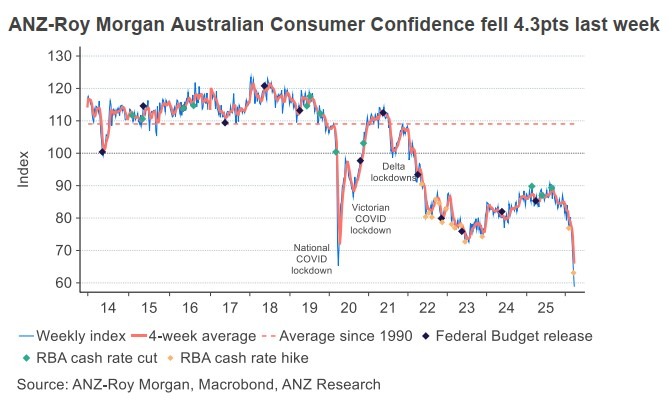
- ANZ-Roy Morgan consumer confidence hits fresh record low
- Inflation expectations surge to a new record high
- Households increasingly pessimistic on economic outlook
- Cost-of-living pressures remain dominant concern
- Weak sentiment persists despite resilient labour market
- Data reinforces upside inflation risks for RBA
Australian consumer confidence has fallen to another record low, while inflation expectations have climbed to a new record high, underscoring the growing pressure on households and the challenge facing policymakers.
The latest ANZ-Roy Morgan survey showed sentiment deteriorating further, with consumers increasingly pessimistic about both their personal financial outlook and broader economic conditions. Persistent cost-of-living pressures and higher interest rates continue to weigh heavily on households, driving confidence deeper into negative territory.
At the same time, inflation expectations surged to their highest level on record, marking a significant development for the Reserve Bank of Australia. The rise suggests households increasingly expect price pressures to remain elevated, raising the risk that inflation becomes more entrenched through changes in behaviour such as wage demands and spending patterns.
The jump in expectations comes amid a renewed energy-driven inflation shock linked to the Middle East conflict, adding to existing domestic price pressures. This combination is particularly concerning for policymakers, as second-round effects — where higher costs feed into broader prices — become more likely when expectations shift higher.
Despite the sharp deterioration in sentiment, the labour market remains relatively resilient, creating a disconnect between current economic conditions and consumer perceptions. However, persistently weak confidence poses downside risks to household consumption, a key pillar of economic growth.
For the RBA, the data presents a clear policy tension. While weak consumer confidence would typically argue for caution, the surge in inflation expectations strengthens the case for maintaining a restrictive stance. With the central bank already signalling it is not looking to cut rates, the focus remains on ensuring inflation expectations do not become unanchored.