Summary:
- ANZ expects the RBNZ to begin hiking earlier and more aggressively, driven by rising inflation risks from energy and persistent price pressures, even as the domestic economy remains uneven.
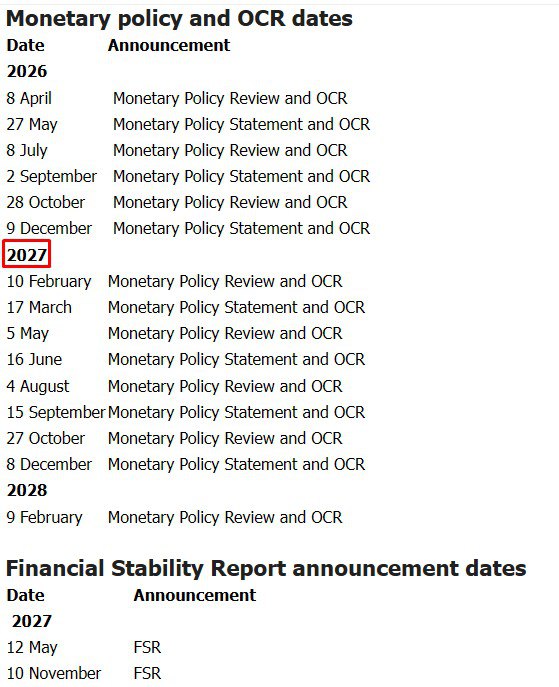
ANZ has revised its outlook for New Zealand monetary policy, now expecting the Reserve Bank of New Zealand (RBNZ) to begin a tightening cycle earlier and move more aggressively than previously anticipated. The bank now forecasts Official Cash Rate (OCR) hikes in July, September, and October, reflecting a shift toward a more persistent inflation backdrop and rising upside risks.
The revised profile marks a notable departure from earlier expectations that the RBNZ would remain on hold for longer. It also contrasts with the central bank’s own recent guidance, which has emphasised patience amid a still-fragile economic recovery. The RBNZ has held the OCR at 2.25% and previously signalled that policy could remain accommodative for some time, even as inflation sits slightly above its 1–3% target band.
However, the inflation outlook is becoming more complicated. Headline inflation is already running around 3.1%, and near-term projections point to a potential spike toward ~4% as energy costs rise due to the Middle East conflict. This external shock is feeding into tradables inflation and risks spilling over into broader price pressures, particularly if inflation expectations begin to drift higher.
At the same time, domestic conditions present a mixed picture. The economy is still in the early stages of recovery following aggressive easing since 2024, with household spending cautious, the housing market subdued, and labour market slack still evident. However, inflation expectations have begun to edge higher again, suggesting underlying price pressures may prove more persistent than previously thought.
Against this backdrop, ANZ’s call reflects a view that the RBNZ will need to act pre-emptively to prevent a re-acceleration in inflation, even if growth remains uneven. The implication is a more front-loaded tightening cycle, aimed at anchoring expectations and maintaining credibility.
---
Dates for the Reserve Bank of New Zealand this year and next"