At a glance:
Musk says China will dominate AI compute via power scale
Electricity, not chips, seen as key AI bottleneck
China cites infrastructure and energy advantages
Domestic chip capabilities accelerating
Beijing targets AI self-reliance by 2027
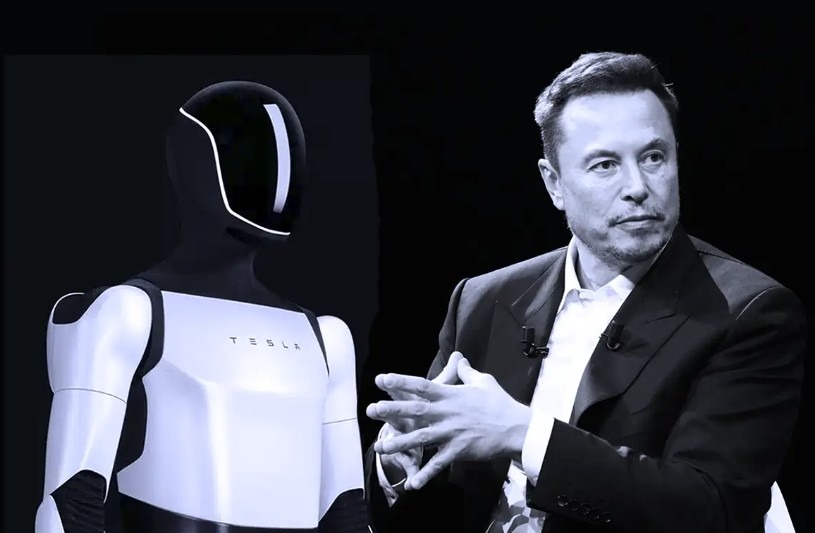
ICYMI, Elon Musk said China is on track to surpass all other countries in artificial-intelligence computing power, arguing that electricity generation, not chips, is becoming the primary constraint on scaling AI systems.
Speaking on the Moonshots with Peter Diamandis podcast, Musk said China’s ability to rapidly expand power generation gives it a decisive advantage in the global AI race. He suggested China could reach roughly three times the electricity output of the United States by 2026, enabling it to support the massive energy demands of AI data centres. Based on current trends, Musk said China is likely to “far exceed the rest of the world” in AI compute capacity, adding that while chips matter, China will ultimately “figure out the chips.”
Musk’s comments align with growing concerns in the US that power availability and grid constraints, rather than algorithms or hardware alone, are increasingly limiting AI deployment. Concentrated demand from hyperscale data centres and major technology firms has tightened electricity supply in several regions, slowing project expansion.
China responds
Chinese experts said Musk’s remarks reflect his personal assessment shaped by constraints faced in the US, rather than a simple China-US comparison. Zhou Mi, a senior researcher at the Chinese Academy of International Trade and Economic Cooperation, said China’s relative advantage lies in its power infrastructure and energy scalability, which provide a foundation for sustained growth in computing capacity.
Zhou added that China’s expanding renewable base, including large-scale wind and solar installations, supports long-term AI development by ensuring reliable electricity supply, a prerequisite for high-intensity computing workloads.
On semiconductors, Wei Shaojun, vice chairman of the China Semiconductor Industry Association, said external restrictions have accelerated domestic innovation. He noted progress in chip architecture, advanced packaging, system integration and AI accelerators, with Chinese GPUs increasingly deployed across training, inference and edge-computing use cases.
According to a 2025 Morgan Stanley report, says China's Global Times, China’s self-sufficiency rate in AI GPUs has risen sharply and is expected to continue climbing through 2027. Chinese authorities have outlined plans to secure core AI technologies and deepen industrial adoption by that timeframe, underscoring a strategic shift from pure hardware catch-up toward system-level innovation.