Summary
China raises minimum margin requirement to 100% from 80%
Reverses 2023 easing aimed at supporting markets
Applies only to new margin contracts
Authorities cite rising leverage and high liquidity
Move signals pre-emptive financial stability focus
China’s stock exchanges have moved to curb rising leverage, announcing a sharp increase in minimum margin requirements for new stock purchases as authorities seek to cool speculative activity without destabilising existing positions.
The Shanghai Stock Exchange, Shenzhen Stock Exchange and Beijing Stock Exchange said on January 14 that the minimum margin ratio for stock purchases will be raised to 100% from 80%, effectively reversing an easing measure introduced in 2023. The change was approved by the China Securities Regulatory Commission (CSRC).
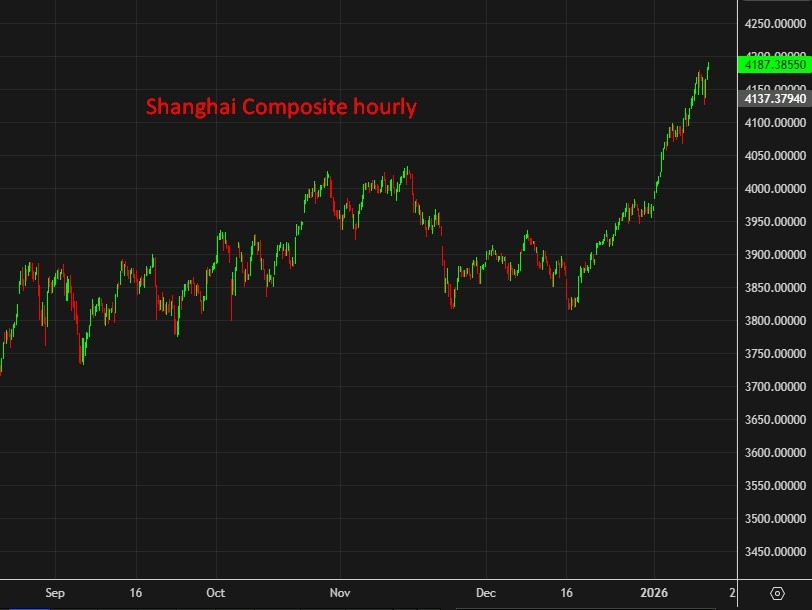
The exchanges framed the move as a “counter-cyclical adjustment,” pointing to a surge in financing activity and persistently high market liquidity. The decision signals growing official concern that leverage is building too quickly amid rising equity prices and improving risk appetite, particularly following recent policy support and stabilisation measures across China’s capital markets.
Crucially, the tightening applies only to new margin contracts. Existing margin positions, and extensions of those positions, will remain governed by the previous rules. That carve-out appears designed to limit forced deleveraging and reduce the risk of abrupt market dislocation, while still slowing the pace of new leveraged inflows.
The adjustment effectively requires investors entering new margin trades to fully fund stock purchases with their own capital, removing the ability to borrow against equity exposure under the margin system. While margin financing is not as dominant in China as in some developed markets, it remains a key channel for retail-driven momentum during periods of rising prices.
The move fits a familiar policy pattern: authorities allowing market momentum to build, then stepping in pre-emptively to lean against excesses rather than reacting after volatility spikes. By tightening conditions at the margin — literally — regulators appear intent on extending the rally’s lifespan by preventing leverage-fuelled distortions.
For markets, the near-term impact may be modest given the exemption for existing positions. However, the signal is clear: Beijing is increasingly alert to financial stability risks and is prepared to recalibrate support measures as sentiment improves, even as it continues to backstop broader market confidence.