Japan’s wholesale inflation cooled in February but rising oil prices from the Iran conflict threaten to push price pressures higher again.
Summary:
Japan’s corporate goods price index (CGPI) rose 2.0% y/y in February, below the 2.1% forecast.
Wholesale inflation slowed from January’s 2.3% rise, marking a third straight month of easing.
Government fuel subsidies helped offset rising commodity costs, cushioning price pressures.
Import prices jumped 2.8% y/y, the fastest pace since July 2024, reflecting a weaker yen.
Economists warn the Middle East oil shock could soon push wholesale inflation higher again.
Japan’s wholesale inflation slowed for a third consecutive month in February as government fuel subsidies helped cushion companies from rising commodity costs, though economists warn the respite could prove temporary amid surging oil prices linked to Middle East tensions.
Data released Wednesday showed the corporate goods price index (CGPI), which measures the prices companies charge one another for goods and services, rose 2.0% from a year earlier, slowing from 2.3% in January and coming in slightly below the 2.1% median forecast.
The moderation in wholesale inflation suggests that government policies aimed at stabilising energy costs have helped dampen some of the impact from higher global commodity prices.
However, the figures largely pre-date the escalation of conflict involving Iran that began on February 28, meaning the data do not fully capture the inflationary effects of the latest surge in oil prices.
A Bank of Japan official noted that even before the latest geopolitical developments, price pressures were building in some areas, including a rise in nonferrous metal prices driven by geopolitical risk.
At the same time, Japan’s yen-based import price index rose 2.8% in February from a year earlier, accelerating from a revised 0.7% increase in January and marking the strongest gain since July 2024. The rise reflects the continued weakness of the yen, which increases the cost of imported goods and raw materials.
Economists say volatile energy markets could soon feed through to domestic prices with a lag.
“Wholesale inflation is likely to re-accelerate as surging crude oil prices from the Middle East conflict push up fuel costs,” said Masato Koike, senior economist at Sompo Institute Plus. He added that the weak yen will also keep import costs elevated said Reuters.
However, Koike said such price increases would largely reflect cost-push inflation, which may complicate the Bank of Japan’s policy decisions.
“At least in the short run, it could serve as a hurdle for additional rate hikes by the BOJ, which focuses more on trend inflation,” he said.
The data underscore the difficult balancing act facing the BOJ. The central bank ended more than a decade of ultra-loose policy in 2024 and has gradually raised interest rates since then, including a move in December that lifted the policy rate to 0.75%, the highest level in roughly 30 years.
Governor Kazuo Ueda has signalled that the BOJ is prepared to tighten policy further if inflation stabilises around its 2% target, supported by stronger wage growth and domestic demand.
But rising oil prices tied to geopolitical tensions risk creating a complicated mix of slower growth and higher costs, leaving policymakers weighing whether inflation pressures reflect durable demand or temporary external shocks.
---
Earlier:
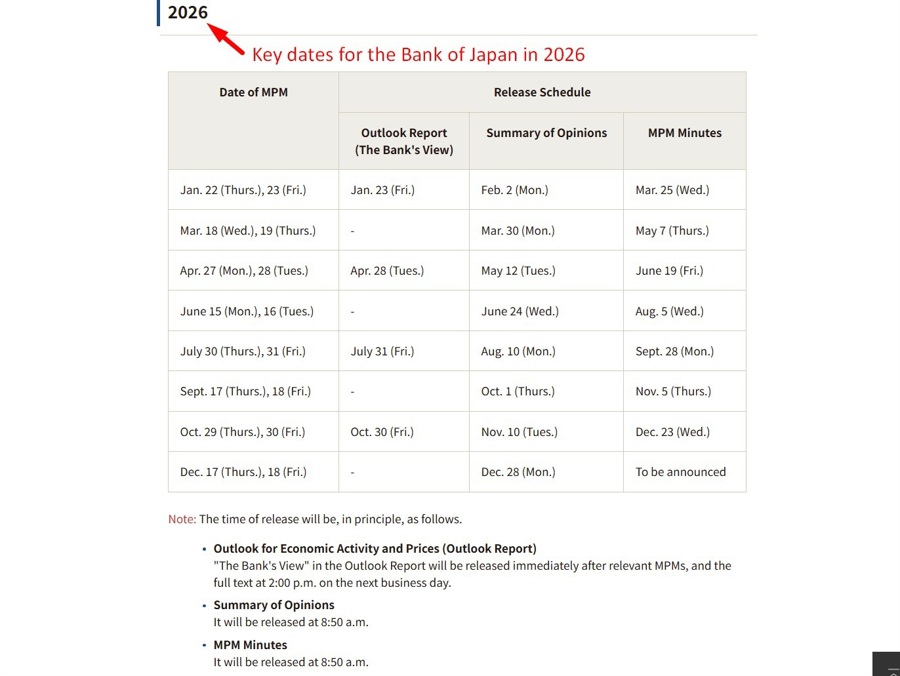
BoJ meet next week: