The headline story on the weekend is from the Washington Post and it's titled: 'Pentagon prepares for weeks of ground operations in Iran'
The headline basically tells the whole story and it signals what the market has been buzzing about since the Japan-based USS Tripoli was deployed to the Middle East on March 13. That ship has now arrived and other units have arrived as well or are reportedly en route.
There are no plans for a large-scale ground invasion and it would be obvious if there were as that would require hundreds of thousands of troops. This deployment might involve thousands of troops including special forces with support from ground troops. There are no indications on what the targets may be, though there is plenty of speculation.
The key detail is that it will take 'weeks', which already pushes the war beyond the 4-5 week timeline that Trump first laid out.
One person cited in the report said the objectives under consideration would probably take “weeks, not months” to complete, while another put the potential timeline at “a couple of months”.
That latter timeline is a gruesome one for the world economy as the lack of oil flowing is very quickly going to be a problem.
As for Hormuz, Secretary of State Marco Rubio offered an equally-chilling message, though it took some reading between the lines. It came after he spoke with G7 ministers:
“One of the immediate challenges we’re going to face is in Iran, when they decide that they want to set up a tolling system in the Strait of Hormuz,” Rubio said.
“Not only is this illegal, it’s unacceptable. It’s dangerous for the world, and it’s important that the world have a plan to confront it. The United States is prepared to be a part of that plan. We don’t have to lead that plan, but we are happy to be a part of it.”
The implied message is that the US doesn't have a plan to open the Strait and it's not one of its objectives in the war. It also implies that the strait won't be opened when the US has accomplished its objectives, whatever they are.
The fear is that the end of this war will be basically the US declaring 'we broke it, you fix it'. That's a problematic approach and could leave Iran with huge leverage at the end, along with a big problem for Europe, Asia and Africa.
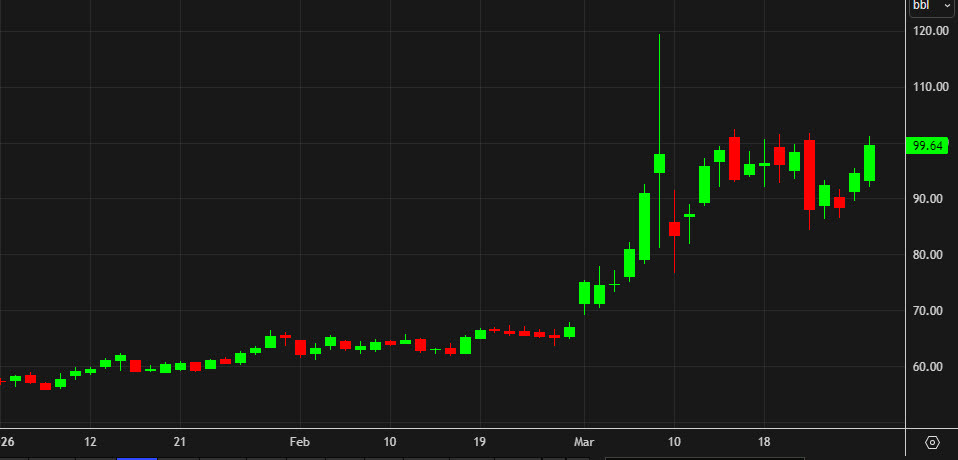
Given the extended timeline, I'd expect to see strong upward pressure on oil prices, barring any sort of diplomatic breakthough.