- Prior was the lowest reading since 2014 at 84.5
Details:
- Present situation 120.0 vs 113.7 prior
- Expectations 72.0 vs 65.1 prior
- Jobs plentiful 28.0% vs 25.8% prior
- Jobs hard to get 20.6% vs 20.8% prior
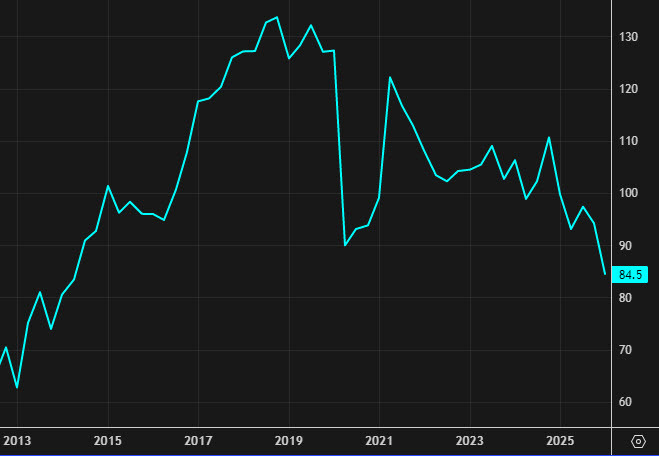
Among demographic groups, confidence on a six-month moving average basis ticked upward in February for consumers under age 35, which continued to be the most optimistic group. Confidence edged down for respondents 35 and older.
I find this something of a narrative violation:
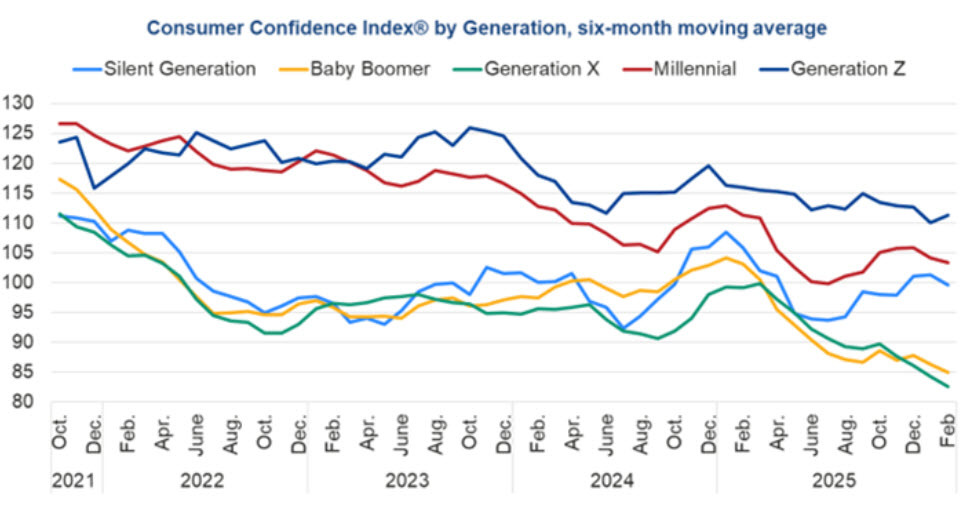
The Conference Board's Consumer Confidence Index traced a dramatic arc through 2025, defined by a steep erosion of sentiment tied to tariff uncertainty, a brief mid-year recovery, and a renewed slide into year-end and an 11-year low in January 2026.
Confidence began the year at its highest point, then fell for five consecutive months from February through June. The decline accelerated sharply in March and April as tariff fears intensified. By April, the index had plunged to 86.0 — levels not seen since the onset of the COVID pandemic — with the Expectations Index cratering to 54.4, its lowest since October 2011. Nearly a third of consumers expected fewer jobs ahead, approaching levels last seen during the Great Recession, and expectations for future income turned negative for the first time in five years. The decline cut across all age groups, income brackets, and political affiliations.
May brought a notable 12.3-point rebound to 98.0 — the largest monthly gain in four years — fueled by the May 12 U.S.-China tariff pause. The improvement was broad-based, though the Expectations Index remained below 80, the threshold historically associated with recession risk.
That recovery proved short-lived. Confidence resumed declining from the summer onward, falling for five straight months through December. By year-end, the index stood at 89.1, with the Present Situation Index dropping sharply to 116.8 as views on business conditions turned negative for the first time since September 2024. The Expectations Index held at a weak 70.7, marking 11 consecutive months below the recession-warning threshold of 80. Write-in responses continued to be dominated by concerns about prices, tariffs, and politics, though mentions of personal finances, immigration, and war increased into December.
January 2026 brought a further 9.7-point plunge to 84.5 — driven by a near-10-point drop in the Present Situation Index — suggesting the cautious consumer mood that defined 2025 has carried firmly into the new year.