After the Supreme Court curtailed key second-term tariffs, the Trump administration is turning to Section 232 to pursue new national security levies.
Summary:
Administration considering new Section 232 tariffs on six industries
Follows 6–3 Supreme Court ruling striking down many levies
New 232 tariffs separate from recently announced global 15% levy
Steel and aluminium 232 tariffs to be revamped
Companies could face higher effective payments under revised rules
The Trump administration is considering a fresh round of national security tariffs under Section 232 of the Trade Expansion Act of 1962, following a Supreme Court ruling that struck down many of President Trump’s tariffs.
According to The Wall Street Journal (gated), the administration is weighing new investigations covering roughly half a dozen industries, including large-scale batteries, cast iron and iron fittings, plastic piping, industrial chemicals, and power grid and telecom equipment. These levies would be imposed under Section 232, which allows the president to restrict imports deemed a threat to national security.
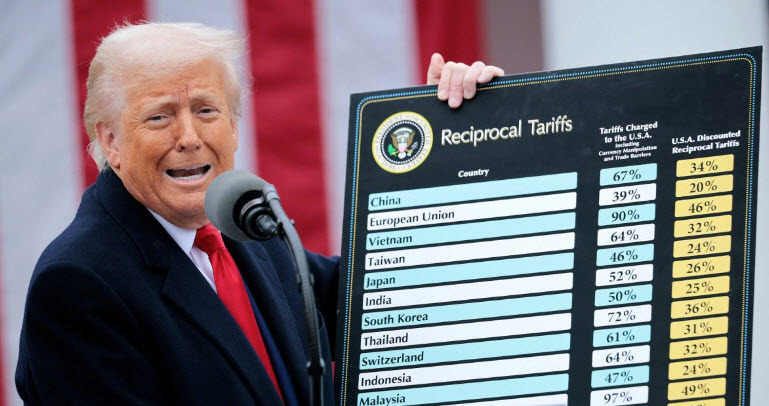
The move comes after the Supreme Court voted 6–3 to invalidate most of Trump’s tariffs issued under the International Emergency Economic Powers Act (IEEPA). The court ruled the president overstepped his authority in imposing so-called reciprocal tariffs on virtually all U.S. trading partners. Those measures accounted for more than half of the revenue generated by his second-term tariff regime.
In response, Trump announced a new global 15% tariff that can remain in place for five months, alongside additional levies planned under Section 301 of the Trade Act. The prospective Section 232 tariffs would be issued separately from these measures.
Importantly, the Supreme Court decision did not affect existing Section 232 tariffs, which have not faced serious legal challenges. During his second term, Trump expanded the scope of 232 measures beyond raw materials such as steel, aluminium and copper to include a broader range of consumer products incorporating those inputs. Exemptions have been limited, with only modest relief offered to U.S. automakers.
It remains unclear when the Commerce Department will formally announce new investigations or when tariffs could ultimately be imposed. Section 232 requires a formal investigative process before duties are enacted, though once in place the president retains broad authority to modify them.
The administration is also moving to revamp existing Section 232 tariffs on steel and aluminium. While nominal tariff rates on some goods may fall, the changes would apply tariffs to a product’s full value rather than only the steel or aluminium content. That shift could result in higher overall tariff payments for many companies.
U.S. Trade Representative Jamieson Greer said last week the administration may “adjust the way some of the tariffs are applied for compliance purposes,” signalling further technical changes ahead.
Separately, the administration had already been reviewing tariffs under Section 232 for nine additional industries, including semiconductors, pharmaceuticals, drones, industrial robots and polysilicon used in solar panels. Some of those investigations were opened nearly a year ago and could be accelerated following the Supreme Court decision.
A White House spokesman said safeguarding national and economic security remains a priority and that the administration is committed to using all lawful authorities available.