
TL; DR summary:
- New Zealand GDP rebounded more than expected in Q3
- Production-based GDP rose 1.1% q/q vs 0.9% forecast
- Expenditure-based GDP up 1.3% q/q, also beating estimates
- Annual-average growth remains negative NZD reaction modest, reflecting backward-looking nature of data
The investingLive economic calendar gives both the expected and priors if you'd like to keep track:

More detail:
New Zealand’s economy recorded a stronger-than-expected rebound in the September quarter, with official data showing solid gains across both production- and expenditure-based measures.
The quarterly bounce points to a period of improving activity momentum after earlier weakness, likely supported by resilient household spending and a stabilisation in domestic demand conditions through late winter. However, the broader picture remains more mixed. On an annual-average basis, production-based GDP was still down 0.5% in Q3 from a year earlier (i.e. Q3 2025 vs. Q3 2024), underscoring that the economy has yet to fully recover from the earlier downturn.
Market reaction was muted. The New Zealand dollar briefly ticked higher following the release, with NZD/USD popping only a handful of points before settling back, reflecting limited conviction that the data materially alters the near-term macro or policy outlook.
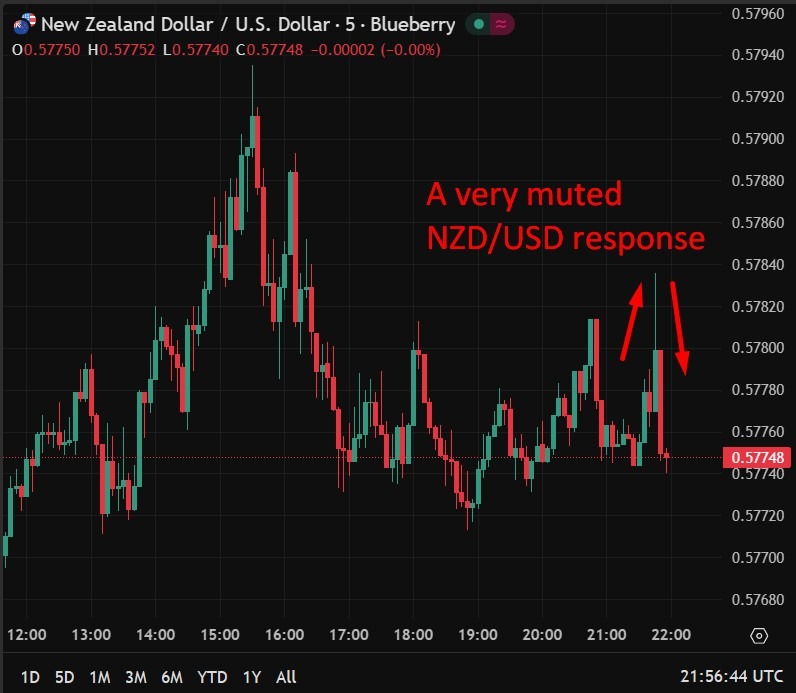
That restrained response highlights an important caveat around GDP data: it is inherently backward-looking. Today’s release largely captures economic conditions from several months ago, before more recent shifts in financial conditions, global growth dynamics, and evolving monetary-policy expectations. In a fast-moving environment, quarterly GDP tends to confirm what has already happened rather than signal what is happening now.
GDP also remains prone to revisions, sometimes meaningful ones, which can further temper its value as a real-time guide for investors or policymakers. As such, while the Q3 upside surprise adds context around New Zealand’s recent growth trajectory, markets are likely to place greater weight on higher-frequency indicators — particularly inflation, labour-market data, business surveys and financial-conditions metrics — when assessing the Reserve Bank of New Zealand’s next move.
