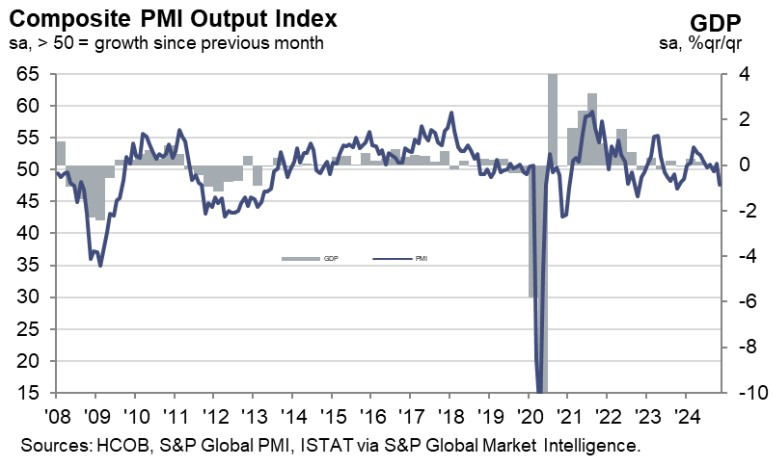
- Services PMI 49.2 vs. 51.2 expected and 52.4 prior.
- Composite PMI 47.7 vs. 51.0 prior.
Key findings:
- Service sector registers fresh decline in activity, albeit only marginal
- Fastest decline in new business for over two years
- Slight increase in payroll numbers, but business expectations dull
Comment:
Commenting on the final PMI data, Jonas Feldhusen, Junior Economist at Hamburg Commercial Bank, said:
“Italy is set to end the year with weak growth in the fourth quarter. The Italian Composite HCOB PMI fell into contraction territory in November, with disappointing figures in both manufacturing and services. The uncertainty following the US election, which is fuelled by a potential trade war is leading to more cautious behaviour, reflected in reduced willingness to consume and invest in the Italian economy.
In November, the poor performance in the manufacturing sector extended to the service sector, with the latter marking its first observed downturn in activity in 2024. This decline had been anticipated in recent months. Demand remains weak, with companies struggling to secure new business, particularly from international markets, where we are witnessing a fourth consecutive monthly setback.
The November data also provide some moderately good news. Following a mild downturn in October, service sector firms have made modest attempts to expand their workforces. However, with a continued decline in outstanding business and a sharp drop in new orders, employment is likely to come under pressure in the coming months. Service providers may increasingly rely on temporary contracts if additional staffing becomes necessary in order to stay flexible in an uncertain environment.
Despite the challenging conditions in the private sector economy, companies remain cautiously optimistic about growth, although confidence has waned. Where noted, the surge in new client acquisitions and promising growth forecasts were key factors behind positive outlook. Nevertheless, the future outlook index dropped and sits below the long-term average.”