- BOJ signals readiness for more rate hikes as yen weakness fuels inflation risks
- Citi downgrades European stocks on Greenland tariff tension
- China meets trade pledge with surge in US soybean purchases, but keeps Brazil option open
- China moves to curb price wars (“involution” again), weighs national M&A fund
- Morgan Stanley: Trump tariff threat poses limited broad risk to Europe stocks
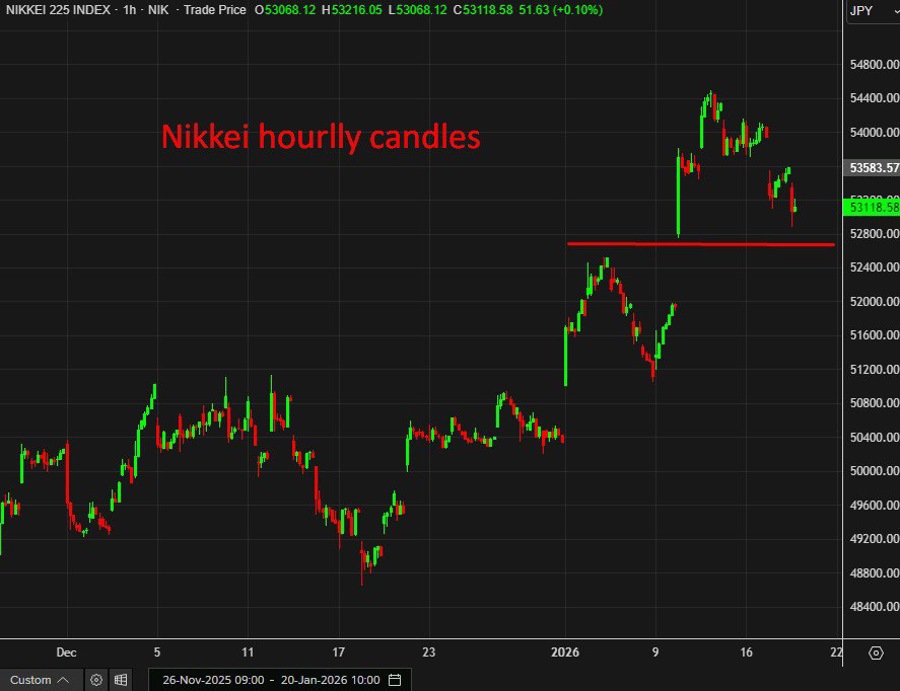
- Japan stocks slide as bond yields hit records and Greenland tensions bite
- China keeps LPRs unchanged, signalling patience on broad easing - further detail
- PBOC sets USD/ CNY central rate at 7.0006 (vs. estimate at 6.9576)
- PBOC set 5- and 1-year LPR rates unchanged, 3.5% and 3.0% respectively. As expected.
- Citi flags risk of three BOJ hikes in 2026 if yen weakness persists. Watch USD/JPY 160
- PBOC is expected to set the USD/CNY reference rate at 6.9576 – Reuters estimate
- Report Trump admits ‘bad information’ on Greenland troop moves. Opens de-escalation door?
- Banks split on USD impact from Trump Greenland tariff threat, diverge on sell America risk
- Japan snap election puts BOJ–fiscal policy clash in focus, Goldman Sachs warned
- Venezuela plans to boost gold and iron mining output to attract inbound FX
- Expandarama! New Zealand services PMI December 2025: 51.5 (prior 47.2)
- investingLive Americas FX market wrap: Vujcic picked as ECB Vice President
At a glance:
Markets were subdued as investors waited for US trading to fully resume after the holiday.
New Zealand data surprised positively, with services PMI back in expansion, lifting NZD and supporting AUD.
Japan’s bond sell-off deepened, with the 40-year JGB yield hitting 4% on fiscal and tax-cut concerns.
China held LPRs steady, delivered its strongest yuan fix since May 2023, and stepped up US soybean buying.
Geopolitics stayed in focus after Trump conceded possible misinformation on Greenland troop moves.
10y US Treasury yield continued higher, back to a 4-month high
It was a session defined by limited data and a wait-and-see mood, with markets marking time ahead of a full reopening in the US after the holiday Monday.
In New Zealand, the services sector returned to expansion in December, with the PSI rising to 51.5, ending a 21-month contraction. The improvement followed last week’s manufacturing PMI rebound, reinforcing signs of economic stabilisation. NZD/USD found support on the data and extended gains as the session progressed, while AUD/USD also pushed higher.
The yen traded in a narrow range, but pressure continued to build in Japan’s bond market. Japan’s 40-year government bond yield hit 4%, the highest since the bond’s debut in 2007 and the first time in more than 30 years that any Japanese sovereign yield has reached that level. The move reflected an accelerating JGB sell-off amid growing fiscal concerns, particularly around proposals to cut the food sales tax. The Centrist Reform Alliance has suggested funding a zero food tax through a new government-linked fund, adding to investor unease around public finances.
In China, the PBOC kept its one- and five-year loan prime rates unchanged for an eighth straight month, in line with expectations. The decision reinforces a preference for targeted easing tools, with broader rate cuts still seen later in Q1 or Q2. Shortly after, the USD/CNY reference rate was set at its strongest level for the yuan since May 18, 2023, prompting USD/CNH to fall in the minutes following the fix.
Separately, traders reported that China has purchased around 12 million tonnes of US soybeans over the past three months, meeting a key trade pledge outlined by the Trump administration in November.
On the geopolitical front, CNN reported that Donald Trump conceded in a call with UK Prime Minister Keir Starmer that he may have received “bad information” regarding European troop deployments to Greenland. UK officials cited in the report see scope for de-escalation, though broader US–Europe disagreements remain unresolved.
Looking ahead, Trump is scheduled to deliver a special address at the World Economic Forum in Davos on January 21, 2026, from 13:30–14:15 GMT.
Overall, major FX pairs traded in relatively subdued fashion, with markets largely in consolidation mode.
Asia-Pac stocks:
- Japan (Nikkei 225) -1.14%
- Hong Kong (Hang Seng) -0.08%
- Shanghai Composite -0.12%
- Australia (S&P/ASX 200) -0.66%
4th session of sliding for Japan's Nikkei: