- US November non-farm payrolls +64K vs +50K expected
- US Retail sales for October rises by 0.0% versus 0.1% estimate
- S&P Global flash manufacturing PMI December 51.8 versus 52.0 estimate
- Fed's Bostic warns against too much monetary policy easing
- New Zealand consumer confidence jumps in the fourth quarter
- Hassett jumps back into the lead as the betting favorite for the Fed job
- BOC Macklem: Policy rate is about right to keep inflation close to 2%.
- Atlanta Fed Q3 GDPNow forecast 3.5% vs 3.6% previously
- US business inventories for September 0.2% versus 0.1% estimate
- WH economic advisor Hassett: There is plenty of room to cut rates
Markets:
- Gold up $8 to $4309
- US 10-year yields down 3.3 bps to 4.15%
- WTI crude down $1.58 to $55.11
- S&P 500 flat
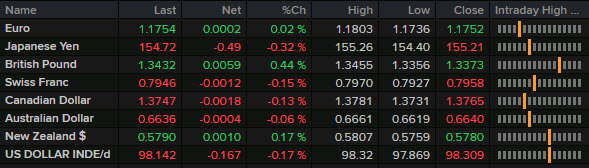
- GBP leads, AUD lags
It was an unusual non-farm payrolls report as it combined October and November for the headline but only November for the unemployment rate. The latter ended up being the most-noteworthy part of the report as it rose to 4.6% from 4.4%, leading to an initial dovish reaction in markets. The odds of a March cut are now up to 58% from 40% before the data.
The initial market reaction was in that direction as well as the euro and yen hit session highs but it had less staying power. For one, stocks sold off and that caused some USD buying. We're also in the end-of-year period where moves are tough to pin down. One concerning note was the BofA fund manager survey that showed cash allocations at all-time lows (the survey dates to 1999).
After some heavy selling in stocks, there was a late-day rebound led by the Nasdaq and Tesla in particular. The company hit an all-time high for the first time this year and the Nasdaq turned positive late.
On the flipside was oil, with crude prices breaking the Liberation Day low of $55.12 and breaking into the lower half of the $50s briefly. There wasn't much of a bounce from there as the market is fearful of oversupply and a potential Russia-Ukraine ceasefire. The drop in crude prices is certainly welcome news to central bankers as it's explicit deflation.