- US initial claims 213K vs 215K estimate
- US January trade balance -54.5B vs -66.6B expected
- US housing starts for January 1.487M versus 1.348M estimate
- Israel may launch a ground campaign in Lebanon imminently
- Netanayu: Iran is no longer the same Iran
- U.S. Treasury sells $22 billion of 30 year bonds at a high yield of 4.871%
- Iran's Foreign Minister spokesman: Many ships can still pass through the Strait of Hormuz
- Britain's Defence Secretary says Iran is likely laying mines in Strait of Hormuz
- Canada January trade balance -3.65B vs -0.9B expected
- US Energy Secretary Wright: Iran operations to take weeks, not months
Markets:
- WTI crude oil up $9.14 to $96.38
- US 10-year yields up 5.5 bps to 4.26%
- Gold down $85 to $5089
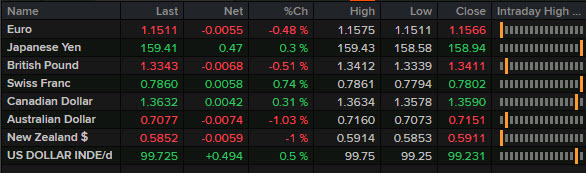
- USD leads, AUD lags
- S&P 500 down 1.5%
It was a classic risk-off day as Iran struck tankers overnight in the Strait of Hormuz. So far, the US response isn't clear, and there are no hints at naval escorts until the end of the month. With that, markets are pricing in the chance of an extended conflict.
Eyes are on Trump but he didn't TACO today and instead called on the Fed to cut rates, something that's not going to happen. Market pricing has gone from 60 bps of easing this year to 22 bps since the war drums started beating. That's led to steady bids in the US dollar that have lifted the dollar index to the best levels of the year.
Eyes are on USD/JPY as it flirts with the best levels since 2024 and now nears striking distance of 1986 levels. With that, we will be watching intervention rhetoric from Japan, which is a major energy importer.
Markets are increasingly pricing in a negative shock to global growth due to high oil prices. That's an ugly picture that could make more days look like today's price action.