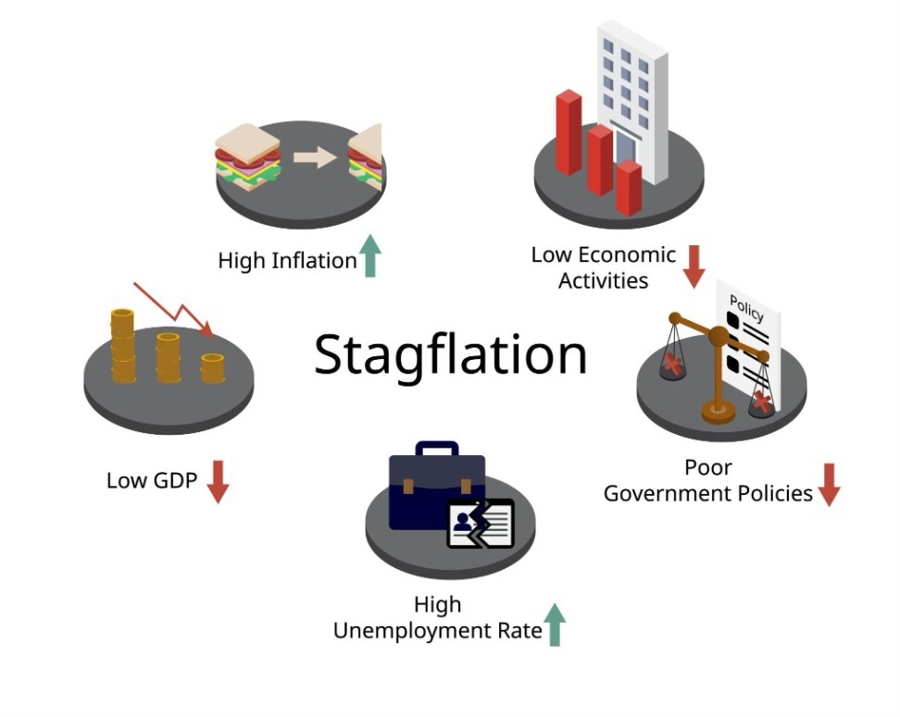
The IMF warns the Iran war is triggering a stagflation shock, with rising inflation and weaker growth, uneven global impacts, and limited policy room to respond.
Summary:
- IMF warns Iran war is driving a global “negative supply shock”
- Inflation set to rise while growth slows; prior growth upgrade scrapped
- Three scenarios to be presented depending on ceasefire durability
- Central banks may be forced to tighten if inflation accelerates
- Impact highly uneven: oil exporters cushioned, importers under pressure
- Asia flagged as most exposed; some nations already facing fuel strain
- IMF estimates $20B–$50B in additional financing needs
- High global debt limits governments’ ability to respond
The global economy is facing a renewed stagflation risk as the Iran war feeds through to higher energy costs and weaker growth, according to the head of the International Monetary Fund.
Speaking in a media interview, the IMF’s managing director said the conflict is acting as a classic negative supply shock, lifting prices while simultaneously weighing on economic activity. The immediate consequence is a deterioration in the global outlook, with earlier expectations for a modest upgrade to growth now abandoned.
Instead of a single forecast, the IMF is preparing a range of scenarios to reflect the uncertainty surrounding the conflict. The trajectory will hinge heavily on whether the current ceasefire holds and how extensive the damage to energy and transport infrastructure ultimately proves to be.
The baseline message is clear: the balance of risks has shifted toward higher inflation and slower expansion. Should inflation pressures intensify further, central banks may be forced to respond with tighter policy, amplifying the drag on growth and reinforcing the stagflation dynamic.
The impact, however, is not evenly distributed. Economies with domestic energy production are relatively insulated from the worst effects, while oil-importing nations are bearing the brunt of the shock. Lower-income countries are particularly vulnerable, as higher fuel costs quickly strain external balances and domestic consumption.
Parts of Asia are emerging as a focal point of stress, especially among economies with limited reserve buffers. Some countries are already experiencing signs of fuel scarcity and rationing, underscoring the speed at which the shock is being transmitted.
Larger economies with deeper reserves and greater policy flexibility are better positioned to absorb the hit, although they are not immune to the broader slowdown in global demand.
The IMF expects financing needs across vulnerable economies to rise sharply, estimating that tens of billions of dollars in additional support may be required. Existing lending programs are likely to be expanded as conditions deteriorate.
Complicating the response is the elevated level of global debt. After years of heavy borrowing, many governments now have limited fiscal capacity to cushion the shock, leaving policymakers with fewer tools to stabilise growth.