- US weekly initial jobless claims 184K vs 215K expected
- US October wholesale sales +2.2% vs +1.0% expected
- Bank of Canada won't switch to average inflation targeting in mandate review - report
- BOC's Gravelle: We are likely to react more readily to upside inflation risks
- BOC's Gravelle: We believe inflation will decrease over time as supply catches up
- Biden might have put a fright into the bond market ahead of CPI
- US State Dept: Probably a couple days before we know where Iran nuclear deal stands
- Atlanta Fed tracker continues to point to strong USQ4 growth
- U.S. Treasury auctioned off $22 billion of 30 year bonds at a high yield of 1.895%
- US household debt grew at 6.2% annualized pace in Q2
Markets:
- WTI crude down $1.78 to $70.58
- US 10-year yields down 1.8 bps to 1.490%
- Gold down $6 to $1775
- S&P 500 down 31 points to 4669
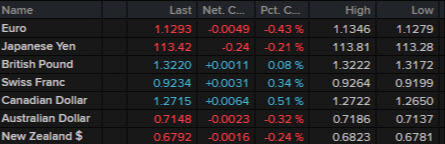
- JPY leads, CAD lags
The enthusiasm for risk trades reversed to some extent on Thursday for two main reasons:
1) Worry about Friday's US CPI report, particularly after the Biden administration warned about high numbers. By some that was seen as a tip that they've received the data, though I doubt it.
2) Concern about omicron. More data continues to show an extremely fast spread, with one report saying 4x more transmissibility than delta. That's a scary thought but it's tempered by data showing milder cases. On net, that's pushed some to the sideslines.
The result was a backup in virtually all of the big moves this week, including the commodity currencies and yen. The euro also moved back down below 1.13 in a 50 pip drop that might signal worry that Europe is more likely to lockdown than the US.
The UK took down growth forecasts today but it didn't hurt GBP as it hung with the dollar and finished strong.
Overall, it was generally an inside day with one exception in oil as it hit a one-week high in Asia before reversing to close below yesterday's low. That's a bit of a red flag in an asset that's been hyper-sensitive to omicron.