- Prior 51.6
- Manufacturing PMI 50.8 vs 50.0 expected
- Prior 49.5
- Composite PMI 51.9 vs 51.5 expected
- Prior 51.3
The most notable thing here is the rebound in the manufacturing sector, with the reading there being a 44-month high. That is largely led by the recovery in Germany, which saw its industry return to expansion territory for the first time in over three years. That's helping to drive better business activity overall as the services sector also holds up in February.
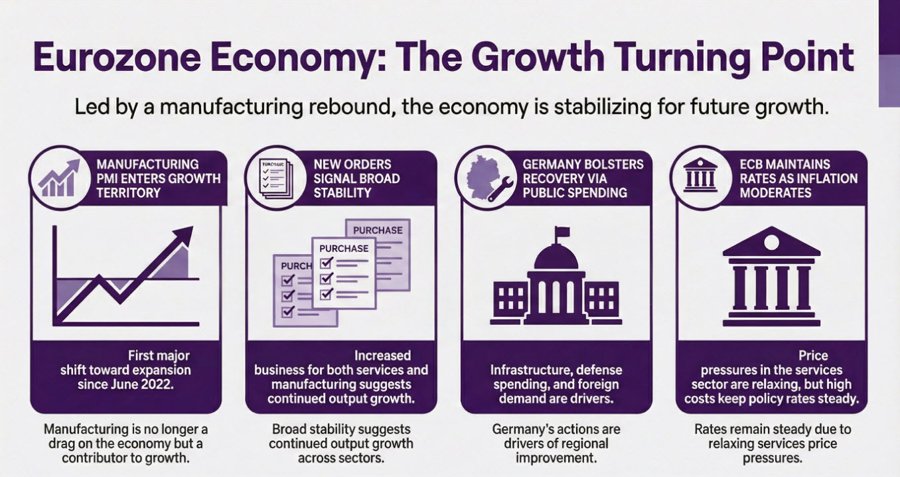
HCOB notes that:
“It might be premature, but this could be the turning point for the manufacturing sector as the headline PMI increased to growth territory. Since June 2022 this happened only once, in August of last year. This time, the overall basis for further growth seems to be a bit better. Most PMI subindices are on a higher level than in August, like for example the volume of purchases, the view on future output and the inventory indicators. New orders are growing at a moderate rate after three months of contraction. This indicator has to show better results in the coming months to make us feel more comfortable about the prospects of this sector over the next quarters. Overall, it seems that the manufacturing sector is on a more stable footing and could contribute to overall growth this year instead of being a drag for the economy.
Services growth is continuing at a moderate rate, supporting overall growth in the Eurozone. Compared to the fourth quarter, overall growth dynamics have lost some momentum, though. Still, the economy of the Eurozone seems to be on a stable footing, as new business for both service providers and manufacturing companies have increased which should lead to continued growth in output over the next few months. Germany is an important contributor to the better development which has to do with the increased public spending for infrastructure and defence, but also more demand from abroad.
Prices pressure in the services sector which is monitored by the ECB tightly, has relaxed a bit in February. Costs are still increasing at a high rate but not as fast as the month before while companies increased their prices to their customers at a significantly lower rate than before. Given the stable expansion of economic activity and a still elevated service inflation the ECB does not seem to be inclined to change its view to stay put with respect to their key policy rates.”