Westpac sees little immediate labour market impact from the Iran war, but expects a delayed slowdown as energy shocks filter through.
Summary:
- March labour data unlikely to reflect Iran war impact yet
- Westpac sees unemployment dipping to 4.2% short-term
- Labour market to weaken later as oil shock feeds through
- RBA still focused on inflation, not labour softness near-term
- Key adjustment likely via fewer hours worked, not layoffs
Westpac’s preview of Australia’s March labour force report suggests the upcoming data will offer limited insight into the economic impact of the Iran war, with the labour market expected to remain resilient in the near term despite mounting risks.
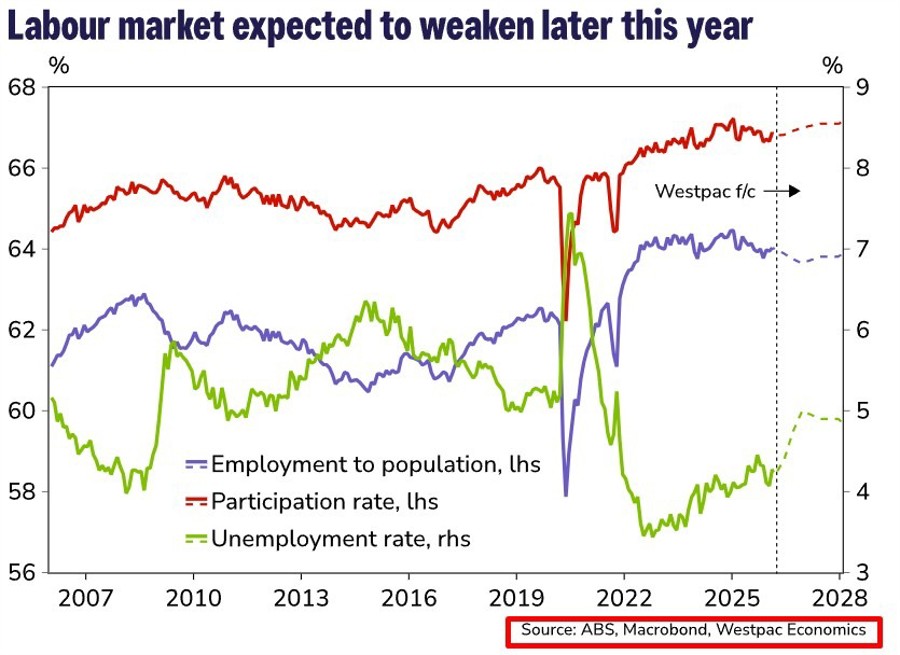
The March survey period (March 1–14) captures only the early phase of the Middle East conflict, meaning any fallout from higher oil prices and global uncertainty is unlikely to be visible yet. Westpac expects employment to rise by around 25k, with the unemployment rate edging down to 4.2%, helped by a slight dip in participation.
However, this near-term stability masks a more concerning outlook. The labour market is typically a lagging indicator, and Westpac expects the real impact of the energy shock to emerge later in the year as higher fuel costs filter through to household spending, business margins, and hiring decisions.
Early signs of this transmission are already visible. Fuel spending has surged, while discretionary services consumption is beginning to soften, hinting at pressure building beneath the surface. Over time, this is expected to translate into weaker labour demand.
Westpac now sees employment growth slowing materially, with the unemployment rate rising to around 5% by early 2027. The adjustment is also expected to be uneven across industries, with fuel-intensive sectors such as manufacturing, construction, transport and tourism facing the greatest strain.
A key nuance is how firms respond. Rather than cutting jobs aggressively, businesses are more likely to reduce average hours worked — a pattern seen in more recent economic slowdowns, allowing them to retain staff while managing costs.
For the Reserve Bank, the implication is clear: despite a softening labour outlook, inflation risks tied to the energy shock remain the dominant concern. As a result, upcoming labour data is unlikely to materially shift near-term policy expectations.