The US dollar started the week on a negative note as the record jump in oil prices got unwound on G7 discussions about emergency oil reserves release and then on Trump's comment to CBS suggesting that the war could be over soon. The relief rally in risk weighed on the greenback as rate cut bets returned.
The positive mood didn't last long though and the reports of Iran deploying mines in the Strait of Hormuz served as a wake-up call that things could still get worse before they get better. Sure enough, the US dollar restarted its run and as the prospects of a quick end to the war faded, the momentum increased.
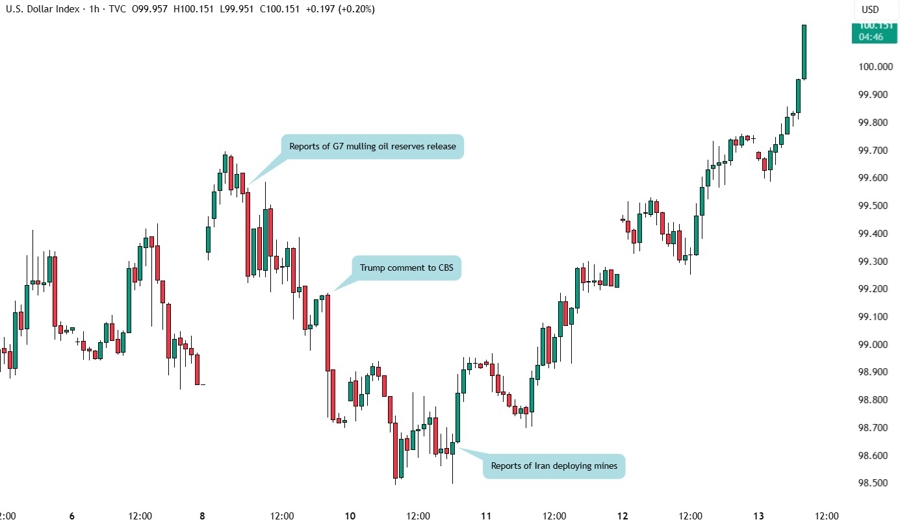
This morning, we're seeing the US dollar extending the gains further and it's now close to August 2025 levels. The are multiple reasons for such strength ranging from the hawkish repricing in interest rates expectations due to elevated oil prices to safe haven demand amid the risk-off sentiment.
But the main reason is the unwinding of the overcrowded positioning. Last month, the Bank of America Fund Manager Survey noted record shorts on the US dollar. When you have such extremely crowded positions, you will usually see extreme unwinding once the fundamentals change. This is what happened with precious metals in January when gold fell by more than 20% in a couple of days and silver by more than 40%.
The question now is: how much more room does the dollar have to appreciate?
There's no real limit in the short-term as the market is still pricing a bit of Fed easing by year-end, so there's still some room to unwind those bets.
There are basically two scenarios going forward:
- The war and the disruption in the Strait of Hormuz lasts more than expected leading to a bear market in stocks, tighter financial conditions (even without rate hikes) and eventually an economic recession. In this case, the demand destruction will lead to lower inflation expectations, rate cut bets and eventually a weak US dollar. This is the lower probability scenario.
- On the other hand, Trump folds as oil prices reach triple digit levels again and stocks fall to new monthly lows. In this case, we should see the same reaction of the one we got when Trump told CBS that the war could be over soon. But this time it would be much stronger. This is the higher probability scenario.