
The Indian Rupee has been the worst performing Asian currency this year amid several negative drivers. The RBI started to cut interest rates this year and delivered an even bigger than expected 50 bps cut in June amid below-target inflation.
But the main driver has been the US tariff policy.
In the first half of the year, the INR benefited from expectations that companies would move manufacturing to India from China amid Trump's trade war. We had also many positive rumors that India would have been the first coutnry to seal a deal with the US.
Unfortunately, things went in the opposite way. Not only India failed to reach a deal with the US, but Trump also imposed 50% tariffs on the country including a 25% penalty for buying Russian oil. This escalation eventually led to a selloff in the Indian Rupee that is still ongoing today.
The RBI recently tried to stop the quick depreciation around USD/INR 88.80 and intervened more forcefully in November. But as it always happens when the fundamentals remain against a currency, the INR resumed its fall and once it broke above the 88.80 level, the momentum increased as the market knew at that point that the RBI folded.
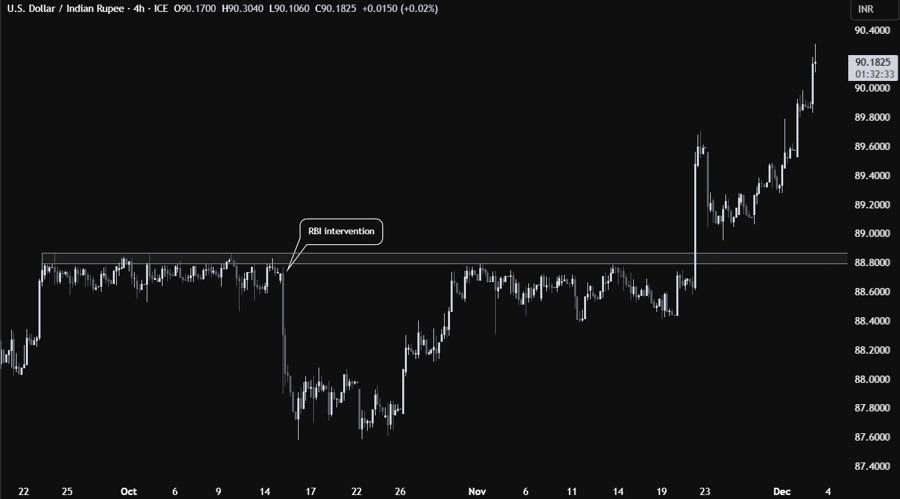
The Reserve Bank of India (RBI) started its 3-day monetary policy meeting today and will release the decision on Friday. According to a Reuters poll, the central bank is expected to cut the repo rate by 25 bps as inflation fell to a record low in October to 0.25%, far below the RBI's 4% target. As a reminder, the RBI targets 4% headline inflation with a +/-2% tolerance band (2%-6%). What makes it a harder call is that growth has also surprised to the upside. The RBI will have to decide what to focus on.
In case the central bank holds the repo rate steady, we could see the INR gain in the short-term, but the focus will then shift to their forward guidance and whether they change their stance from neutral back to accomodative.
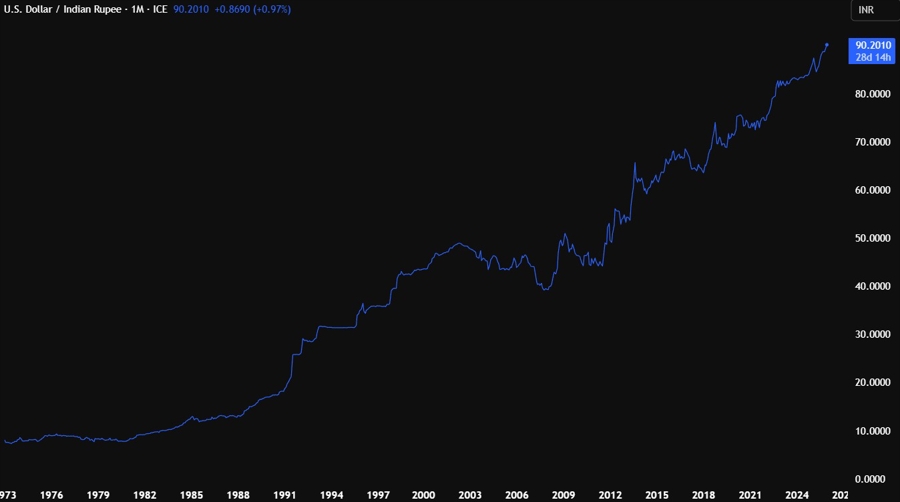
In the bigger picture, the INR will continue to weaken against the USD given the structural economic differences, but in the short-term, the focus will remain mainly on the US-India trade talks. A deal and a lowering of US tariff rates should give the Indian Rupee a solid boost. Until then, the INR will likely remain a sell on rallies.
The USD part of the equation is of course another thing to keep an eye on. The Federal Reserve is expected to cut interest rates by 25 bps next week but what the market will focus on is their forward guidance. Before Fed's Williams December cut endorsement, I would have bet on a dovish hold, which would have continued to put pressure on the greenback.
Now, there is a good chance that the Fed delivers a hawkish cut, which could give the US dollar another boost.
