US tightens the screws: Iran trade hit, Hormuz stays open for now.
The origianl announcement of this blockade was garbled, implying full closure, which seemed illogical. Some clarification now.
Summary:
- US to implement maritime blockade targeting Iranian ports from April 13, 10 a.m. ET
- Enforcement applies to all vessels trading with Iran, regardless of flag
- Crucially, transit through the Strait of Hormuz to non-Iranian ports remains permitted
- Move tightens pressure on Tehran without fully closing Hormuz
- Oil risk premium rises; escalation risk shifts from “closure” to “interdiction”
The United States is set to significantly escalate pressure on Iran by initiating a maritime blockade of vessels entering and exiting Iranian ports, according to a statement from US Central Command (CENTCOM). The operation is scheduled to begin on April 13 at 10 a.m. Eastern Time and represents a major step up in economic and military pressure following the breakdown of recent US–Iran talks.
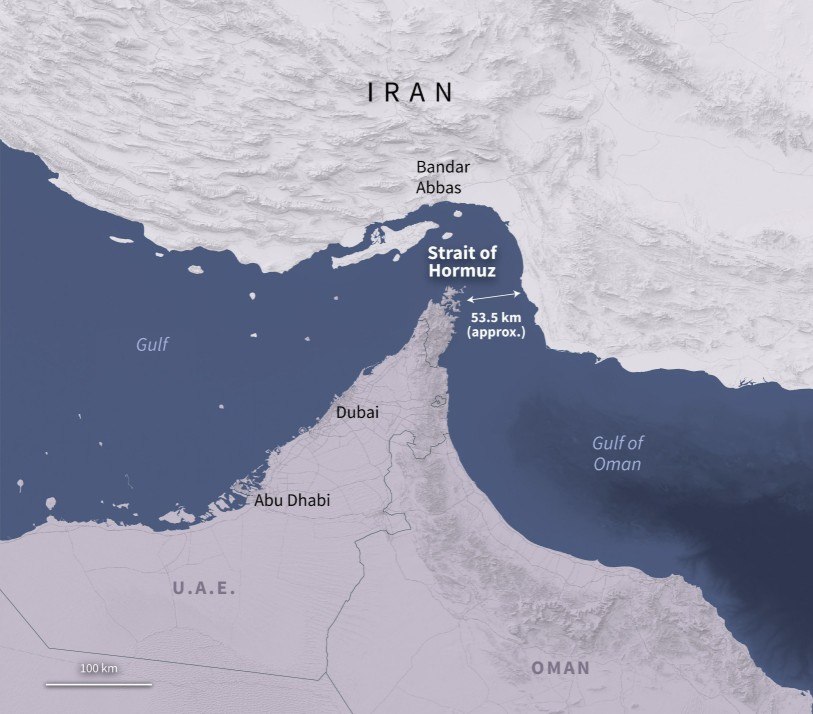
Under the plan, US forces will enforce restrictions on all maritime traffic engaging with Iranian ports and coastal areas. The enforcement will apply universally, targeting vessels of all nationalities, underscoring the breadth of the measure and its intent to isolate Iran’s trade flows. However, CENTCOM emphasised that the blockade is not a full closure of the Strait of Hormuz. Ships transiting the strait to and from non-Iranian ports will be allowed to pass without interference, maintaining a key artery for global energy markets.
This distinction is critical. While the US is effectively choking off Iran’s direct maritime trade, it is attempting to avoid a broader disruption to global oil flows that could result from a full Hormuz shutdown. Additional operational details are expected to be communicated to commercial shipping operators via formal maritime notices ahead of implementation.
The move follows failed negotiations in Islamabad and signals a shift from diplomacy toward coercive economic containment. It also raises the risk of retaliation from Iran, particularly given Tehran’s repeated warnings that restrictions on its exports could trigger countermeasures in the Gulf.
For markets, the development reframes the risk landscape. Rather than a binary “open vs closed” Hormuz scenario, attention now shifts to enforcement dynamics, potential miscalculation at sea, and the durability of safe passage guarantees for non-Iranian flows. The result is a more persistent and complex geopolitical risk premium, particularly for energy markets.
Earlier: