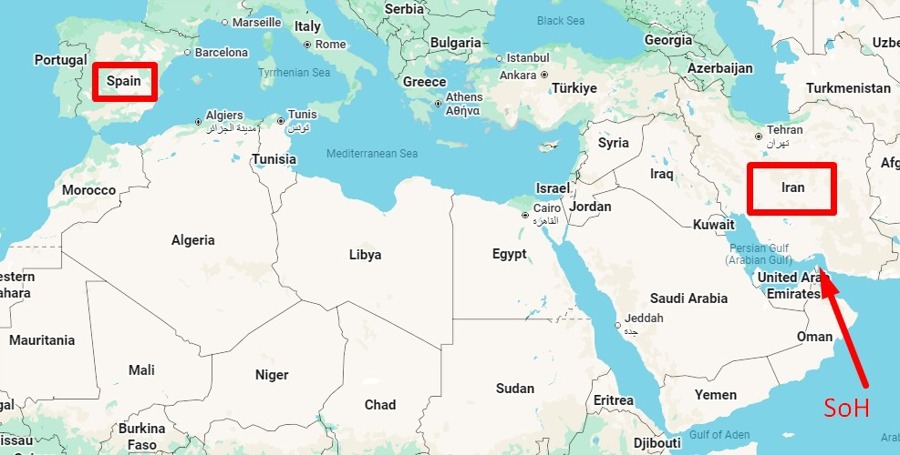
Iran offers conditional Hormuz access to Spain-linked vessels, signalling selective easing, though global energy flows remain constrained.
Summary:
- Iran signals openness to Spain-linked Hormuz transit requests
- “Non-hostile vessels” allowed passage with coordination, per prior UN note
- First explicit concession toward an EU state amid ongoing conflict
- Limited practical impact given Spain’s small tanker presence in the Gulf
- Signs of selective easing as Thailand and Malaysia vessels also transit
Iran has signalled a potential softening in its approach to maritime access through the Strait of Hormuz, indicating it would be receptive to requests from Spain regarding vessel transit, in what appears to be the first explicit concession extended to a European Union member since the conflict escalated.
The Iranian embassy in Madrid said Spain is viewed as a country that respects international law, suggesting this underpins Tehran’s willingness to consider transit-related requests. The remarks follow a broader position outlined by Iran earlier this week, where it told the United Nations that “non-hostile vessels” could pass through the strategic waterway if they coordinated with Iranian authorities.
The Strait of Hormuz remains a critical chokepoint for global energy flows, handling roughly one-fifth of the world’s oil and liquefied natural gas shipments. Since the onset of hostilities, traffic through the strait has been severely disrupted, contributing to heightened volatility in global energy markets and reinforcing supply concerns.
However, there are emerging signs of selective easing. A Thai oil tanker was recently able to transit the strait following diplomatic coordination, while Malaysian authorities confirmed that their vessels have also been permitted passage. These developments suggest that access may be increasingly contingent on bilateral engagement with Tehran, rather than a blanket restriction on shipping.
Despite the apparent diplomatic opening, the practical implications for Spain are limited. Spain maintains a relatively small merchant fleet, with only a handful of oil and gas carriers, and ship-tracking data indicates that none are currently operating within the Gulf. Moreover, only a small portion of its tanker fleet meets the typical vetting standards required by major oil companies.
Spanish officials have also struck a cautious tone, emphasising calls for de-escalation and diplomacy while downplaying the significance of Iran’s remarks.
Overall, while Iran’s signal toward Spain points to a potential framework for controlled transit, the broader outlook for energy flows through Hormuz remains highly dependent on geopolitical developments and ongoing negotiations.