Gulf shipping risks intensify as projectile incident near UAE signals widening threat zone.
Trump isn't helping:
Summary:
- Explosion reported near bulk carrier off Sharjah coast, crew unharmed
- Incident linked to rising attacks on commercial vessels in Gulf waters
- Blast occurred close to vessel, suggesting it may have been targeted
- Similar projectile incident reported near Qatar days earlier
- Maritime security risks spreading beyond core Hormuz chokepoint
- Shipping traffic through Strait of Hormuz remains severely disrupted
- Iran-linked retaliation continues to target regional energy infrastructure
- Elevated risks for shipowners, insurers, and global energy supply chains
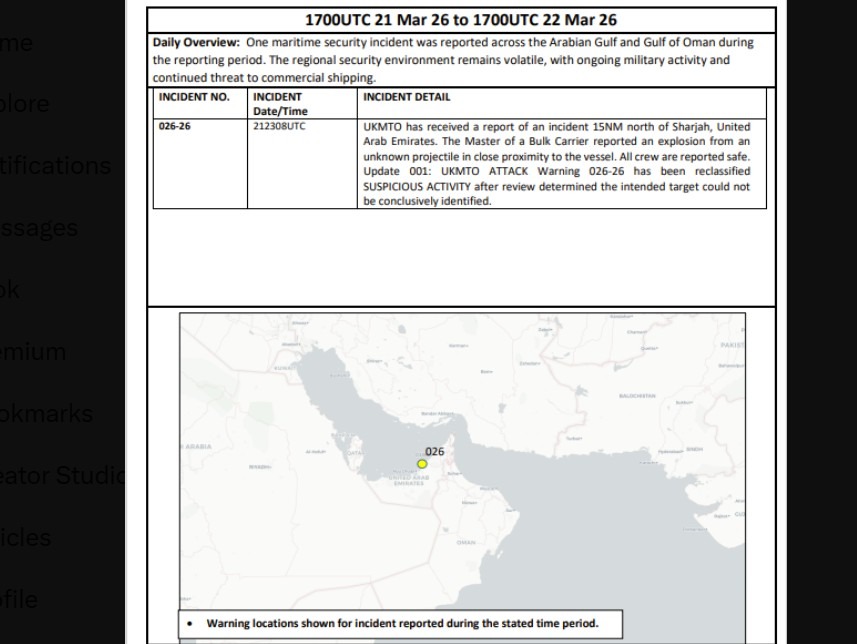
Maritime security risks in the Middle East have intensified further after an explosion from an unidentified projectile was reported near a commercial vessel off the coast of Sharjah in the United Arab Emirates.
According to UK Maritime Trade Operations (UKMTO), the incident occurred late Saturday around 15 nautical miles north of Sharjah. The blast was recorded at approximately 23:08 GMT on March 21 and detonated close to a bulk carrier, raising the likelihood that the vessel itself was the intended target. Despite the proximity of the explosion, no direct strike was confirmed and all crew members were reported safe.
The incident marks the latest in a growing number of attacks and near-misses involving commercial shipping across Gulf waters since the outbreak of the US-Israeli conflict with Iran roughly three weeks ago. Analysts say the pattern of activity suggests a broadening risk environment for maritime traffic in and around the Strait of Hormuz, a critical artery for global oil and gas shipments.
Earlier in the week, a similar projectile-related event was reported near Ras Laffan in Qatar, reinforcing concerns that threats are no longer confined to a single flashpoint but are spreading across multiple shipping lanes in the region. The expanding geographic footprint of these incidents is heightening uncertainty for vessel operators, insurers, and energy traders alike.
Shipping flows through the Strait of Hormuz remain significantly constrained, with only limited vessel movement recorded since hostilities began in late February. The disruption has already contributed to tightening global supply conditions and increased volatility in energy markets.
At the same time, Iran’s retaliatory actions have extended beyond maritime threats, with missile and drone strikes targeting energy infrastructure across several Gulf states. Analysts say the convergence of risks — both at sea and on land — is compounding pressure on regional stability and raising the probability of further escalation.
With security conditions deteriorating and no clear path to de-escalation, market participants are increasingly factoring in prolonged disruptions to shipping routes and energy flows, keeping geopolitical risk firmly embedded in oil prices and broader market sentiment.

Trump remains unable to deescalate and get oil flowing again: