Goldman Sachs warns oil prices may surge further on prolonged supply risks.
Summary:
Goldman Sachs sees upside risks to oil prices near term and into 2027
Brent settles at $108.65 after volatile session, earlier above $119
Iran conflict disrupting energy supply and Hormuz shipping routes
Bank warns Brent could exceed 2008 all-time high if disruptions persist
Past supply shocks suggest prolonged periods of elevated prices
Base case sees Brent easing to $70s by Q4 2026
Oil flows assumed to normalise within four weeks of reopening
Risks remain around damage to production capacity and timing
OPEC spare capacity could partially offset disruptions
Energy shocks feeding into inflation and broader market conditions
Goldman Sachs has warned that oil prices face significant upside risks in the near term and over the medium horizon, as ongoing disruptions linked to the Iran conflict continue to tighten global supply.
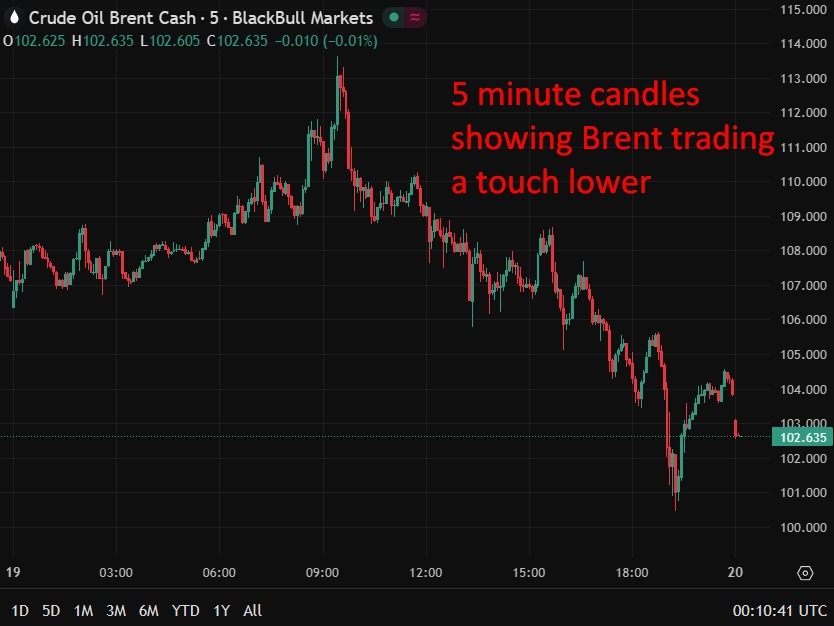
Brent crude settled higher after another volatile session, with prices having earlier surged above $119 following Iranian strikes on energy infrastructure across the Middle East. The escalation, now entering its third week, has led to widespread supply disruptions across Gulf producers and heightened concerns over the security of flows through the Strait of Hormuz. Brent has since dribbled lower:
Goldman said the balance of risks for oil prices remains skewed to the upside both in the near term and through to 2027. The bank highlighted that past supply shocks over the past five decades have often proven more persistent than initially expected, raising the possibility that oil prices could remain above $100 per barrel for an extended period.
In the immediate term, Goldman expects prices to continue rising while flows through the Strait of Hormuz remain constrained. The bank added that Brent could potentially exceed its 2008 all-time high if disruptions prove prolonged, as markets remain highly sensitive to the risk of sustained supply shortages.
The bank’s base case assumes a gradual recovery in oil flows beginning in April, with Brent prices easing back toward the $70s by the fourth quarter of 2026. However, Goldman cautioned that this outlook is subject to considerable uncertainty, particularly around the timing of a full reopening of key shipping routes and the extent of damage to production capacity.
While oil output could recover relatively quickly once flows resume, potentially within four weeks, Goldman flagged meaningful downside risks to longer-term supply, especially from Iran and offshore production assets. The firm also noted that OPEC spare capacity could help offset some of the disruption, though the scale and timing remain uncertain.
More broadly, the analysis highlights how geopolitical shocks to energy infrastructure are driving global market dynamics. Disruptions to supply and transport routes are lifting oil prices, reinforcing inflation pressures and tightening financial conditions, with spillover effects across currencies, bond markets and equities.