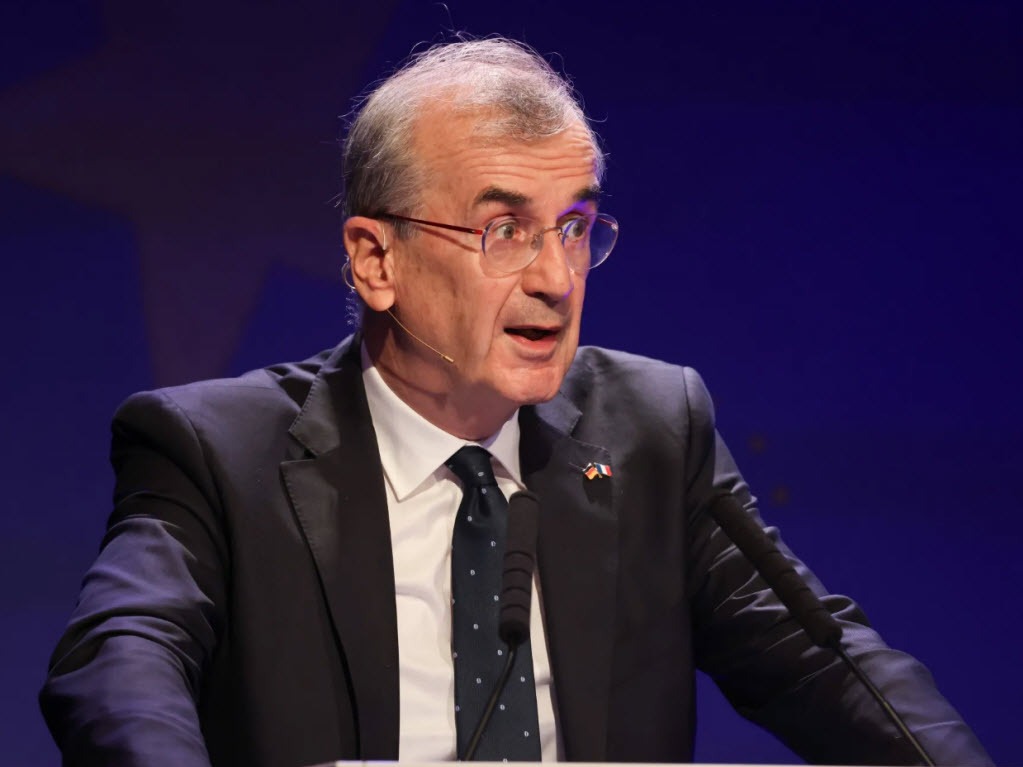
BdF's Villeroy says ECB ready to act, but too early to discuss timing of any rate hike
- European Central Bank’s François Villeroy says policymakers are ready to act if energy-driven inflation broadens.
- Emphasises it is too early to discuss timing of any rate hike despite rising market expectations.
- Iran war-driven energy shock is seen as inflationary near term, but ECB cannot prevent the initial spike.
- Policy focus is on second-round effects, not the first-round energy price surge.
- Markets currently price ~3 hikes in 2026, with the first fully priced by June
The European Central Bank is signalling a clear readiness to respond to energy-driven inflation pressures, but remains cautious about committing to the timing of any policy tightening, according to comments from French central bank chief François Villeroy de Galhau.
Speaking to Italy’s La Stampa, Villeroy said the ECB stands prepared to act if the recent surge in energy prices begins to spill over into broader inflation, but stressed that it is premature to discuss specific dates for potential rate hikes. His remarks reflect a growing internal debate within the ECB as policymakers assess the inflationary consequences of the U.S.-Israeli war on Iran, which has driven a sharp rise in energy costs.
The key distinction for the ECB is between the initial inflation shock and its potential persistence. Villeroy acknowledged that the central bank is effectively powerless to prevent the immediate impact of higher energy prices on headline inflation. Instead, policy is focused on preventing second-round effects—where higher energy costs feed into wages, services, and core inflation dynamics.
This framing aligns with the ECB’s broader reaction function. While some policymakers have floated the possibility of an April rate hike, others remain cautious, arguing that there is insufficient evidence at this stage to justify a rapid tightening response. Villeroy’s comments reinforce the more measured camp, emphasising optionality rather than urgency.
At the same time, he conceded that the war has worsened the inflation outlook, even if the ECB’s own adverse scenarios may overstate the risks by not accounting for potential policy responses. This suggests policymakers are aware of the upside risks to inflation but are not yet convinced that those risks will become entrenched.
Market pricing, however, is moving ahead of the ECB’s guidance. Investors are currently expecting around three rate hikes this year, with the first move fully priced by June. This divergence highlights a familiar tension: markets are reacting to the inflation impulse from energy, while the ECB is focused on whether that impulse becomes persistent.
For now, the ECB’s message is one of conditional readiness. Policymakers are clearly shifting toward a more hawkish stance as energy risks build, but remain data-dependent and unwilling to pre-commit to a tightening timeline without clearer evidence of broader inflation transmission.
---
I just posted this chart update here ... spooky!
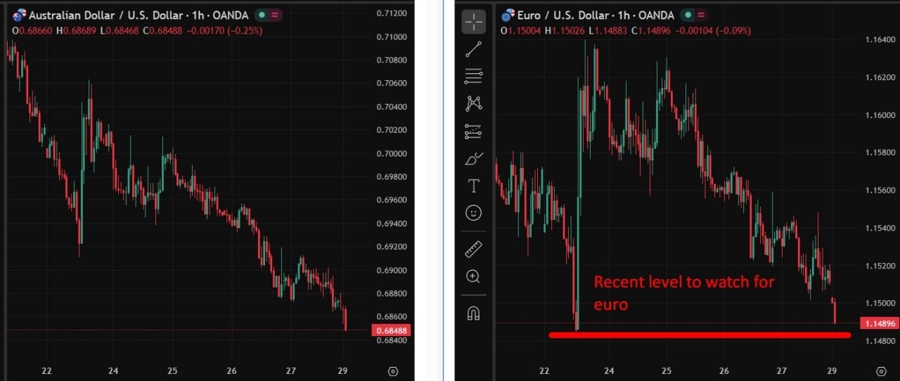
Let's see if this nascent bounce develops.


